IoT has been projected to rework many of the most mature business models like utilities, many of which haven’t changed in 50 years.
The Internet of Things (IoT) has been projected to rework many of the mature businesses, which have not made many changes in the past fifty years to their operation or business model.
Utilities that provide gas, water, and electricity into the home are on the cusp of a major overhaul, according to Sierra Wireless, and the companies that take advantage of IoT will be the winners.
See also: Beyond Devices: The Second Wave of IoT Emerges
IoT lowers the cost of experimentation, provides utilities with new ways to analyze their networks and allows them to adapt a model to fit specific customer needs.
Consumer attitudes toward energy production have been changing over the past 10 years. Energy conscious customers are adding solar panels to their house to reduce energy costs and consumption while lobbying their energy company to go renewable as well.
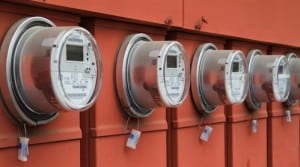
Analytics that weren’t available on a “one-fit-all” package is becoming available to customers that ask for smart meters installed, which can provide real-time data on energy consumption.
Alongside changes to consumer interests, governments and municipalities around the world are being challenged to find ways to reduce energy consumption and move to renewable. Utilities have long used arcane, proprietary technologies for these large-scale industrial operations, and are now being told they need to move to delivery models or exit the business.
Sierra Wireless sees three new business models for utilities in the next few years:
- Smart Integrator (SI) – instead of owning the power stations or wind-farms, SI builds a network of third-party energy retailers. The SI provides the software to run the network at scale, reducing the overall cost of energy and locating improvements to consumption.
- Energy service utility (ESU) – Similar to the current model, but with a customer service-centric philosophy. The ESU will look at ways to reduce overall consumption and give customers all the data they need to reduce energy by themselves.
- Energy as a service (EAAS) – a model that offers customers with the largest variety of services. Financing programs for wind and solar would be available to customers.
The introduction of LTE-M into the mix provides utilities with a way to connect their network cellularly without the power consumption and price cost usually associated with LTE. Moving from proprietary technology to open-source also reducing the costs of moving to new systems, alongside making the energy network adaptable to third-party units.
David is a technology writer with several years experience covering all aspects of IoT, from technology to networks to security.

 Best Practices for Deploying and Scaling Industrial AIArtificial Intelligence (AI) is transforming industrial operations, helping organizations optimize workflows, reduce downtime, and enhance productivity. Different industry verticals leverage AI in unique ways.Link to The Center for Adaptive Edge Intelligence
 The Center for Adaptive Edge IntelligenceAdaptive edge intelligence brings real-time decision-making to the point of data creation, whether from sensors, machines, or cameras.Link to The Value of Vehicle Electrification
 The Value of Vehicle ElectrificationElectric vehicles (EVs) present automakers with many design, engineering, and manufactu ring challenges.Link to Accelerating Manufacturing Digital Transformation with Industrial Connectivity and IoT
 Accelerating Manufacturing Digital Transformation with Industrial Connectivity and IoTDigital transformation is empowering industrial organizations to deliver sustainable innovation, disruption-proof products and services, and continuous operational improvement.Link to Smart Manufacturing for Automotive
 Smart Manufacturing for AutomotiveLeading a transportation revolution in autonomous, electric, shared mobility and connectivity with the next generation of design and development tools.Link to Center for Data Pipeline Automation
 Center for Data Pipeline AutomationAs businesses become data-driven and rely more heavily on analytics to operate, getting high-quality, trusted data to the right data user at the right time is essential.Link to Center for Automated Integration
 Center for Automated IntegrationThe goal of automated integration is to enable applications and systems that were built separately to easily share data and work together, resulting in new capabilities and efficiencies that cut costs, uncover insights, and much more.Link to Continuous Intelligence: Insights
 Continuous Intelligence: InsightsDigital transformation requires continuous intelligence (CI). Today’s digital businesses are leveraging this new category of software which includes real-time analytics and insights from a single, cloud-native platform across multiple use cases to speed decision-making, and drive world-class customer experiences.