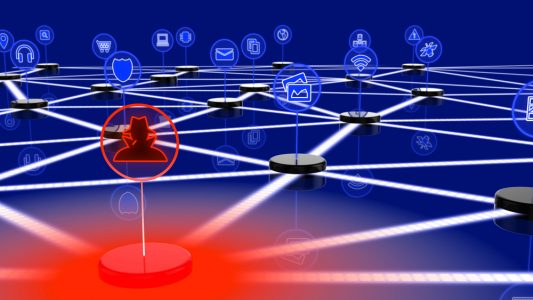
Coinciding with the end of support for Windows 7 last month, cyber-criminals have begun a malware campaign targeting vulnerable Internet of Things (IoT) devices.
Spotted by researchers at TrapX Labs, the malware campaign uses a phishing email to make an initial entry. After that, the malware spreads, using tools to crack weak passwords, pass-the-hash, and other software vulnerabilities, until it infects the entire system.
SEE ALSO: Managing a Real-Time Recovery in a Major Cloud Outage
Originally spotted in
Latin America, TrapX Labs CEO Ori Bach said it has since spread to North
America, Africa, and the Middle East. It has infected several large organizations,
damaging operational equipment and delaying product shipments.
“The infection targeted a range of devices ranging from smart printers, smart TV’s, and even heavy operational equipment,” said TrapX Labs. “Infected devices are at risk to malfunction creating risks to safety, disruption of the supply chain, and data loss.”
In the research report, TrapX Labs reveal that a supply chain attack infected an automatic guided vehicle (AGV), causing it to malfunction on the shop floor. After analysis, three other vehicles were found to be infected with the same malware.
Originally developed at
a cryptominer, the Lemon_Duck malware variant has been customized to attack all
types of IoT devices. Clearly, hackers see IoT as the weakest chain in an
organization’s link, with many devices completely unprotected.
This lack of built-in security for IoT devices, alongside an outdated operating system, is a recipe for disaster.
Some developers have started to make IoT devices more secure, with longer passwords, more warnings to change them, better interfaces for users and built-in encryption, however, a lot of older devices have none of those defenses and now lack stable security updates.

 Best Practices for Deploying and Scaling Industrial AIArtificial Intelligence (AI) is transforming industrial operations, helping organizations optimize workflows, reduce downtime, and enhance productivity. Different industry verticals leverage AI in unique ways.Link to The Center for Adaptive Edge Intelligence
 The Center for Adaptive Edge IntelligenceAdaptive edge intelligence brings real-time decision-making to the point of data creation, whether from sensors, machines, or cameras.Link to The Value of Vehicle Electrification
 The Value of Vehicle ElectrificationElectric vehicles (EVs) present automakers with many design, engineering, and manufactu ring challenges.Link to Accelerating Manufacturing Digital Transformation with Industrial Connectivity and IoT
 Accelerating Manufacturing Digital Transformation with Industrial Connectivity and IoTDigital transformation is empowering industrial organizations to deliver sustainable innovation, disruption-proof products and services, and continuous operational improvement.Link to Smart Manufacturing for Automotive
 Smart Manufacturing for AutomotiveLeading a transportation revolution in autonomous, electric, shared mobility and connectivity with the next generation of design and development tools.Link to Center for Data Pipeline Automation
 Center for Data Pipeline AutomationAs businesses become data-driven and rely more heavily on analytics to operate, getting high-quality, trusted data to the right data user at the right time is essential.Link to Center for Automated Integration
 Center for Automated IntegrationThe goal of automated integration is to enable applications and systems that were built separately to easily share data and work together, resulting in new capabilities and efficiencies that cut costs, uncover insights, and much more.Link to Continuous Intelligence: Insights
 Continuous Intelligence: InsightsDigital transformation requires continuous intelligence (CI). Today’s digital businesses are leveraging this new category of software which includes real-time analytics and insights from a single, cloud-native platform across multiple use cases to speed decision-making, and drive world-class customer experiences.