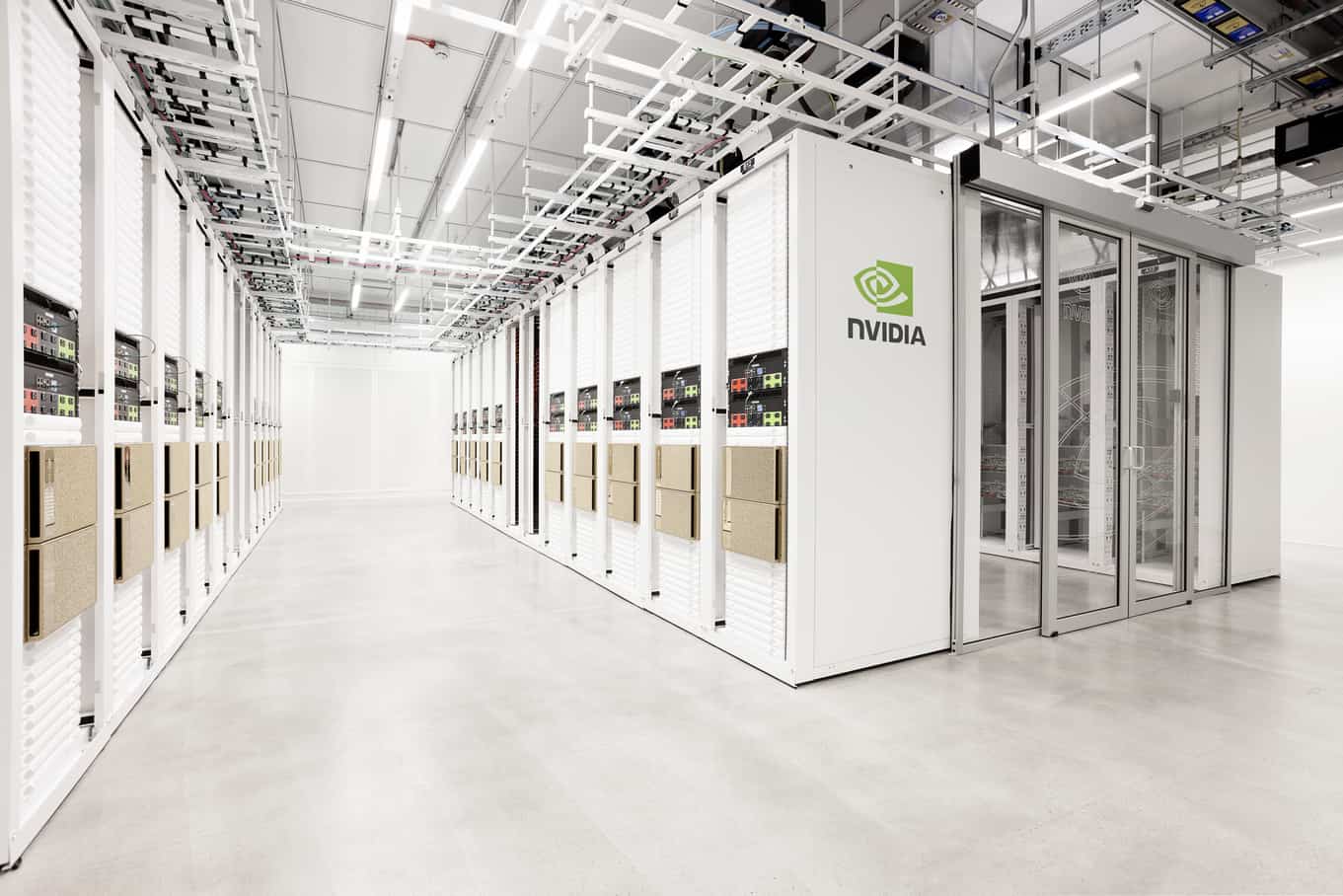
NVIDIA will be collaborating with Microsoft to build one of the most powerful supercomputers dedicated to artificial intelligence training and inference.
The multi-year partnership will see NVIDIA supply tens of thousands of DGX A100 and H100 GPUs, with software optimized to get the best performance out of AI workloads.
See Also: How Data Will Dictate What’s Next in the Streaming World
Through the use of Microsoft Azure’s scalable virtual instances, NVIDIA will be able to run large-scale research projects to further accelerate the development of AI.
In particular, NVIDIA sees the supercomputer as a benefactor to the emerging field of generative systems, which have been popularized with the launch of OpenAI’s ChatGPT and DALL-E.
“AI technology advances as well as industry adoption are accelerating. The breakthrough of foundation models has triggered a tidal wave of research, fostered new startups and enabled new enterprise applications,” said Manuvir Das, vice president of enterprise computing at NVIDIA. “Our collaboration with Microsoft will provide researchers and companies with state-of-the-art AI infrastructure and software to capitalize on the transformative power of AI.”
Of course, generative systems are just one area of AI, and we expect the supercomputer will be used for a lot more projects. NVIDIA is a key partner with many self-driving vehicle operators, so we suspect that this supercomputer will be helpful in running massive simulations to teach quickly teach autonomous vehicles how to drive and edge cases to spot.
“AI is fueling the next wave of automation across enterprises and industrial computing, enabling organizations to do more with less as they navigate economic uncertainties,” said Scott Guthrie, executive vice president of the Cloud and AI Group at Microsoft. “Our collaboration with NVIDIA unlocks the world’s most scalable supercomputer platform, which delivers state-of-the-art AI capabilities for every enterprise on Microsoft Azure.”
As artificial intelligence research grows, as does the requirements needed to have another breakthrough. Already, we see much of the infrastructure available even five years ago is not enough to power some of the largest foundational models, which are the backbone of the generative systems and other recent AI pursuits.
This new supercomputer looks to push infrastructure once again into the driver’s seat, although with the ever increasing need for more resources, it may not take long for AI models to require even more juice than NVIDIA’s supercomputer provides.

 Best Practices for Deploying and Scaling Industrial AIArtificial Intelligence (AI) is transforming industrial operations, helping organizations optimize workflows, reduce downtime, and enhance productivity. Different industry verticals leverage AI in unique ways.Link to The Center for Adaptive Edge Intelligence
 The Center for Adaptive Edge IntelligenceAdaptive edge intelligence brings real-time decision-making to the point of data creation, whether from sensors, machines, or cameras.Link to The Value of Vehicle Electrification
 The Value of Vehicle ElectrificationElectric vehicles (EVs) present automakers with many design, engineering, and manufactu ring challenges.Link to Accelerating Manufacturing Digital Transformation with Industrial Connectivity and IoT
 Accelerating Manufacturing Digital Transformation with Industrial Connectivity and IoTDigital transformation is empowering industrial organizations to deliver sustainable innovation, disruption-proof products and services, and continuous operational improvement.Link to Smart Manufacturing for Automotive
 Smart Manufacturing for AutomotiveLeading a transportation revolution in autonomous, electric, shared mobility and connectivity with the next generation of design and development tools.Link to Center for Data Pipeline Automation
 Center for Data Pipeline AutomationAs businesses become data-driven and rely more heavily on analytics to operate, getting high-quality, trusted data to the right data user at the right time is essential.Link to Center for Automated Integration
 Center for Automated IntegrationThe goal of automated integration is to enable applications and systems that were built separately to easily share data and work together, resulting in new capabilities and efficiencies that cut costs, uncover insights, and much more.Link to Continuous Intelligence: Insights
 Continuous Intelligence: InsightsDigital transformation requires continuous intelligence (CI). Today’s digital businesses are leveraging this new category of software which includes real-time analytics and insights from a single, cloud-native platform across multiple use cases to speed decision-making, and drive world-class customer experiences.