The dream of eliminating road accidents moves one step closer thanks to a research team at Universitat Oberta de Catalunya (UOC). They’re exploring how perceptive AI might notice conditions for accidents and traffic hazards, offering humans the chance to intervene before it’s too late.
How does perceptive AI work?
The team, led by Cristina Bustos and Javier Borge, developed algorithms
used to train neural networks to recognize the conditions surrounding major
traffic issues. These patterns are present before an accident occurs, but human
perception frequently misses the mark because of the sheer amount of data.
For example, a human might recognize wet road conditions, but other
much more subtle factors may go unnoticed. The team points to what they call
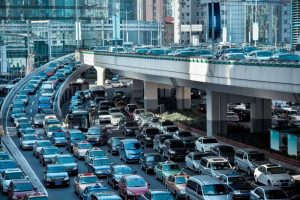
“the urban scene,” things like parked cars or even the placement of
advertisements that can distract drivers, causing an accident. The number of
distinct elements found in a scene correlates with the number of accidents.
See also: The Killer App for Autonomous Cars: Airport Parking
Who created the study?
Complex Systems @ IN3 (CoSIN3), a research group located at the
Internet Interdisciplinary Institute, combined forces with the Scene
Understanding and Artificial Intelligence Lab (SUNAI) from the Faculty of
Computer Science, Multimedia and Telecommunications. Spain’s National Traffic
Authority and city councils from both Barcelona and Madrid also joined the
initiative.
Affiliates from MIT and Àlex Arenas, a researcher from the Department
of Computer Engineering and Mathematics at Universitat Rovira i Virgili (URV),
also lent expertise to the project. Together, the team took traffic data and
used deep learning applied to computer image
processing. The result was a set of algorithms able to process the
complexity of a scene in urban traffic.
The convolutional neural network first discerns simple patterns across
a top layer of an image. As the algorithm goes deeper, the patterns become more
complex until the computer can recognize even a human face.
Deep learning is still a black box problem. Machines come to
conclusions, but they don’t tell us why. The system requires the expertise of
an urban planner or engineer who can validate the result and implement changes.
The algorithms need human experts
Researchers hope this type of research can help in future city planning
as humans continue to move and relocate. Right now, the team notes the biggest
hurdle is data availability to train the algorithm. However, the team is still
looking into multiple hazardous patterns to build a system that makes car
accidents and traffic hazards a thing of the past.

 Best Practices for Deploying and Scaling Industrial AIArtificial Intelligence (AI) is transforming industrial operations, helping organizations optimize workflows, reduce downtime, and enhance productivity. Different industry verticals leverage AI in unique ways.Link to The Center for Adaptive Edge Intelligence
 The Center for Adaptive Edge IntelligenceAdaptive edge intelligence brings real-time decision-making to the point of data creation, whether from sensors, machines, or cameras.Link to The Value of Vehicle Electrification
 The Value of Vehicle ElectrificationElectric vehicles (EVs) present automakers with many design, engineering, and manufactu ring challenges.Link to Accelerating Manufacturing Digital Transformation with Industrial Connectivity and IoT
 Accelerating Manufacturing Digital Transformation with Industrial Connectivity and IoTDigital transformation is empowering industrial organizations to deliver sustainable innovation, disruption-proof products and services, and continuous operational improvement.Link to Smart Manufacturing for Automotive
 Smart Manufacturing for AutomotiveLeading a transportation revolution in autonomous, electric, shared mobility and connectivity with the next generation of design and development tools.Link to Center for Data Pipeline Automation
 Center for Data Pipeline AutomationAs businesses become data-driven and rely more heavily on analytics to operate, getting high-quality, trusted data to the right data user at the right time is essential.Link to Center for Automated Integration
 Center for Automated IntegrationThe goal of automated integration is to enable applications and systems that were built separately to easily share data and work together, resulting in new capabilities and efficiencies that cut costs, uncover insights, and much more.Link to Continuous Intelligence: Insights
 Continuous Intelligence: InsightsDigital transformation requires continuous intelligence (CI). Today’s digital businesses are leveraging this new category of software which includes real-time analytics and insights from a single, cloud-native platform across multiple use cases to speed decision-making, and drive world-class customer experiences.