Best Practices for Deploying and Scaling Industrial AI
Artificial Intelligence (AI) is transforming industrial operations, helping organizations optimize workflows, reduce downtime, and enhance productivity. Different industry verticals leverage AI in unique ways.
Accelerating Manufacturing Digital Transformation with Industrial Connectivity and IoT
Digital transformation is empowering industrial organizations to deliver sustainable innovation, disruption-proof products and services, and continuous operational improvement.
Leading a transportation revolution in autonomous, electric, shared mobility and connectivity with the next generation of design and development tools.
As businesses become data-driven and rely more heavily on analytics to operate, getting high-quality, trusted data to the right data user at the right time is essential.
The goal of automated integration is to enable applications and systems that were built separately to easily share data and work together, resulting in new capabilities and efficiencies that cut costs, uncover insights, and much more.
Digital transformation requires continuous intelligence (CI). Today’s digital businesses are leveraging this new category of software which includes real-time analytics and insights from a single, cloud-native platform across multiple use cases to speed decision-making, and drive world-class customer experiences.
Best Practices for Deploying and Scaling Industrial AI
Artificial Intelligence (AI) is transforming industrial operations, helping organizations optimize workflows, reduce downtime, and enhance productivity. Different industry verticals leverage AI in unique ways.
Accelerating Manufacturing Digital Transformation with Industrial Connectivity and IoT
Digital transformation is empowering industrial organizations to deliver sustainable innovation, disruption-proof products and services, and continuous operational improvement.
Leading a transportation revolution in autonomous, electric, shared mobility and connectivity with the next generation of design and development tools.
As businesses become data-driven and rely more heavily on analytics to operate, getting high-quality, trusted data to the right data user at the right time is essential.
The goal of automated integration is to enable applications and systems that were built separately to easily share data and work together, resulting in new capabilities and efficiencies that cut costs, uncover insights, and much more.
Digital transformation requires continuous intelligence (CI). Today’s digital businesses are leveraging this new category of software which includes real-time analytics and insights from a single, cloud-native platform across multiple use cases to speed decision-making, and drive world-class customer experiences.
Using DevOps to Address Embedded Software Challenges
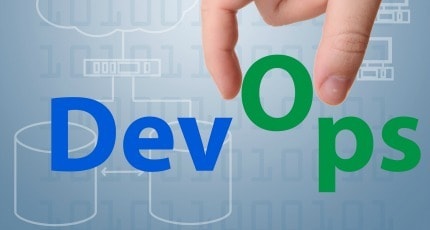
DevOps is considered the best way to meet the embedded software market demands for more applications and new features, all made available in shorter times.
A perfect storm is brewing for embedded device software development. Embedded devices are proliferating, particularly as new connectivity options, such as 5G, make innovative connected device applications possible, and their use is expanding, taking advantage of new analytics and artificial intelligence capabilities. At the same time, the device lifecycle needs, such as responding to evolving cyberattacks, make it necessary to quickly create and deploy software changes.
These conditions place new demands on development and
operations staff. Increasingly, DevOps is considered the best way to meet the
market demands for more applications and new features, all made available in
shorter times. RTInsights recently sat down with Graham Morphew, Senior Director
of Product Management at Wind River. We discussed the challenges of embedded
device software development, the differences between DevOps for traditional
environments and embedded devices, and more.
Here is a summary of our conversation.
RTInsights: How is DevOps for embedded
devices different from traditional DevOps approaches to developing software?
Graham Morphew
Morphew: When you look at traditional DevOps in an
IT enterprise-based environment, you have a ubiquitous execution environment. You’re
either running on Intel servers in the cloud, or you have something running on
an Intel PC. Embedded is very different. Your end execution environment is
usually a different architecture than the one you are using for development. There
are more challenges because of the diversity of the end hardware and how you
deploy to them. For example, when you’re building software for a cloud-based
environment, you know it’s going in a Google Cloud, Azure, or AWS environment. When
you’re building embedded software, the diversity of choice for deployment
environment is almost infinite, and you also could have devices in remote
locations.
So, there are many differences in terms
of how you think about the software and how these differences translate into
DevOps implementation challenges.
You must contend with specialized
hardware, cross-compiling, cross-debugging, memory footprints, and security
issues. You don’t have the almost limitless resources at your fingertips as you
would in a cloud environment. There’s an island of execution that you need to
keep in mind as you design these systems. You also have security to worry
about. You don’t necessarily have physical control of the security of the
devices. You may have to contend with physical tampering of the device.
Another challenge is that the data from
these devices is more difficult to gather. In a DevOps environment, you want a continuous
feedback loop. That’s easy if development is on servers that are under your
control. When you’re talking about devices, they will likely be remotely
distributed, and they may not be online all the time. So, many different issues
come into play when comparing your traditional DevOps and DevOps for embedded
software.
RTInsights: Why will the embedded device
community move towards DevOps? Why is it becoming compelling, and what’s
happening in the markets to drive this?
Morphew: With embedded software, there is a growing
need for more frequent updates and higher quality. To get there, you need automation
to help you along the way. Automation will play a big role in the future of DevOps
and embedded software. If you go back a decade or two, there was a lot of focus
on the hardware driving the capabilities of the device. Now, much, much more of
the differentiating technology among device vendors is software.
Another factor pushing companies towards DevOps
for embedded systems is something that we see at Wind River quite a bit: the
changing demographics of software development.
There are two very distinct camps. You
have your traditional embedded software developers and new graduates or
developers entering the domain of intelligent devices from other software
domains. The traditional developers tend to be older, and many are retiring.
Like me, there are people who came into the market out of college at a time
where you would look at hardware manuals, program registers, and things like
that. That’s just not something that college programs spend a lot of time on
now.
I have a son who’s college-age now. He’s programming
in Python. He just learned C for the first time, and that was a big eye-opener.
Python offers much higher levels of abstraction.
DevOps can help overcome this obstruction
between the application environment and wanting to make that look like a
familiar environment to developers of device software. The need to do this is
that companies building devices have trouble acquiring new software development
talent.
I was talking to someone we had hired as
an intern recently, and he told us that many of his classmates want to go to
Silicon Valley and work for companies like Facebook, Google, Apple, and Tesla. For
companies in the industrial or aerospace and defense segments, it may be more
of a challenge to attract the needed software talent that would come in and
program embedded devices in a rudimentary C environment.
To overcome this, some companies think
that giving that new generation of software developers an environment they’re
familiar with will help. And that’s one of the reasons why Wind River is adopting
a Visual Studio Code environment. Visual Studio Code is an environment that has
seen rapid growth in popularity since coming into the market. Everyone that we
talked to, coming from a new grad perspective, is very familiar with VS Code,
and we see less experience from the new developer with older environments like
Eclipse. So, sometimes you have to be where your audience is already.
RTInsights: What problems do companies
have when they try to adopt DevOps solutions? And what are the key challenges
for the embedded device realm versus other domains?
Morphew: The biggest challenge is the cultural
shift that has to happen within companies. And this isn’t necessarily an embedded-specific
challenge. It’s more deeply ingrained in some software development practices.
You have small teams, and in many cases,
you have individuals who do very specific tasks. You need a level of
collaboration and cooperation with DevOps that sometimes takes people out of
the realm that they’ve become comfortable with for a number of years. You have
to say, “Everyone’s working together.”
The Ops part of DevOps for embedded is a
challenge because, in a traditional DevOps environment for the cloud, the Ops
is pretty standard. You’re running a website or developing an application that
does something through a cloud-based interface. When you’re talking about embedded,
you are talking about a device in the field, and what that device does is
specific to your company. In many cases, the device manufacturers are not the
companies that are operating the devices. An equipment manufacturer may be selling
its device to a big electrical company or a big manufacturer. Those companies
are the ones operating the devices. Sometimes there is assistance from the device
manufacturer, but it’s not a completely closed-loop the way you might see with
a cloud-based solution.
There are toolset compatibility issues.
Having a common development environment sometimes meets resistance. So that
comes back to some of the cultural and management backing you need to implement
these systems.
And then there is the hardware issue
again. It’s a common theme in the embedded market. How do you get enough
hardware to build out the automation environments needed to make DevOps a
reality? That’s an ongoing challenge. Typically, successful customers have a
mix of hardware and simulation to scale up their test processes.
RTInsights: Are there tools that would
make the transition to DevOps easier?
Morphew: One thing helping companies get through
this revolution is the availability of tools. Many of these tools are open
source or have free versions. What you would often see was a consolidation
around some flavor of Source Code Management, often a flavor of Git. Now, organizations
have gone from having a very Source Code Management-centric solution to
including more and more DevOps types of tools within their solutions. That
helps companies make the transition.
There’s a lot of choice. You might argue
sometimes there’s too much choice. The challenge that we see customers having
now is, yes, there are many tools. How do I bring them together into a solution
that works for me?
Today, many companies are starting
projects where they’re forming teams internally to manage their transition to a
more digitally-focused development environment. We see a transition happening
now in the embedded space like what we saw with other technological transitions.
In many cases, it’s very much a do-it-yourself mentality of, “Let’s build
the perfect system for us, let’s customize it to our needs.” Such efforts
are draining more and more resources out of the company just to maintain these
things going forward. That’s not necessarily where they want to invest. That
approach will likely evolve to one where people are looking to have another
company maintain more of their environment over time.
Another area where, ultimately, companies
can make their lives easier is to have clear separations between application development
and maintaining the software platforms that they’re running on. It used to be
you had a small team that did both things, and the application and platform
merged into each other. But now, you need that clear separation to modularize
your software and have people working on what they have the best skills for.
RTInsights: What are the industry drivers
for solutions that make it easier to develop and test software for embedded
devices?
Morphew: There is the convergence of the IT and OT worlds. You have devices
connected to the Internet. This has been a big driver for companies to
re-examine how they deliver software. Also, there are several industries where
you have compliance-related requirements to update the software in devices. You
see that in the medical field, where now you must prove that you can update
your device if a security vulnerability becomes known. This can be a life-or-death
scenario. You need to be able to prove that you can address such a problem if
one comes up.
Such drivers are pushing companies to
look at the processes they’re using regarding their ability to do remote
updates. What we see is a lot of larger companies feel the threat from these
digitally-native new and up-and-coming companies. There are even terms they use
to describe it. You hear the term Teslafication. They’re saying they need to be
more like Tesla and be a very, very software-focused business, as opposed to
brick and mortar, steel, and iron type of thinking that is more associated with
hardware. More and more, they must differentiate their product on the software
that runs on the things they’re building.
The pandemic has also accelerated this trend.
You have most of the software-focused workforce working from home. And in many
cases, a significant number of employees are not going to return to the office
after this is over. That’s a big shift. So, you need to change the way you
think about working to make that situation productive for developers. That’s a
challenge. It screams out, to some extent, for more collaboration tools and
more standardization in terms of how things get done because you don’t have
many people working face-to-face and collaborating in the more traditional way.
RTInsights: Moving on to a different
issue, why have fast software iterations become a critical, competitive
advantage in every industry? And how does that relate to that need for automated
testing?
Morphew: I’ve gone through several projects that transitioned from a waterfall model to a more agile model. That ability to do continuous testing, automated testing is often the limiting factor in terms of increasing your productivity. If you’re going to run fast and you still want to maintain your quality, it’s a necessity. This is a particular area where having a digital twin of your end device lets you do a lot of the testing on it, and you can do it at scale.
One of the big advents that we see in terms of DevOps being applicable to embedded is the ability to take a simulation of the embedded device and then use it at scale in a cloud-based environment. In that way, you can have a hundred tests running simultaneously. You’re only limited by cloud resources. That’s one of the transformations we see a number of companies going through and something that they ultimately value quite highly.
We’ve had a simulation business at Wind
River for many years. Some of the early adopters were doing a lot of this on
their servers, scaling up large numbers of simulations. But when you move it to
the cloud, you don’t have to buy new servers every six months.
You have control over the type of
hardware you’re using and the amount of it. You can dial it up and dial it down
depending on what you need at any one time, rather than having the capital
expense of large hardware and IT teams to maintain it. Right now, we see a
balance or sort of hybrid cloud environment, where some of the testing is done locally
on-premises, and some of it is in a public cloud.
RTInsights: Are there any other points
you want to bring up that we left out?
Morphew: When you talk about DevOps and moving embedded
software development to a more cloud-native, cloud-focused environment, there
are several things I’ve seen personally as a product manager that are big
changes.
One of them is collaboration. I was
trying to complete a Linux build. I’m not a tried-and-true Linux engineer. I
was having some problems getting a build to work correctly. And while I was
doing this, one of our Linux software architects could see that I had had several
failed builds. And he contacted me over an instant messaging app and said,
“Hey, I’ve seen that you’re having some trouble, I had a look, and you
just need to switch the setting, and you’ll be good. And I just went ahead and fixed it for you.”
If I were developing in a different
environment where I had software installed on my PC, no one would ever know I
was having problems. I’d have to go out and ask. Also, I most probably wouldn’t
be able to recreate that same scenario. Most likely, I would have been stuck on
it all day. And, I may have just given up after a while. So, the ability to get
quick access to software that you don’t have to install locally, and being able
to play in a common sandbox, to me, was a big eye-opener on how this changes
how you work, just from essentially having these kinds of shared assets amongst
your team.
RTInsights: Anything else?
Morphew: The one thing we look forward into the not-too-distant
future is to have digital feedback loops where you’re taking data off the
device, taking data out of your development environment, and feeding that back
to improve your software. AI and machine learning play into this as well. What
kind of information can I get off these devices? How can I analyze it
potentially with a large cloud-scale, big data type of a model or engine, and
then feed that back into future software development? That could help me optimize
a system as a whole.
Salvatore Salamone is a physicist by training who writes about science and information technology. During his career, he has been a senior or executive editor at many industry-leading publications including High Technology, Network World, Byte Magazine, Data Communications, LAN Times, InternetWeek, Bio-IT World, and Lightwave, The Journal of Fiber Optics. He also is the author of three business technology books.
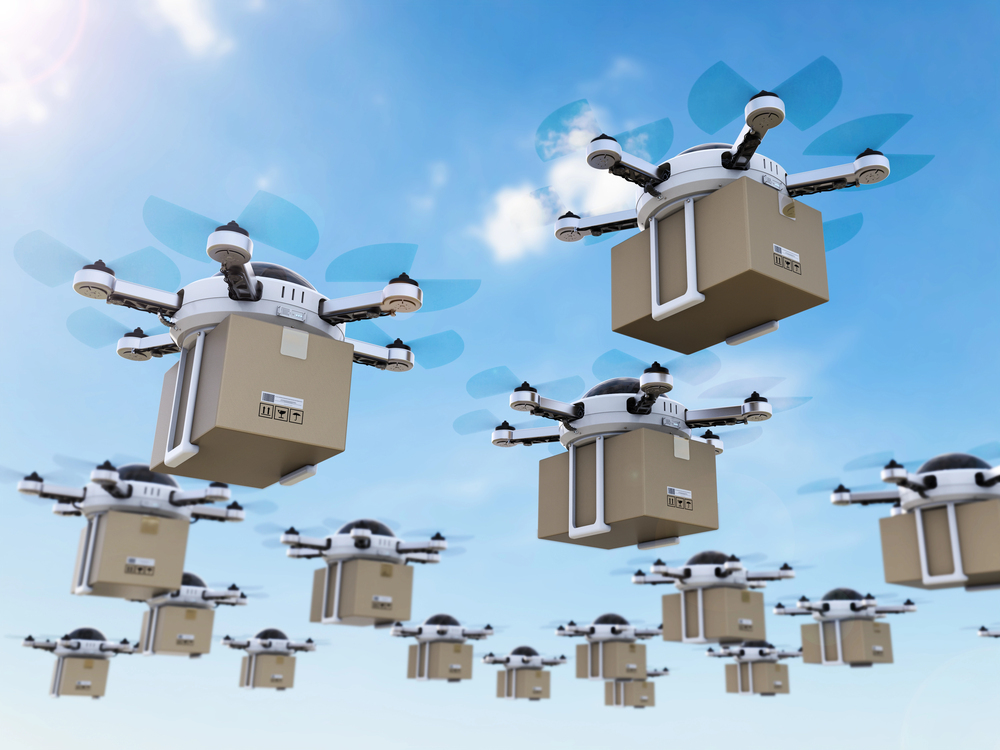
The low-altitude economy depends on continuous, real-time ingestion and processing of high-volume telemetry, sensor, and imagery data to support safe, scalable operations.
The shift toward real-time decision-making at the edge is an evolution in how businesses operate. Closing the latency gap means smarter, safer, and more resilient operations.
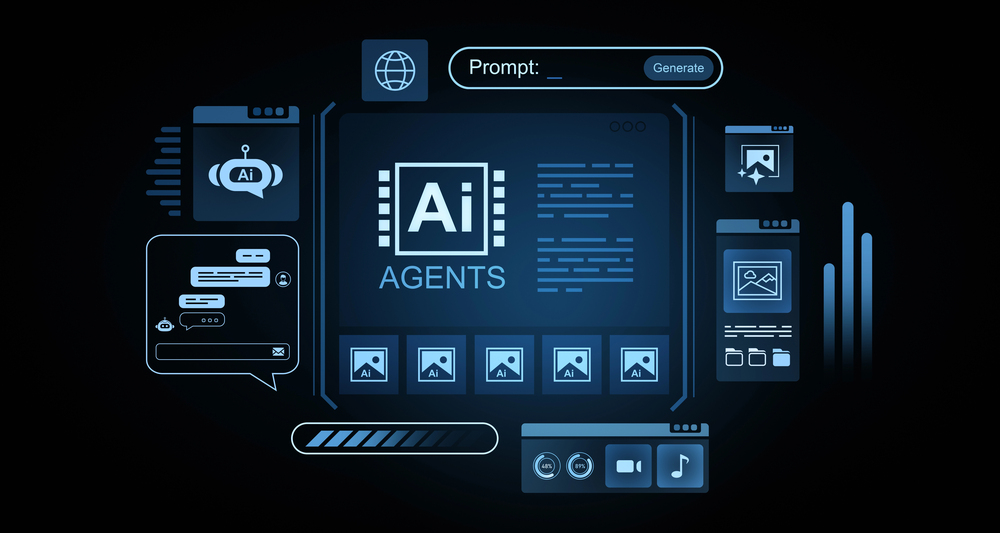
The transition to a truly agentic enterprise is not merely an IT upgrade. Such a transition is an architectural and philosophical metamorphosis. The organizations that scale with confidence are those that recognize this early.
Boring AI earns trust because it works. It removes friction from daily tasks, and over time, that trust becomes the foundation for more ambitious systems.
Neoclouds offer performance specialization, which increasingly is factored into what some call multi-compute strategies. In general, what that means is that enterprises are using hyperscalers for general workloads, neoclouds for model training, and edge infrastructure for inference.
Analysis and market insights on real-time analytics including Big Data, the IoT, and cognitive computing. Business use cases and technologies are discussed.
Advertiser Disclosure: Some of the products that appear on
this site are from companies from which TechnologyAdvice
receives compensation. This compensation may impact how and
where products appear on this site including, for example,
the order in which they appear. TechnologyAdvice does not
include all companies or all types of products available in
the marketplace.