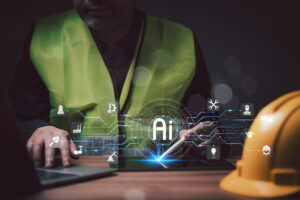
Ai and Engineers play pivotal role in factory operations, managing manufacturing processes, assembly lines, logistics to ensure smooth production, leveraging industrial machinery, skilled workforce
AI agents are being used to enhance efficiency, safety, reliability, and cost-effectiveness of industrial operations. Use cases are expanding all the time as organizations become more familiar with the technology.
The acceleration of digital transformation initiatives in industrial operations is being driven by advancements in edge computing, IoT, and more. In 2025, many organizations will complement their efforts in these areas by deploying AI agents at scale. Industrial organizations will use these agents to drive real-time decision-making and unlock operational efficiencies.
Here are some of the most common AI agent use cases that have wide appeal across a wide range of industrial organizations, departments, and operational areas.
Data Democratization
AI agents can help change how numerous and different data consumers interact with data. They can also help non-professional data users perform data management tasks and develop advanced analytics independently.
Some common use cases include using data democracy AI agents to:
- Automate data discovery and retrieval, making it easier for all levels of users to have access to the data they need to perform their jobs.
- Personalize data presentation and insights to match an individual’s job function, which helps improve that person’s efficiency in that they do not receive unrelated and unnecessary data for their role in the organization.
- Empower individuals across an organization to analyze data independently, eliminating the reliance and delays incurred if they had to wait for a data specialist to get involved.
See also: With AI Agents on the Scene, Structured Data is Back in Vogue
Document Summarization
AI agents used for document summarization automate extracting key information from unstructured text. This enhances productivity and reduces the time spent on manual document review.
Some common use cases include using document summarization AI agents to:
- Find information in technical documents so a service agent can diagnose an issue, get suggestions as to how to fix an issue, and quickly repair a piece of equipment.
- Perform market research and competitive analysis of rival companies by scouring their websites, public financial reports, and press releases.
- Highlight key financial metrics, trends, and insights in earnings reports, financial statements, and market analysis documents to speed up the analysis process and help identify critical factors affecting a company’s financial health.
Robotics
AI agents are playing a transformative role in robotics, enabling robots to become more autonomous, adaptive, and intelligent. Empowering robotic systems with AI agents can expand the range of operations the systems can perform, enhance safety, and enable more collaborative human-robotic applications.
Some common use cases of AI agents used in robotic systems include:
- Autonomous navigation, where AI-powered robots can perceive their environment and navigate without human intervention. Such use is common in autonomous vehicles, warehouse robots, and drones.
- Task and decision-making automation, where AI-driven robots can analyze data and make decisions autonomously to optimize workflows. An example of this application would be warehouse robots that use AI to sort and transport packages efficiently.
- Improve robot-human collaboration where AI agents allow cobots to work alongside humans safely and efficiently in manufacturing or logistics applications.
Troubleshooting
AI agents can be used for troubleshooting in industrial operations to detect issues, predict failures, and automate resolution processes. In many troubleshooting use cases, AI agents monitor equipment in real time, predict potential failures, and suggest preventive actions before breakdowns occur.
Some common use cases of AI agents used for troubleshooting include:
- Predictive maintenance and anomaly detection to reduce unplanned downtime, extend the lifespan of equipment, and minimize maintenance costs.
- Root cause analysis, where AI-powered analytics engines sift through vast amounts of operational data to identify performance issues.
- Process optimization, where AI agents analyze historical and real-time data to recommend process adjustments that improve efficiency and reduce operational bottlenecks.
Safety and Risk Management
AI agents can assist in safety and risk management in industrial operations by proactively identifying hazards, mitigating risks, and ensuring compliance with safety protocols in highly regulated industries. Additionally, such agents could helpimprove worker safety and reduce incident rates.
Common use cases of AI agents used to assist in safety and risk management include:
- Monitoring work environments to identify safety risks in real time and guide workers to adhere to safety protocols through alerts and recommendations.
- Incident response where AI agents analyze sensor data and historical incidents to optimize emergency response strategies. An example would be when an AI detects a gas leak in a chemical plant and automatically triggers evacuation protocols while notifying first responders.
- Automated safety compliance monitoring, where AI agents track compliance with safety regulations and flag deviations from industry standards. For example, an AI system in a manufacturing plant might ensure OSHA compliance by monitoring workplace conditions and reporting violations.
A Final Word on AI Agents in Industrial Operations
Industrial organizations are deploying AI agents to enhance efficiency, safety, reliability, and cost-effectiveness. Use cases are expanding all the time as such organizations become more familiar with the technology.
The best way to start using AI agents is to pick a specific application area where a specific problem is addressed. The five broad areas detailed above might provide some ideas of where to start. Once that initial application is successfully implemented, an organization can expand its use to many other application areas of its operations.

 Best Practices for Deploying and Scaling Industrial AIArtificial Intelligence (AI) is transforming industrial operations, helping organizations optimize workflows, reduce downtime, and enhance productivity. Different industry verticals leverage AI in unique ways.Link to The Center for Adaptive Edge Intelligence
 The Center for Adaptive Edge IntelligenceAdaptive edge intelligence brings real-time decision-making to the point of data creation, whether from sensors, machines, or cameras.Link to The Value of Vehicle Electrification
 The Value of Vehicle ElectrificationElectric vehicles (EVs) present automakers with many design, engineering, and manufactu ring challenges.Link to Accelerating Manufacturing Digital Transformation with Industrial Connectivity and IoT
 Accelerating Manufacturing Digital Transformation with Industrial Connectivity and IoTDigital transformation is empowering industrial organizations to deliver sustainable innovation, disruption-proof products and services, and continuous operational improvement.Link to Smart Manufacturing for Automotive
 Smart Manufacturing for AutomotiveLeading a transportation revolution in autonomous, electric, shared mobility and connectivity with the next generation of design and development tools.Link to Center for Data Pipeline Automation
 Center for Data Pipeline AutomationAs businesses become data-driven and rely more heavily on analytics to operate, getting high-quality, trusted data to the right data user at the right time is essential.Link to Center for Automated Integration
 Center for Automated IntegrationThe goal of automated integration is to enable applications and systems that were built separately to easily share data and work together, resulting in new capabilities and efficiencies that cut costs, uncover insights, and much more.Link to Continuous Intelligence: Insights
 Continuous Intelligence: InsightsDigital transformation requires continuous intelligence (CI). Today’s digital businesses are leveraging this new category of software which includes real-time analytics and insights from a single, cloud-native platform across multiple use cases to speed decision-making, and drive world-class customer experiences.