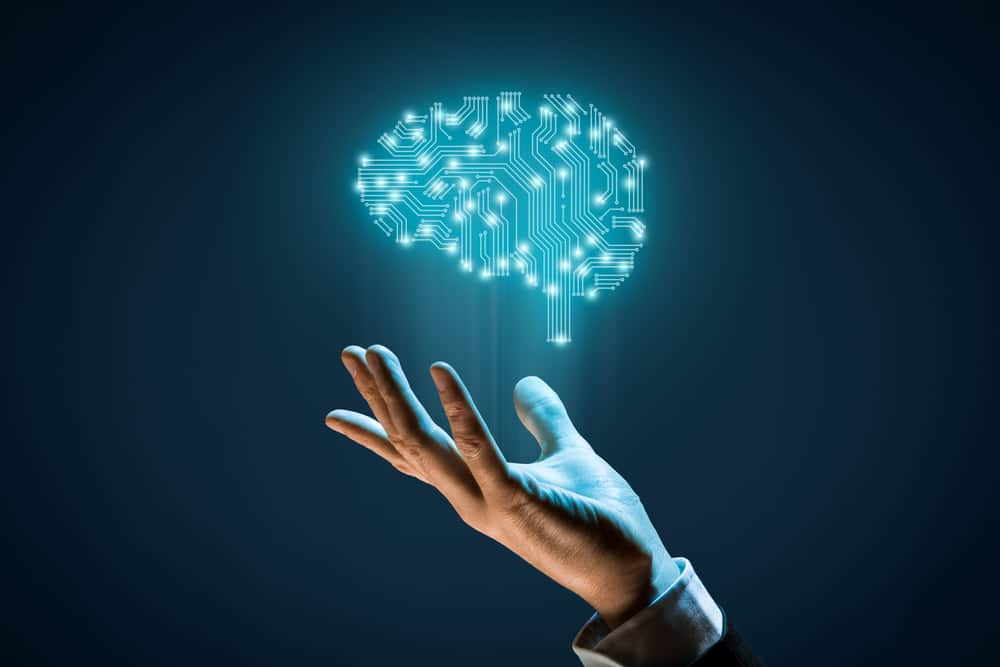
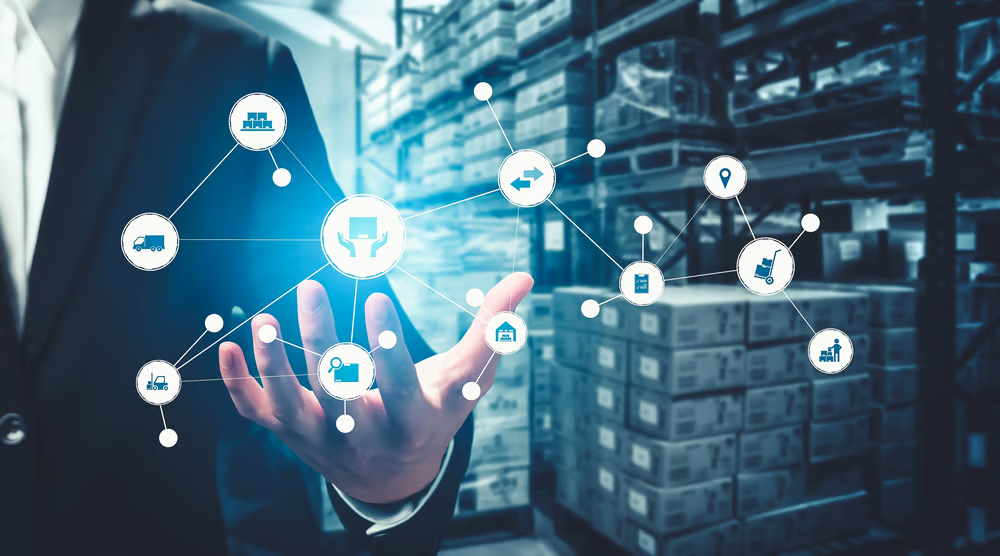
Brain with printed circuit board (PCB) design and businessman representing artificial intelligence (AI), data mining, machine and deep learning and another modern computer technologies concepts.
Edge computing changes are enabling decision-making where data is generated, and are powering applications that are reliable, private, and faster than ever.
Edge computing still isn’t the go-to framework for processing data, but more companies are making the shift. After a decade of centralizing cloud processing, more organizations will look to edge computing to reduce latency and scale processing. Here are some factors influencing this shift.
Before neural networks
changed how we process big data, cloud computing sped up processing by
bypassing on-premises solutions. Businesses sent data to the cloud for
processing and received insights back with barely perceptible latency.
See also: Edge Computing Enhances In-Store Retail
Now, with more IoT
devices, more data, and more systems, latency is perceptible. Artificial
intelligence and machine learning allow companies to run their algorithms much
closer to the device.
Edge computing helps
balance two major needs:
- Data
appetite: Our data production is
incomprehensibly big. Companies have to move this data in real-time to produce
competitive insight, creating enormous bandwidth needs, storage needs, and
heavy computing costs, solved by centralized cloud computing.
- Privacy: This data movement to a centralized cloud
creates privacy issues for sensitive data. Companies previously solved this by
adopting a safer but significantly slower, on-premises processing.
AI/ML-optimized solutions allow companies to move processing more efficiently to the edge. They help protect sensitive information but avoid high computing costs by leaving that processing distributed at the edge. McKinsey predicts that AI will generate an extra $13 trillion of economic activity by 2030, and some of this will be in edge computing.

Containerized applications are
more common
Containers are
standardized, standalone software solutions designed to work independently. It
includes everything you need to process a certain task or task series. Because
they isolate software from the larger environment, you can export this process
to other locations without risking corruption or misalignment.
Edge containers provide:
- Low latency: Instead of far-off cloud processing, edge containers remain close to the user.
- Scalability: Edge containers are deployed in parallel to points of presence (PoPs), so organizations can send them to many points at once. Processing grows as companies expand, and companies can meet demand where they are.
- Lower bandwidth: Data-hungry applications cost companies a lot of money because traffic to a centralized server is high. Edge containers break up this traffic and provide pre-processing to reduce the load.
- Maturity: Containers are tested and deployed as all-in-one solutions. There’s no need for retraining, and developers don’t worry about misalignment due to the processing location conditions.
See Also: Center for Edge Computing and 5G
Lean edge computing solutions
TensorFlow Lite and
TinyML are just the beginning. They provide deep learning frameworks —
traditionally deployed on processor-heavy applications — for on-device
inference. They’re extremely low power and build sensor analysis into even the
most extreme edge applications.
The key takeaway is
flexibility. Companies can deploy low bandwidth, low latency solutions that
previously required computationally intense (and expensive) commitments. Edge
computing is becoming more common because it offers organizations more choices
about how, where, and when to deploy. The introduction of new tools like edge
containers and TensorFlow Lite offer deep learning capability without the
weight.
Edge computing is now
possible in so many use cases we previously never dreamed of. And thanks to
decision-making close to the device, these applications are reliable, private,
and faster than ever.
Elizabeth Wallace is a Nashville-based freelance writer with a soft spot for data science and AI and a background in linguistics. She spent 13 years teaching language in higher ed and now helps startups and other organizations explain - clearly - what it is they do.

 Best Practices for Deploying and Scaling Industrial AIArtificial Intelligence (AI) is transforming industrial operations, helping organizations optimize workflows, reduce downtime, and enhance productivity. Different industry verticals leverage AI in unique ways.Link to The Center for Adaptive Edge Intelligence
 The Center for Adaptive Edge IntelligenceAdaptive edge intelligence brings real-time decision-making to the point of data creation, whether from sensors, machines, or cameras.Link to The Value of Vehicle Electrification
 The Value of Vehicle ElectrificationElectric vehicles (EVs) present automakers with many design, engineering, and manufactu ring challenges.Link to Accelerating Manufacturing Digital Transformation with Industrial Connectivity and IoT
 Accelerating Manufacturing Digital Transformation with Industrial Connectivity and IoTDigital transformation is empowering industrial organizations to deliver sustainable innovation, disruption-proof products and services, and continuous operational improvement.Link to Smart Manufacturing for Automotive
 Smart Manufacturing for AutomotiveLeading a transportation revolution in autonomous, electric, shared mobility and connectivity with the next generation of design and development tools.Link to Center for Data Pipeline Automation
 Center for Data Pipeline AutomationAs businesses become data-driven and rely more heavily on analytics to operate, getting high-quality, trusted data to the right data user at the right time is essential.Link to Center for Automated Integration
 Center for Automated IntegrationThe goal of automated integration is to enable applications and systems that were built separately to easily share data and work together, resulting in new capabilities and efficiencies that cut costs, uncover insights, and much more.Link to Continuous Intelligence: Insights
 Continuous Intelligence: InsightsDigital transformation requires continuous intelligence (CI). Today’s digital businesses are leveraging this new category of software which includes real-time analytics and insights from a single, cloud-native platform across multiple use cases to speed decision-making, and drive world-class customer experiences.