For manufacturers, 5G offers compelling opportunities to improve operational performance and build greater resilience into processes. Many new services and opportunities will arise from its pervasive and ubiquitous connectivity.
That’s the word from a report issued by The Manufacturing Institute, which looks at the unbounded potential of 5G in manufacturing. “5G is a significant step beyond 4G,” the study’s authors, led by Dr. Shawn DuBravac of Avrio Institute, point out. Manufacturers may start out with LTE “for high-bandwidth applications for tasks such as streaming video and real-time applications that require very low latency,” DuBravac and his co-authors point out. As more 5G-ready equipment comes on the scene, “LTE and 5G are widely expected to coexist on the same private networks for at least the next five years.”
5G technology takes networks well beyond previous capabilities, the co-authors added. “5G has unique properties and attributes, which will define its disruptive characteristics. These include high data rates, higher system capacity, reduced latency, and massive device connectivity. “5G can help realize the ideal of a modular factory where machinery can be quickly reconfigured to optimize production,” they observe. “It can facilitate data collection from a dense population of sensors at a previously impossible scale. And it will be able to head off problems by enabling systems that automatically schedule maintenance or order replacements for consumables to ensure there is minimal downtime. It paves the way for self-configuring manufacturing lines, proactive equipment maintenance determined by analyzing sensor data, and autonomous vehicles that can begin or perhaps one day complete outbound logistics. “
See also: 5G and Digital Twins: It Takes an Ecosystem
DuBravac and his co-authors point to a range of applications that 5G makes possible:
Digital twins. “Digital twins usually require large datasets to be effective,” DuBravac and his co-authors state. “5G networks can not only facilitate the transmission of these datasets across vast distances at very high speeds but, with its low-power variants, can enable sensors for applications that may require far-flung sensors in remote locations such as stretches of roads or fields in agriculture applications.”
Industrial Internet of Things. These device deployments focus on “measuring how efficiently factory machines are operating and the environmental factors that can affect that operation, such as temperature and humidity,” the co-authors state. “IIoT sensors can be used to provide real-time input to factory-floor workers on the operational health of machines, helping to ensure worker safety. They can also report on potential longer-term challenges, such as whether a part needs to be replaced or whether lubricant needs to be ordered to ensure its optimal operation. IIoT-driven data can even unlock new business opportunities in terms of allowing precise monitoring of costs for manufacturing-as-a-service scenarios.”
Extended reality (XR). XR technologies “run the gamut from virtual reality— an immersive experience that completely shuts out the physical world—to augmented reality, in which digital objects appear and can be manipulated in the real world,” DuBravac and his co-authors explain. “It also has many horizontal business applications, the co-authors state. “XR has particular value in sectors like construction and manufacturing, where participants can see detailed models of complex machinery. Manufacturers can present data and information about machinery in spatially relevant ways, which in turn can aid workers in maintenance, repair, and training. XR applications are ideally experienced through a headset.”
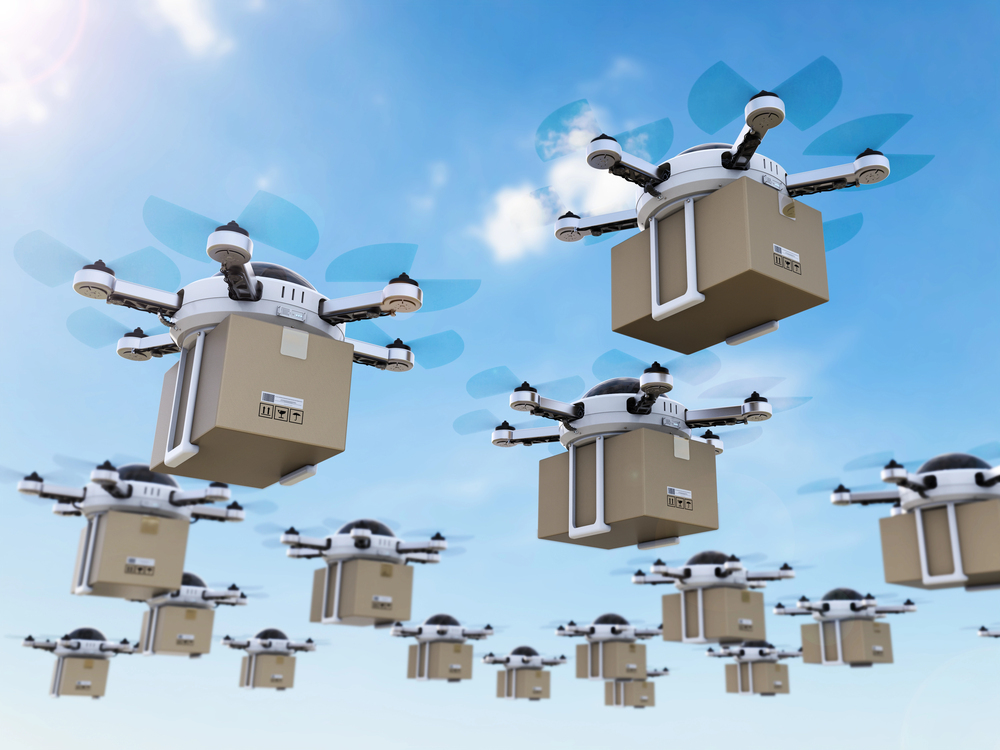
Autonomous vehicles and robotics. To reach their full potential, autonomous vehicles “will have to communicate with each other and other connected, intelligent parts of the transportation grid using technologies referenced under the umbrella term vehicle-to-everything (V2X). 5G can also be used to guide robots or forklifts through factories using many of the same core-enabling technologies, such as advanced computer vision destined for passenger cars. 5G has the potential to enable advanced automation through zero-touch approaches. From forklifts to drones to warehouse shelves themselves, 5G will connect autonomous modes of transportation — all forms of transportation within the future factory could be connected to the 5G network.”
Safety and security. “5G opens the door to multiple high-definition video streams from fixed cameras and drones — likely navigating via the 5G network as well — to ensure the security of facilities or monitor for any signs of disruption or failure, particularly when paired with a computer vision system that can analyze this video and detect aberrations or dangerous situations,” DuBravac and his co-authors state.

 Best Practices for Deploying and Scaling Industrial AIArtificial Intelligence (AI) is transforming industrial operations, helping organizations optimize workflows, reduce downtime, and enhance productivity. Different industry verticals leverage AI in unique ways.Link to The Center for Adaptive Edge Intelligence
 The Center for Adaptive Edge IntelligenceAdaptive edge intelligence brings real-time decision-making to the point of data creation, whether from sensors, machines, or cameras.Link to The Value of Vehicle Electrification
 The Value of Vehicle ElectrificationElectric vehicles (EVs) present automakers with many design, engineering, and manufactu ring challenges.Link to Accelerating Manufacturing Digital Transformation with Industrial Connectivity and IoT
 Accelerating Manufacturing Digital Transformation with Industrial Connectivity and IoTDigital transformation is empowering industrial organizations to deliver sustainable innovation, disruption-proof products and services, and continuous operational improvement.Link to Smart Manufacturing for Automotive
 Smart Manufacturing for AutomotiveLeading a transportation revolution in autonomous, electric, shared mobility and connectivity with the next generation of design and development tools.Link to Center for Data Pipeline Automation
 Center for Data Pipeline AutomationAs businesses become data-driven and rely more heavily on analytics to operate, getting high-quality, trusted data to the right data user at the right time is essential.Link to Center for Automated Integration
 Center for Automated IntegrationThe goal of automated integration is to enable applications and systems that were built separately to easily share data and work together, resulting in new capabilities and efficiencies that cut costs, uncover insights, and much more.Link to Continuous Intelligence: Insights
 Continuous Intelligence: InsightsDigital transformation requires continuous intelligence (CI). Today’s digital businesses are leveraging this new category of software which includes real-time analytics and insights from a single, cloud-native platform across multiple use cases to speed decision-making, and drive world-class customer experiences.