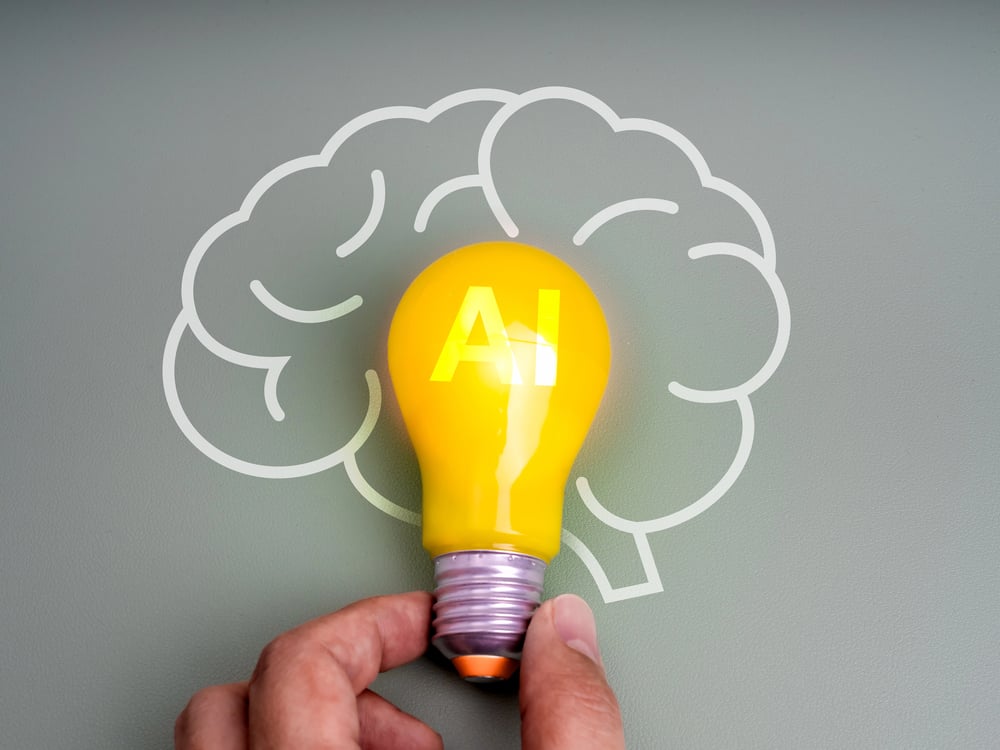
Composable applications, hyperautomation and generative artificial intelligence have been highlighted as some of the most important strategic technology trends for CIOs and IT executives to be aware of in 2022, according to technology research firm Gartner.
“CIOs must find the IT force multipliers to enable growth and innovation, and create scalable, resilient technical foundations whose scalability will free cash for digital investments. These imperatives form the three themes of this year’s trends: engineering trust, sculpting change and accelerating growth,” said David Groombridge, research vice president at Gartner.
![Featured Resource: Embracing a Transformative Approach to Business-led Integration [Read Now]](https://no-cache.hubspot.com/cta/default/8019034/9919b744-7cf0-4636-8c23-71fd85f681a4.png)
Generative AI
Generative AI is a powerful machine learning technique that can create new, unique content from existing text, audio files or images. Imagine this type of AI put to work creating stock images for specific situations, using the plethora of available images online as guidelines.
This technique could also be applied by technology companies looking to enable a low-code environment, with the AI operating in the background while the user works in a visual platform.
Composable applications
Software providers that have adapted to the changing business circumstances of their clients throughout the coronavirus pandemic have seen their success and customer loyalty increase, and that need for composability system design is now the new normal that businesses expect.
“Composable business principles help organizations master the accelerated change that is essential for business resilience and growth. Without it, modern organizations risk losing their market momentum and customer loyalty,” said Groombridge.
SEE ALSO: Center for Automated Integration
Hyperautomation
Gartner defines hyperautomation as a “business-driven approach to identify, vet and automate as many processes as possible”. Artificial intelligence and other automation tools are becoming more readily available to organizations, alongside steady improvements to the technology’s ease-of-access.
According to a Gartner research study, 37 percent of organizations use AI in the workplace. It’s unclear how many of the 37 percent would fall under Gartner’s “hyperautomation” category.
Data Fabric
Considered a solution to the growing amount of data siloed and the shortage of skilled data and analytics workers, data fabrics are a flexible, integrated solution for viewing data and applications across all platforms.
Through the use of this integrated data architecture, organizations can operate on premise, in the cloud and at the edge, while maintaining centralized control of the network. Gartner says it can reduce data management efforts by 70 percent.
Distributed Enterprise
Another by-product of the pandemic, which was already occurring in some industries, is the rise of remote or hybrid working environments. Even as some organizations try to draw their employees back to the office, a lot of others are create the environments to make work from home a real choice.
“This requires CIOs to make major technical and service changes to deliver frictionless work experiences, but there is another side to this coin: the impact on business models,” said Groombridge. “For every organization, from retail to education, their delivery model has to be reconfigured to embrace distributed services. The world didn’t think they’d be trying on clothes in a digital dressing room two years ago.”
This is but a shortlist of Gartner’s full strategic technology trends, more are available on the company’s pressroom.

 Best Practices for Deploying and Scaling Industrial AIArtificial Intelligence (AI) is transforming industrial operations, helping organizations optimize workflows, reduce downtime, and enhance productivity. Different industry verticals leverage AI in unique ways.Link to The Center for Adaptive Edge Intelligence
 The Center for Adaptive Edge IntelligenceAdaptive edge intelligence brings real-time decision-making to the point of data creation, whether from sensors, machines, or cameras.Link to The Value of Vehicle Electrification
 The Value of Vehicle ElectrificationElectric vehicles (EVs) present automakers with many design, engineering, and manufactu ring challenges.Link to Accelerating Manufacturing Digital Transformation with Industrial Connectivity and IoT
 Accelerating Manufacturing Digital Transformation with Industrial Connectivity and IoTDigital transformation is empowering industrial organizations to deliver sustainable innovation, disruption-proof products and services, and continuous operational improvement.Link to Smart Manufacturing for Automotive
 Smart Manufacturing for AutomotiveLeading a transportation revolution in autonomous, electric, shared mobility and connectivity with the next generation of design and development tools.Link to Center for Data Pipeline Automation
 Center for Data Pipeline AutomationAs businesses become data-driven and rely more heavily on analytics to operate, getting high-quality, trusted data to the right data user at the right time is essential.Link to Center for Automated Integration
 Center for Automated IntegrationThe goal of automated integration is to enable applications and systems that were built separately to easily share data and work together, resulting in new capabilities and efficiencies that cut costs, uncover insights, and much more.Link to Continuous Intelligence: Insights
 Continuous Intelligence: InsightsDigital transformation requires continuous intelligence (CI). Today’s digital businesses are leveraging this new category of software which includes real-time analytics and insights from a single, cloud-native platform across multiple use cases to speed decision-making, and drive world-class customer experiences.