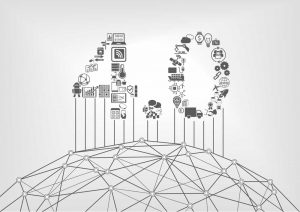
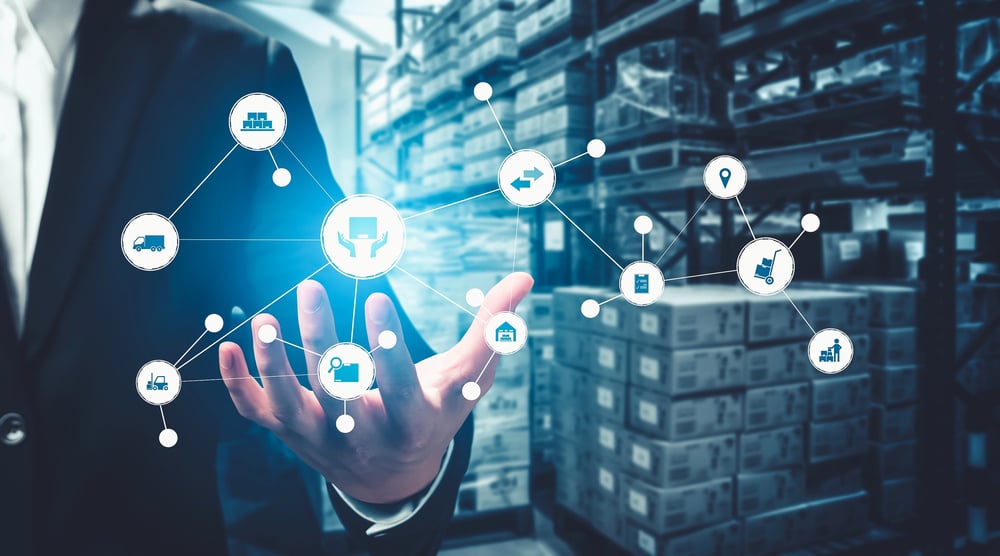
With manufacturing, energy, utilities, and supply chain applications rapidly adopting the industrial internet of things (IIoT), a new reality for these industries is on the way. IIoT provides the type of data enterprises need to manage thousands of moving parts and reduce risk to human life. Having embraced IIoT, what does Industry 4.0 bring to the table?
With Industry 4.0’s
input, IIoT will evolve from a collection of wireless devices to a full-scale,
artificial intelligence/edge-driven solution to some of the biggest enterprise
problems. Here’s how this could play out.
See also: 3 Major Challenges in Adopting Industrial Internet of Things (IIoT)
The Basic Definitions
Before we get into
specifics, let’s take a look at what these two things are.
- Industrial
IoT: Distinguished from the
interconnected system of consumer devices, IIoT is interconnected commercial
devices now found in everything from factory floor machines to field monitors
in massive agriculture.
- Industry
4.0: Big data-driven advances in
software, frameworks, and solutions marking the new AI-enabled industry of
today.
Industry 4.0 doesn’t
work without IIoT, and without the framework of Industrial 4.0, IIoT is little
more than massively disparate sensors. Together, these two related concepts
change the face of industry.
IIoT enables Industry 4.0
IIoT distinguishes this
industrial revolution from those in the past. This great leap of interconnected
devices and sensors streamlines production and maintenance. IIoT enables
automation on a scale previously unseen, with devices connected to a central
server and sending data for processing. They enable smart factories, connected
supply chains, easier energy maintenance, and computing closer to the edge.
It’s artificial
intelligence that makes monitoring IIoT even possible. In this way, IIoT and
Industrial 4.0 enable each other. Industrial 4.0 provides a logical framework
for processing and governance, while IIoT realizes 4.0’s dreams of a
streamlined, automated system of operation.
Many industries have already jumped in with IIoT, and now, they must adopt 4.0’s commitment to data-driven digital transformation. It provides the framework for these interconnected systems, creating not just connected factories, for example, but smart ones.
There are still challenges
Industry 4.0 does bring
its share of challenges. Governance and security are key issues with the
proliferation of big data. More and more interconnected devices introduce new
strain on systems and potential weaknesses to be exploited.
There are management
issues as well. Gathering data with no real ingestion pipeline could create a
lot of noise instead of insight. Despite all these challenges, however,
Industry 4.0’s commitment to security first architecture and real-time data,
companies taking the leap into the new world will find solutions that enable
the interconnected automation they need.
IIoT is merely a hub of
sensors without the intelligent framework Industrial 4.0 brings to the table.
And without IIoT, 4.0 remains a simple dream. Now, they can usher in a bold
future for industry with revolutionary solutions.

 Best Practices for Deploying and Scaling Industrial AIArtificial Intelligence (AI) is transforming industrial operations, helping organizations optimize workflows, reduce downtime, and enhance productivity. Different industry verticals leverage AI in unique ways.Link to The Center for Adaptive Edge Intelligence
 The Center for Adaptive Edge IntelligenceAdaptive edge intelligence brings real-time decision-making to the point of data creation, whether from sensors, machines, or cameras.Link to The Value of Vehicle Electrification
 The Value of Vehicle ElectrificationElectric vehicles (EVs) present automakers with many design, engineering, and manufactu ring challenges.Link to Accelerating Manufacturing Digital Transformation with Industrial Connectivity and IoT
 Accelerating Manufacturing Digital Transformation with Industrial Connectivity and IoTDigital transformation is empowering industrial organizations to deliver sustainable innovation, disruption-proof products and services, and continuous operational improvement.Link to Smart Manufacturing for Automotive
 Smart Manufacturing for AutomotiveLeading a transportation revolution in autonomous, electric, shared mobility and connectivity with the next generation of design and development tools.Link to Center for Data Pipeline Automation
 Center for Data Pipeline AutomationAs businesses become data-driven and rely more heavily on analytics to operate, getting high-quality, trusted data to the right data user at the right time is essential.Link to Center for Automated Integration
 Center for Automated IntegrationThe goal of automated integration is to enable applications and systems that were built separately to easily share data and work together, resulting in new capabilities and efficiencies that cut costs, uncover insights, and much more.Link to Continuous Intelligence: Insights
 Continuous Intelligence: InsightsDigital transformation requires continuous intelligence (CI). Today’s digital businesses are leveraging this new category of software which includes real-time analytics and insights from a single, cloud-native platform across multiple use cases to speed decision-making, and drive world-class customer experiences.