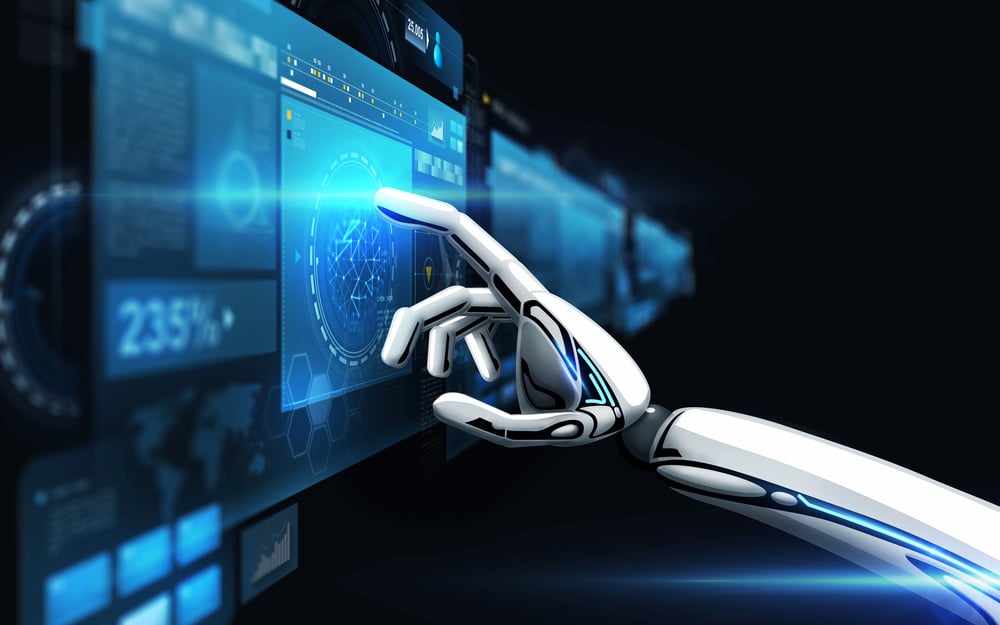
What does it take to deliver services in the real-time digital era? It requires new ways of digital transformation involving the deployments of robots as well as asset-management strategies.
First, there’s the robots, which are changing the face of customer service, as reported in the Harvard Business Review. “Thanks to the Covid-19 pandemic, service robot technology has been on the rise in the past few years,” relate Alicia Grandey and Kayley Morris, the report’s authors. Robots like Hilton’s ‘Connie’ and Softbank’s ‘Pepper’ are already handling guest experiences in hotels, restaurants, and shops around the world. Self-service automated kiosks are here to stay, and robots are the future of customer service.”
The potential gains from robotic service won’t be realized just by throwing robots into the organization just for the glitz. “Otherwise customers — and human coworkers — will avoid interacting with them,” Grandey and Morris caution.
In addition, there are other challenges today’s services organizations face. “Service organizations face many issues that increase the cost of providing services and limit gains in productivity,” a new survey report from ServiceMax states. These center mainly around the inefficient use of people and parts and the organization’s inability to perform the following activities:
- “Incorporate preventive maintenance programs and tools effectively to resolve problems and issues before they escalate.
- “Enable customers to manage and view service information to support self-service initiatives.
- “Remotely triage and resolve situations prior to technician dispatch.
- “Have a clear line of sight into critical asset and entitlement data to ensure the best path of resolution.
- “Ensure the best-fit technician with the right skills and parts is available and selected for work.
- “Ensure technicians have up-to-date information, knowledge, and resolution tools.
- Ensure technicians and other service workers can effectively capture necessary information to reduce time-consuming and error-filled paperwork.”
See also: How Data Will Dictate What’s Next in the Streaming World
New and evolving technologies such as artificial intelligence and machine learning, connected assets and the Internet of Things, and cloud computing have been incorporated into the digital transformation toolkit,” relates Sumair Dutta, VP of product marketing at ServiceMax. This provides a “greater ability to better leverage data, improve workflows, enable agile responses to market changes, improve data-driven decision making, and reveal new business opportunities.”
Four key benefits of digitization Include ‘minimized service costs and increased productivity
Increased revenue, Improved customer experience and retention, Improved asset lifetime value and performance.”
Digitization assists the service team by “ensuring that the work being done is being validated against warranty or contractual commitments,” the survey report states. It also facilitates “accurate and timely billing of transactional (time and material) work.” In addition, digitization provides “service team members with access to relevant installed base data to proactively recommend solutions to customers.”
In addition, IoT solutions have become “an integral part of an asset-centric strategy as they directly connect to the cloud, assisting in the maintenance and parts optimization by surfacing data on the status of devices. Issues are identified as they occur and are addressed as needed. This allows service organizations to minimize unnecessary site visits and parts replacements, right-size their maintenance work, lower costs, and extend the life of these assets. By pairing these solutions with digital tools, many organizations have found that the goal of achieving zero unplanned customer downtime becomes attainable.”

 Best Practices for Deploying and Scaling Industrial AIArtificial Intelligence (AI) is transforming industrial operations, helping organizations optimize workflows, reduce downtime, and enhance productivity. Different industry verticals leverage AI in unique ways.Link to The Center for Adaptive Edge Intelligence
 The Center for Adaptive Edge IntelligenceAdaptive edge intelligence brings real-time decision-making to the point of data creation, whether from sensors, machines, or cameras.Link to The Value of Vehicle Electrification
 The Value of Vehicle ElectrificationElectric vehicles (EVs) present automakers with many design, engineering, and manufactu ring challenges.Link to Accelerating Manufacturing Digital Transformation with Industrial Connectivity and IoT
 Accelerating Manufacturing Digital Transformation with Industrial Connectivity and IoTDigital transformation is empowering industrial organizations to deliver sustainable innovation, disruption-proof products and services, and continuous operational improvement.Link to Smart Manufacturing for Automotive
 Smart Manufacturing for AutomotiveLeading a transportation revolution in autonomous, electric, shared mobility and connectivity with the next generation of design and development tools.Link to Center for Data Pipeline Automation
 Center for Data Pipeline AutomationAs businesses become data-driven and rely more heavily on analytics to operate, getting high-quality, trusted data to the right data user at the right time is essential.Link to Center for Automated Integration
 Center for Automated IntegrationThe goal of automated integration is to enable applications and systems that were built separately to easily share data and work together, resulting in new capabilities and efficiencies that cut costs, uncover insights, and much more.Link to Continuous Intelligence: Insights
 Continuous Intelligence: InsightsDigital transformation requires continuous intelligence (CI). Today’s digital businesses are leveraging this new category of software which includes real-time analytics and insights from a single, cloud-native platform across multiple use cases to speed decision-making, and drive world-class customer experiences.