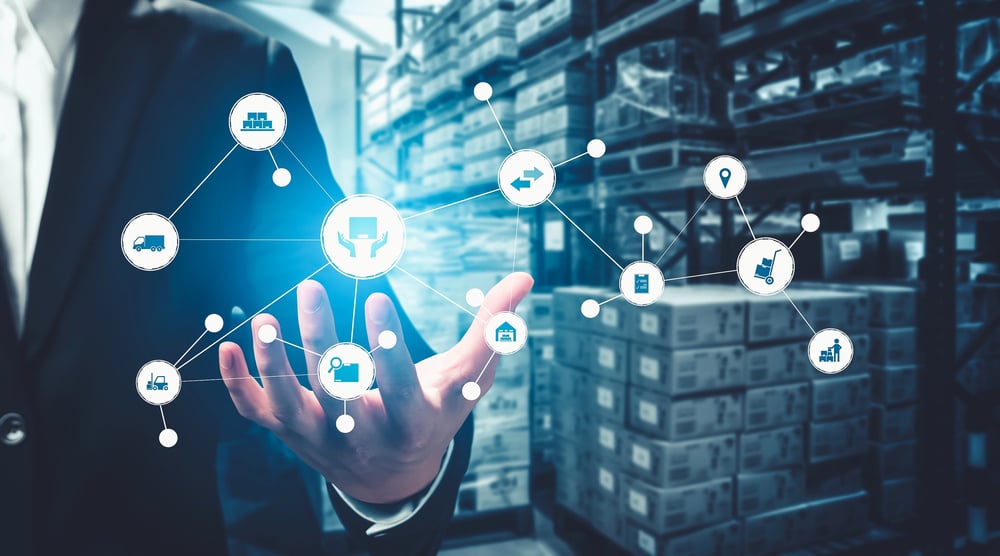
The new Azure offering gives a virtual representation of a physical environment expanding access to AI, Cloud and IoT technologies to every company.
At a recent Ignite conference, Microsoft announced the launch of their newest platform, Azure Digital Twins. It offers a virtual representation of a physical environment and expands access to AI, Cloud and IoT technologies to companies of all sizes. The company’s research has identified a growing demand for solutions that provide a deeper understanding of interactions between people, places and things.
Microsoft’s Digital Twins
Microsoft created its own version of digital twins which represent physical environment using data from many sources. While industrial equipment has used digital twins for quite some time, the company believes they offer other applications, like modeling how we live and work to:
- Improve both public and private spaces
- Increase efficiencies
- Provide new opportunities
See also: Snowflake lets you share data across Azure and AWS
The public can now preview Azure Digital Twins, which will become part of the Azure IoT platform. The platform allows users to query data in the context of a space rather than from sensors. Users can then build repeatable and scalable experiences combine data from digital sources and the physical world.
Once the digital model has been created, Azure IoT Hub connects the devices that sync with the physical world. This connection helps users build IoT solutions for predictive maintenance, analyze energy needs, optimize available space, and more.
Key Features of Digital Twins
According to Microsoft, key features include:
- Spatial intelligence graph. An actual virtual representation of a physical environment that models the relationships among people, places, and devices. This digital twin generates insights that allow organizations to build solutions that can improve energy efficiency, space utilization, occupant experience, and more. It includes blob storage — the ability to attach and store maps, documents, manuals, pictures — as metadata to the spaces, people, and devices represented in the graph.
- Twin object models. The service also offers pre-defined schema and device protocols aligned to a solution’s domain-specific needs to accelerate and simplify their creation. These benefits can apply to any interior or exterior space, as well as to infrastructure or even entire cities.
- Advanced compute capabilities. Users can define functions that generate notifications or events based on telemetry from devices and sensors. This powerful capability has many uses. Conference rooms can detect the start of a PowerPoint presentation and adjust lights. When the meeting ends, lights turn off and temperatures adjust.
- Data isolation via multi- and nested-tenancy capabilities. Users can build solutions that scale and securely replicate across multiple tenants and sub-tenants by leveraging built-in multi- and nested-tenancy capabilities to isolate data.
- Security through access control and Azure Active Directory (AAD). Role-Based Access Control and Azure Active Directory serve as automated gatekeepers for people or devices. They specify allowable actions and help ensure security, data privacy, and compliance.
- Integration with Microsoft services. Customers and partners can build out their solution by connecting Azure Digital Twins to the broader set of Azure analytics, AI, and storage services, as well as Azure Maps, Azure High-Performance Computing, Microsoft Mixed Reality, Dynamics 365, and Office 365.
Azure Digital Twins will be available for customers on October 15, 2018.
Sue Walsh is News Writer for RTInsights, and a freelance writer and social media manager living in New York City. Her specialties include tech, security and e-commerce. You can follow her on Twitter at @girlfridaygeek.

 Best Practices for Deploying and Scaling Industrial AIArtificial Intelligence (AI) is transforming industrial operations, helping organizations optimize workflows, reduce downtime, and enhance productivity. Different industry verticals leverage AI in unique ways.Link to The Center for Adaptive Edge Intelligence
 The Center for Adaptive Edge IntelligenceAdaptive edge intelligence brings real-time decision-making to the point of data creation, whether from sensors, machines, or cameras.Link to The Value of Vehicle Electrification
 The Value of Vehicle ElectrificationElectric vehicles (EVs) present automakers with many design, engineering, and manufactu ring challenges.Link to Accelerating Manufacturing Digital Transformation with Industrial Connectivity and IoT
 Accelerating Manufacturing Digital Transformation with Industrial Connectivity and IoTDigital transformation is empowering industrial organizations to deliver sustainable innovation, disruption-proof products and services, and continuous operational improvement.Link to Smart Manufacturing for Automotive
 Smart Manufacturing for AutomotiveLeading a transportation revolution in autonomous, electric, shared mobility and connectivity with the next generation of design and development tools.Link to Center for Data Pipeline Automation
 Center for Data Pipeline AutomationAs businesses become data-driven and rely more heavily on analytics to operate, getting high-quality, trusted data to the right data user at the right time is essential.Link to Center for Automated Integration
 Center for Automated IntegrationThe goal of automated integration is to enable applications and systems that were built separately to easily share data and work together, resulting in new capabilities and efficiencies that cut costs, uncover insights, and much more.Link to Continuous Intelligence: Insights
 Continuous Intelligence: InsightsDigital transformation requires continuous intelligence (CI). Today’s digital businesses are leveraging this new category of software which includes real-time analytics and insights from a single, cloud-native platform across multiple use cases to speed decision-making, and drive world-class customer experiences.