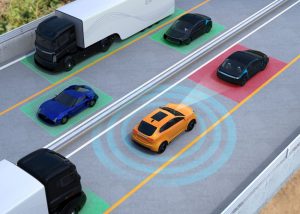
The New Jersey Department of Transportation will partner with Rutgers University to develop a testing ground for new ways to study mobility. The partnership will expand data gathering, analysis, and sharing for mobility, a vital metric for traffic monitoring and intelligent city planning.
Using the latest generation
sensor
New Brunswick, New Jersey, will see the
installation of several lidar sensors at multiple intersections. These sensors
monitor traffic data, sending real-time analytics to help planners ease traffic
congestion, reduce traffic incidents, and improve flow.
It’s not the first time cities have utilized
IoT to pursue more efficient and safer cities. Still, this partnership marks
another step in leveraging new technology such as machine learning and IoT
sensors to create a realistic picture of what happens with mobility.
See also: The Killer App for Autonomous Cars: Airport Parking
Sensors use 3D mapping
The purpose of installing lidar sensors is to
create 3D maps of traffic flow in real-time. As traffic patterns change, these
maps provide highly accurate models with no lag or setbacks. New Brunswick
joins several other cities in using this technology and hopes to protect people
even as cities grow.
Municipalities should be able to pivot traffic
strategies based on the latest data. As these initiatives prove successful,
they could make it much easier for cities to adopt smart strategies to manage
internal mobility.
Lidar sensors read pulsed light waves,
creating dynamic data that goes beyond traditional radar or video methods.
These sensors convert data into information about trajectory and might shed
more light on why certain backups occur, for example, or the reason behind
certain intersections experiencing more incidents.
Building safer cities
AI-powered traffic monitoring could unlock smarter ways to plan infrastructure and reconfigure outdated models for cities experiencing growth. It could also bring these capabilities to smaller cities with fewer resources, helping transform the concept of a smart city from a dream to a reality.
The partnership will work through Rutger’s
Center for Advanced Infrastructure and Transportation. From there, the city and
the university will monitor the data to launch new initiatives to improve
traffic and protect vulnerable citizens.

 Best Practices for Deploying and Scaling Industrial AIArtificial Intelligence (AI) is transforming industrial operations, helping organizations optimize workflows, reduce downtime, and enhance productivity. Different industry verticals leverage AI in unique ways.Link to The Center for Adaptive Edge Intelligence
 The Center for Adaptive Edge IntelligenceAdaptive edge intelligence brings real-time decision-making to the point of data creation, whether from sensors, machines, or cameras.Link to The Value of Vehicle Electrification
 The Value of Vehicle ElectrificationElectric vehicles (EVs) present automakers with many design, engineering, and manufactu ring challenges.Link to Accelerating Manufacturing Digital Transformation with Industrial Connectivity and IoT
 Accelerating Manufacturing Digital Transformation with Industrial Connectivity and IoTDigital transformation is empowering industrial organizations to deliver sustainable innovation, disruption-proof products and services, and continuous operational improvement.Link to Smart Manufacturing for Automotive
 Smart Manufacturing for AutomotiveLeading a transportation revolution in autonomous, electric, shared mobility and connectivity with the next generation of design and development tools.Link to Center for Data Pipeline Automation
 Center for Data Pipeline AutomationAs businesses become data-driven and rely more heavily on analytics to operate, getting high-quality, trusted data to the right data user at the right time is essential.Link to Center for Automated Integration
 Center for Automated IntegrationThe goal of automated integration is to enable applications and systems that were built separately to easily share data and work together, resulting in new capabilities and efficiencies that cut costs, uncover insights, and much more.Link to Continuous Intelligence: Insights
 Continuous Intelligence: InsightsDigital transformation requires continuous intelligence (CI). Today’s digital businesses are leveraging this new category of software which includes real-time analytics and insights from a single, cloud-native platform across multiple use cases to speed decision-making, and drive world-class customer experiences.