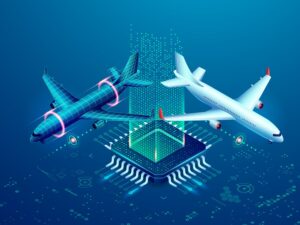
When things go wrong, our instinct is to retrace our process to pinpoint the problem. This process can be slow and frustrating. So, imagine if AI could step in and flag the misstep with data in real time. On the enterprise level, enter digital twins.
As our world becomes increasingly connected, digital twins abstract and model almost everything to improve business operations, reduce risk, and enhance decision-making for better outcomes. They provide greater context to challenges by creating clear relationships and streamlining workflows as a virtual representation of the real world, including physical objects, processes, relationships, and behaviors.
Even though it is a valuable part of the enterprise technology toolkit, digital twins are not a technology per se but a specification for the structure and use of real-time data. But this concept is still relatively new, and as data is moving rapidly, how do we maximize the outcomes and role of digital twins?
See also: Digital Twins Packing a One-Two Punch, Survey Shows
Seeing digital doubles: An introduction
IBM defines digital twins as “a virtual representation of an object or system that spans its lifecycle, is updated from real-time data, and uses simulation, machine learning, and reasoning to help decision-making.” In short, they can connect digital and physical items through data.
According to McKinsey, “by 2025, smart workflows and seamless interactions among humans and machines will likely be as standard as the corporate balance sheet, and most employees will use data to optimize nearly every aspect of their work.” Realistically, that’s only a couple of years away, meaning we have a short time to get this right. Currently, digital twins are helping revolutionize engineering, security, eCommerce, supply chain issues, and manufacturing to ensure better outcomes across industries.
Embrace and enhance
Until recently, digital twins were used to simulating real-world processes rather than interact with the world in real time. Either synthetically generated or previously captured data was run (and rerun) in controlled scenarios. As a design and diagnostic aid in product lifecycle management, digital twins have proven enormously helpful (think NASA engineers during the Apollo 13 mission for the early use of a twin).
But as enterprises increasingly feel the pressure to replace offline batch processing of event data with real-time event processing, digital twins will need to go real time to remain relevant and valuable.
This means moving the digital twin out of legacy databases, and in particular, graph databases, and into systems capable of processing potentially vast amounts of data, usually arriving via data pipeline software like Apache Kafka or Spark, the instant it arrives. Such systems, often termed streaming databases or streaming graphs, have evolved in recent years and combine the complex event processing capabilities of Flink and ksqlDB with the powerful data structures popularized by Neo4J, a traditional graph database.
Going real time, in this case, means more than just processing data as it streams in, though. For digital twins to be truly useful, they must be able to drive actions — for example, issue alerts or power down equipment — the instant an issue emerges, perhaps even beforehand.
See also: Report: Demand for Digital Twins Growing
Keep your twin up
New streaming graph systems have evolved to embed query logic and compute resources in line with data flows. They act like nets stretched across the data stream to capture interesting patterns as they race past and trigger workflows where instant matches occur.
If our goal is to streamline and make our data processing more precise, digital twins need to be graph and real time. The best way to do this is by embracing and engaging with streaming graph, which combines event stream processing with the ability to query graph data. The volume of events being handled in the physical world must be translated into tangible and usable data. By making digital twins real time and graph, we can take the training wheels off this area of AI/ML and allow it to run at its highest potential for maximum business impact.

 Best Practices for Deploying and Scaling Industrial AIArtificial Intelligence (AI) is transforming industrial operations, helping organizations optimize workflows, reduce downtime, and enhance productivity. Different industry verticals leverage AI in unique ways.Link to The Center for Adaptive Edge Intelligence
 The Center for Adaptive Edge IntelligenceAdaptive edge intelligence brings real-time decision-making to the point of data creation, whether from sensors, machines, or cameras.Link to The Value of Vehicle Electrification
 The Value of Vehicle ElectrificationElectric vehicles (EVs) present automakers with many design, engineering, and manufactu ring challenges.Link to Accelerating Manufacturing Digital Transformation with Industrial Connectivity and IoT
 Accelerating Manufacturing Digital Transformation with Industrial Connectivity and IoTDigital transformation is empowering industrial organizations to deliver sustainable innovation, disruption-proof products and services, and continuous operational improvement.Link to Smart Manufacturing for Automotive
 Smart Manufacturing for AutomotiveLeading a transportation revolution in autonomous, electric, shared mobility and connectivity with the next generation of design and development tools.Link to Center for Data Pipeline Automation
 Center for Data Pipeline AutomationAs businesses become data-driven and rely more heavily on analytics to operate, getting high-quality, trusted data to the right data user at the right time is essential.Link to Center for Automated Integration
 Center for Automated IntegrationThe goal of automated integration is to enable applications and systems that were built separately to easily share data and work together, resulting in new capabilities and efficiencies that cut costs, uncover insights, and much more.Link to Continuous Intelligence: Insights
 Continuous Intelligence: InsightsDigital transformation requires continuous intelligence (CI). Today’s digital businesses are leveraging this new category of software which includes real-time analytics and insights from a single, cloud-native platform across multiple use cases to speed decision-making, and drive world-class customer experiences.