The past year has seen unprecedented stresses on supply chains. Currently, a worldwide semiconductor shortage a spillover from the Covid-19 crisis is affecting the automotive industry, as cars these days are actually computers on wheels. Rental-car companies are struggling to meet demand, and auto dealers are working with lots that are half-empty, and even bringing used cars to occupy gaps within their showrooms.
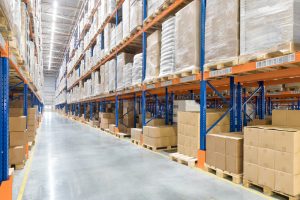
Of course, company every industry has to understand what products are in the pipeline and what’s available. Crucial to this understanding is what inventory exists at a given moment within their warehouses. While some advanced tech companies such as Amazon have mastered the art of automating and digitizing its warehouse operations, most companies still rely on a mix of digital and manual methods to keep tabs on inventory. There’s a direct, and immediate impact on the business. Inventory management is a tricky thing; too much means money is being spent without incoming revenues; too little means customer demand is not being met. At the same time, many retailers have been shifting to same-day delivery to meet customer demand. We have the technology; analytics and warehouse visibility systems can provide a peek into inventory levels.
See also: Covid Lessons Learned: Focus on Real-Time Supply Chains
However, real-time views of what’s going on in warehouses are still elusive, a recent survey of 2,500 supply chain executives by Longbow finds. Nearly 70% said they need better visibility into their procurement functions of their warehouse, followed by production and labor (65%), and fulfillment (37%). Over the next two years, most (72%) said they will be focused on aligning traditional strategies for supply chains with digital and analytics solutions. Sixty-four percent said they’ll be focused on defining an advanced supply chain systems strategy.
At the same time, applications of advanced analytics – namely, artificial intelligence and machine learning – are still a ways off in the future, a separate study shows. Data released by the American Center for Productivity and Quality, finds only 13% of executives foresee a major impact from artificial intelligence or cognitive computing over the coming year. Another 17% predict a moderate impact.
While AI may not be a reality today, it’s important to work toward advanced analytics to achieve greater visibility. Both businesses and consumers can benefit from “true real-time tracking that extends visibility seamlessly from order through delivery,” writes Dennis Moon in Supply & Demand Chain Executive. “Real-time visibility helps decrease costs, conserve working capital and improve efficiency – all through better understanding and management of supplier performance, warehouse optimization, inventory accuracy, exception control, transportation resource management, delivery velocity, and on-time service.”
Real-time warehouse visibility systems “leverage capabilities embedded in a GPS-enabled mobile app, integrated with a sophisticated software platform for scheduling, directing, and managing a connected network of on-the-go drivers. For the recipient waiting for same-day delivery, it’s an experience not unlike watching your smartphone to monitor the progress of an Uber or Lyft driver on their way to pick you up. All of this foreshadows what will likely be a permanent shift in purchasing behavior – one that favors more online commerce with same-day delivery and accurate real-time visibility. It’s a shift that won’t likely reverse itself once the pandemic finally gives way,”
The warehouse is the most crucial stop along the way, and as the Longbow survey shows, real-time visibility is on corporate agendas, but still a work in progress. “Most supply chains today still have some components and areas that are not connected and the data used is bounded, which hinders the ability of all business involved to understand all the operations completely,” the survey’s authors state. “To stay competitive, modern supply chain managing experts are focusing on better visibility and use of data inside the warehouse, the central point of operations for each supply chain.”

 Best Practices for Deploying and Scaling Industrial AIArtificial Intelligence (AI) is transforming industrial operations, helping organizations optimize workflows, reduce downtime, and enhance productivity. Different industry verticals leverage AI in unique ways.Link to The Center for Adaptive Edge Intelligence
 The Center for Adaptive Edge IntelligenceAdaptive edge intelligence brings real-time decision-making to the point of data creation, whether from sensors, machines, or cameras.Link to The Value of Vehicle Electrification
 The Value of Vehicle ElectrificationElectric vehicles (EVs) present automakers with many design, engineering, and manufactu ring challenges.Link to Accelerating Manufacturing Digital Transformation with Industrial Connectivity and IoT
 Accelerating Manufacturing Digital Transformation with Industrial Connectivity and IoTDigital transformation is empowering industrial organizations to deliver sustainable innovation, disruption-proof products and services, and continuous operational improvement.Link to Smart Manufacturing for Automotive
 Smart Manufacturing for AutomotiveLeading a transportation revolution in autonomous, electric, shared mobility and connectivity with the next generation of design and development tools.Link to Center for Data Pipeline Automation
 Center for Data Pipeline AutomationAs businesses become data-driven and rely more heavily on analytics to operate, getting high-quality, trusted data to the right data user at the right time is essential.Link to Center for Automated Integration
 Center for Automated IntegrationThe goal of automated integration is to enable applications and systems that were built separately to easily share data and work together, resulting in new capabilities and efficiencies that cut costs, uncover insights, and much more.Link to Continuous Intelligence: Insights
 Continuous Intelligence: InsightsDigital transformation requires continuous intelligence (CI). Today’s digital businesses are leveraging this new category of software which includes real-time analytics and insights from a single, cloud-native platform across multiple use cases to speed decision-making, and drive world-class customer experiences.