Best Practices for Deploying and Scaling Industrial AI
Artificial Intelligence (AI) is transforming industrial operations, helping organizations optimize workflows, reduce downtime, and enhance productivity. Different industry verticals leverage AI in unique ways.
Accelerating Manufacturing Digital Transformation with Industrial Connectivity and IoT
Digital transformation is empowering industrial organizations to deliver sustainable innovation, disruption-proof products and services, and continuous operational improvement.
Leading a transportation revolution in autonomous, electric, shared mobility and connectivity with the next generation of design and development tools.
As businesses become data-driven and rely more heavily on analytics to operate, getting high-quality, trusted data to the right data user at the right time is essential.
The goal of automated integration is to enable applications and systems that were built separately to easily share data and work together, resulting in new capabilities and efficiencies that cut costs, uncover insights, and much more.
Digital transformation requires continuous intelligence (CI). Today’s digital businesses are leveraging this new category of software which includes real-time analytics and insights from a single, cloud-native platform across multiple use cases to speed decision-making, and drive world-class customer experiences.
Best Practices for Deploying and Scaling Industrial AI
Artificial Intelligence (AI) is transforming industrial operations, helping organizations optimize workflows, reduce downtime, and enhance productivity. Different industry verticals leverage AI in unique ways.
Accelerating Manufacturing Digital Transformation with Industrial Connectivity and IoT
Digital transformation is empowering industrial organizations to deliver sustainable innovation, disruption-proof products and services, and continuous operational improvement.
Leading a transportation revolution in autonomous, electric, shared mobility and connectivity with the next generation of design and development tools.
As businesses become data-driven and rely more heavily on analytics to operate, getting high-quality, trusted data to the right data user at the right time is essential.
The goal of automated integration is to enable applications and systems that were built separately to easily share data and work together, resulting in new capabilities and efficiencies that cut costs, uncover insights, and much more.
Digital transformation requires continuous intelligence (CI). Today’s digital businesses are leveraging this new category of software which includes real-time analytics and insights from a single, cloud-native platform across multiple use cases to speed decision-making, and drive world-class customer experiences.
Many of the things auto manufacturers are doing today to make their operations smart can help drive additional improvements in the future. While the benefits of digitalization and Industry 4.0 have been discussed for years, there is a growing interest in Industry 5.0.
Industry 5.0 goes beyond Industry 4.0 in that it shifts the focus from economic value towards the broader concept of societal value (e.g., sustainability and reduced energy use) and well-being (e.g., worker safety in complex manufacturing environments that include working with automated systems and robotics).
Building on Industry 4.0
To put Industry 5.0 into perspective, it is worth summarizing the methodologies and goals of Industry 4.0.
To start, Industry 4.0 seeks to bring a high level of digitalization into play for manufacturing. A typical effort includes and integrates a wide range of technologies, including IoT, digital twins, robotics, automation, data sharing, sophisticated analytics, and increasingly using AL and ML.
These technologies aim to increase productivity and efficiencies via virtualization (e.g., digital twins for work cells, production lines, and plants) and automation, reducing the need for human intervention in processes. For such an approach to work, there must be a high level of integration and communication between machines and systems. That allows elements within manufacturing operations to make decisions independently without needing a human operator’s intervention.
Upping the ante with Industry 5.0
Industry 5.0 builds on the technologies of Industry 4.0 but emphasizes the collaboration between humans and machines. Some say its goal is to create a balance between automation and using human insights in operations. In other words, it aims for a best-of-all-worlds environment where mundane tasks are offloaded from workers via automation. But processes and operations are refined and improved in real time, taking advantage of the expertise of the workers on the lines.
To that point, many instances in manufacturing and other industries show how human insights, when combined, can lead to improved results. For example, take the field of modern meteorology. Similar to how manufacturing uses IoT, analytics, modeling, and more, forecasts are based on collecting vast amounts of weather data from around the world. That data is ingested into sophisticated models that produce forecasts.
Many industries involved in aviation, transportation, logistics, events planning, and more base their operations on those forecasts. But those who seek a competitive edge hire their own meteorologists who work with the model outputs and refine the forecasts. In some cases, meteorologists may fine-tune a forecast based on knowledge about a specific region. In other cases, they may know certain things the model does well or misses and refine a forecast based on those insights.
Skilled auto manufacturing workers could do similar things using their expertise to amplify the benefits of a plant’s automation.
Additionally, Industry 5.0 takes things to a new level with respect to sustainability, emphasizing social and environmental responsibility in manufacturing.
In today’s marketplace, regulatory agencies, shareholders, and customers have sustainability mandates and desires. Auto manufacturers adopting smart manufacturing strategies and implementing appropriate technologies can address these issues AND, at the same time, improve their operations, increase revenues, cut costs, and more.
To do that, a manufacturer must address sustainability in a coordinated, integrated, and formal manner rather than in an uncoordinated ad hoc manner, which is quite common. So, rather than focusing on the sustainability aspects of one element of operations (e.g., waste reduction in production, fuel economy of a vehicle, etc.), there needs to be end-to-end scenario planning and strategic analysis.
Once the right strategy is set, that’s where smart technologies come in. A smart manufacturer can collect relevant data to measure sustainability-related parameters. The data can be aggregated, analyzed, shared, and reported to all stakeholders.
The critical information provided in this manner helps establish a baseline and can be used to identify areas for improvement. Such an approach is exactly the same game plan auto manufacturers followed in their initial digitalization and Industry 4.0 projects. In both cases (i.e., the shift in focus to sustainability and digitalization of operations), a manufacturer starting down the sustainability pathway can use the information to identify use cases and scenarios that deliver the greatest impact and then prioritize those things.
When Industry 5.0 is brought up, much of the focus is on sustainability. But the goals and what can be done with Industry 5.0 go far beyond that. As noted above, one aspect where Industry 5.0 is expected to play a major role is improving workers’ well-being.
A prime example is addressing worker safety in complex manufacturing environments, including working with automated systems and robotics.
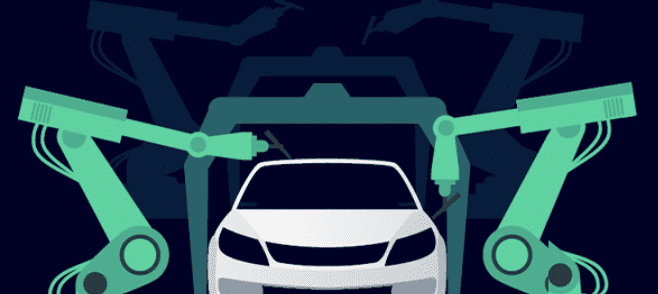
For years, auto manufacturers have used robots on production lines to perform repetitive work. Some robots do dangerous work, and others carry out tasks that would be physically exhausting to a human operator.
When looking at robotics from an Industry 4.0 perspective, the focus is on operational efficiency. Digital twins of robotics systems would ensure smooth operations in the context of the entire work cell or production line. Simulations would also help ensure safe operating conditions.
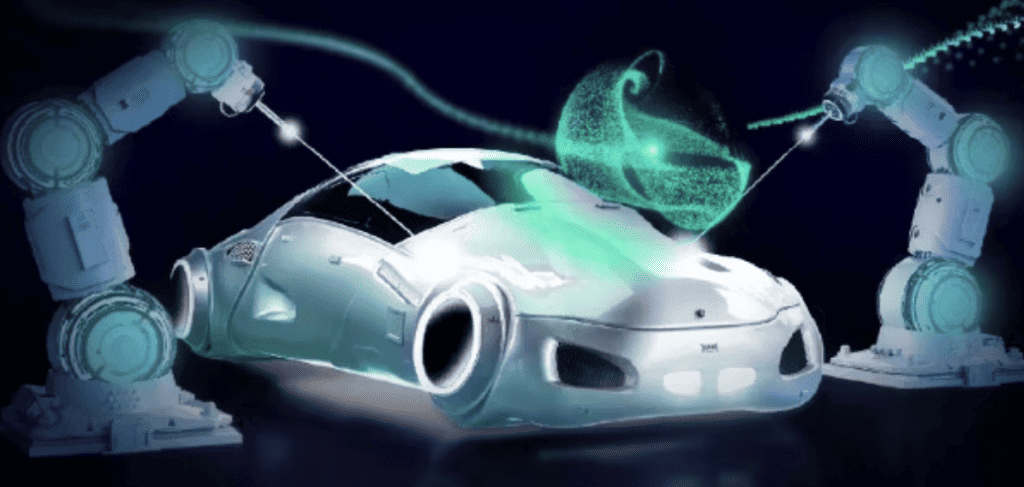
Industry 5.0 extends such work to seek ways for robotic systems to work collaboratively with human workers. So, rather than having a robotic system with limited functionality or fenced off for safety, Industry 5.0 would look for ways for a robotic system and humans to work together. Such cobots, as some call them, would amplify the benefits of a robotic system by imparting the operational knowledge of the human worker into processes.
The automotive industry is facing unprecedented challenges, with rapid change and intense pressure to meet the demands of climate change, regulations, and consumers. Download Now
Discover how automakers can transform their business with Smart Manufacturing solutions using state-of-the-art hardware and software to modernize production lines. Watch Now
Salvatore Salamone is a physicist by training who writes about science and information technology. During his career, he has been a senior or executive editor at many industry-leading publications including High Technology, Network World, Byte Magazine, Data Communications, LAN Times, InternetWeek, Bio-IT World, and Lightwave, The Journal of Fiber Optics. He also is the author of three business technology books.
As the pace and complexity of operations accelerate, organizations are rethinking architectures to enable real-time, human-in-the-loop decision-making.
The edge is where it all happens. It is where innovation is created and where it is delivered. SQL Server workloads must therefore be just as resilient and highly available there as they are in the cloud or in a traditional data center.
NVIDIA launched NVIDIA Nemotron 3 Super, a 120 billion parameter open model with 12 billion active parameters designed to run complex agentic AI systems at scale.
As the pace and complexity of operations accelerate, organizations are rethinking architectures to enable real-time, human-in-the-loop decision-making.
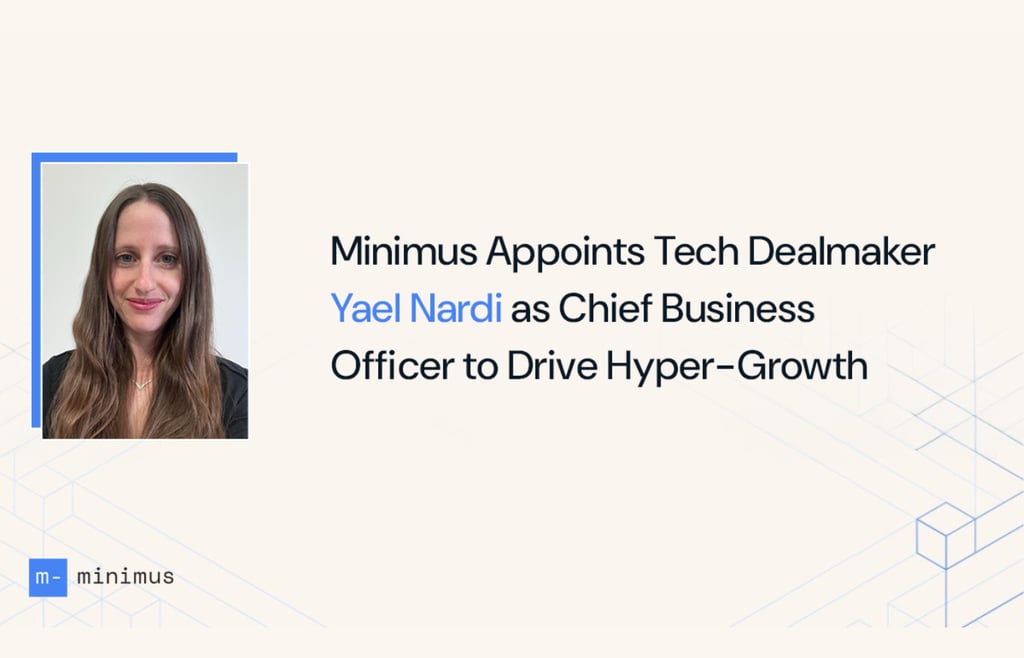
Minimus, a leading provider of hardened container images and secure container images designed to eliminate CVE risk, today announced the appointment of Yael Nardi as Chief Business Officer (CBO). In this newly created role, Nardi will architect the company’s next phase of scale, overseeing a high-velocity top-of-funnel growth strategy, strategic operations, and future corporate development.
Analysis and market insights on real-time analytics including Big Data, the IoT, and cognitive computing. Business use cases and technologies are discussed.
Advertiser Disclosure: Some of the products that appear on
this site are from companies from which TechnologyAdvice
receives compensation. This compensation may impact how and
where products appear on this site including, for example,
the order in which they appear. TechnologyAdvice does not
include all companies or all types of products available in
the marketplace.

 Best Practices for Deploying and Scaling Industrial AIArtificial Intelligence (AI) is transforming industrial operations, helping organizations optimize workflows, reduce downtime, and enhance productivity. Different industry verticals leverage AI in unique ways.Link to The Center for Adaptive Edge Intelligence
 The Center for Adaptive Edge IntelligenceAdaptive edge intelligence brings real-time decision-making to the point of data creation, whether from sensors, machines, or cameras.Link to The Value of Vehicle Electrification
 The Value of Vehicle ElectrificationElectric vehicles (EVs) present automakers with many design, engineering, and manufactu ring challenges.Link to Accelerating Manufacturing Digital Transformation with Industrial Connectivity and IoT
 Accelerating Manufacturing Digital Transformation with Industrial Connectivity and IoTDigital transformation is empowering industrial organizations to deliver sustainable innovation, disruption-proof products and services, and continuous operational improvement.Link to Smart Manufacturing for Automotive
 Smart Manufacturing for AutomotiveLeading a transportation revolution in autonomous, electric, shared mobility and connectivity with the next generation of design and development tools.Link to Center for Data Pipeline Automation
 Center for Data Pipeline AutomationAs businesses become data-driven and rely more heavily on analytics to operate, getting high-quality, trusted data to the right data user at the right time is essential.Link to Center for Automated Integration
 Center for Automated IntegrationThe goal of automated integration is to enable applications and systems that were built separately to easily share data and work together, resulting in new capabilities and efficiencies that cut costs, uncover insights, and much more.Link to Continuous Intelligence: Insights
 Continuous Intelligence: InsightsDigital transformation requires continuous intelligence (CI). Today’s digital businesses are leveraging this new category of software which includes real-time analytics and insights from a single, cloud-native platform across multiple use cases to speed decision-making, and drive world-class customer experiences.