Best Practices for Deploying and Scaling Industrial AI
Artificial Intelligence (AI) is transforming industrial operations, helping organizations optimize workflows, reduce downtime, and enhance productivity. Different industry verticals leverage AI in unique ways.
Accelerating Manufacturing Digital Transformation with Industrial Connectivity and IoT
Digital transformation is empowering industrial organizations to deliver sustainable innovation, disruption-proof products and services, and continuous operational improvement.
Leading a transportation revolution in autonomous, electric, shared mobility and connectivity with the next generation of design and development tools.
As businesses become data-driven and rely more heavily on analytics to operate, getting high-quality, trusted data to the right data user at the right time is essential.
The goal of automated integration is to enable applications and systems that were built separately to easily share data and work together, resulting in new capabilities and efficiencies that cut costs, uncover insights, and much more.
Digital transformation requires continuous intelligence (CI). Today’s digital businesses are leveraging this new category of software which includes real-time analytics and insights from a single, cloud-native platform across multiple use cases to speed decision-making, and drive world-class customer experiences.
Best Practices for Deploying and Scaling Industrial AI
Artificial Intelligence (AI) is transforming industrial operations, helping organizations optimize workflows, reduce downtime, and enhance productivity. Different industry verticals leverage AI in unique ways.
Accelerating Manufacturing Digital Transformation with Industrial Connectivity and IoT
Digital transformation is empowering industrial organizations to deliver sustainable innovation, disruption-proof products and services, and continuous operational improvement.
Leading a transportation revolution in autonomous, electric, shared mobility and connectivity with the next generation of design and development tools.
As businesses become data-driven and rely more heavily on analytics to operate, getting high-quality, trusted data to the right data user at the right time is essential.
The goal of automated integration is to enable applications and systems that were built separately to easily share data and work together, resulting in new capabilities and efficiencies that cut costs, uncover insights, and much more.
Digital transformation requires continuous intelligence (CI). Today’s digital businesses are leveraging this new category of software which includes real-time analytics and insights from a single, cloud-native platform across multiple use cases to speed decision-making, and drive world-class customer experiences.
The
importance of workforce and talent strategies for Industry 4.0 success were recently highlighted by executives
from Porsche, Schneider Electric, HP, and others during the Industry 4.0 conference in Tel Aviv.
Faced
with the complicated technology requirements of Industry 4.0 – which is “the
digitization of physical assets and connectivity between networks of producers
and partners” – organizations are increasingly embracing open innovation and
tapping external technologies through partnerships and acquisitions instead of
developing them internally.
Companies are also addressing skills gaps in their workforce and trying to adopt more agile practices to mimic startups.
Educating the workforce
HP, for example, has grown its team of data scientists and artificial intelligence and analytics capabilities and has launched training programs to upskill its workforce, said Paul Benning, a Senior Fellow and CTO at HP, during a panel session on talent and open innovation.
Workers
also need to be given more responsibility by managers and encouraged to think
out of the box as part of their training and education, said Barthold Veendaal,
SVP Partnerships at Schneider Electric, during the session. Managers also need
to be prepared if they fail, he added.
To
encourage this shift in education and thinking at Schneider, the company is
embracing more diversity and measuring it as one of its key performance
indicators, he said.
Panelists from left to right: Barthold Veendaal, Paul Benning, Hadar Pode, and moderator Jeff Schwartz. Courtesy: Start-Up Nation Central.
Open innovation
When
it comes to open innovation, managers need to be trained to handle it, Veendaal
continued.
The
difference in corporate and startup cultures requires consideration and
sensitivity, for example. While multinationals are established and can take
longer views of projects, startups don’t have that luxury and need to look at
next week, said panelist Hadar Pode, Director, Porsche Digital Lab Tel Aviv,
which has several partnerships with startups in Israel.
Corporate
managers need to be agile and find ambassadors in management who can shorten
the deadline, she added.
The results
This
change in approach and the rise of open innovation, is expected to bring
together more and better partnerships, said Yariv Lotan, Director of Strategic
Sector Development at Start-Up Nation Central, a non-profit advancing
collaboration with Israeli innovation and one of the conference organizers.
“These
megatrends are enabling collaboration more openly and partnerships with less
boundaries,” he explained, adding that the participation of governments,
universities, investors, and others in the ecosystem is also helping drive
innovation.
The
conference, which was also organized by Deloitte and the venture capital firm
Grove Ventures, attracted several large manufacturers including Ford, Nestle
CPW, and AB inBev, and there were over 200 business meetings that took place
the day before the conference, he noted.
Several
of the companies already have partnerships in Israel, including Nestle’s cereal
unit Nestle CPW, which uses Israel-based Seebo’s industrial AI solutions, and
Swedish bearings manufacturer SKF, which acquired Presenso, a provider of
industrial analytics tools for predictive maintenance, in 2019.
SKF
had been developing a solution internally when Presenso reached out about a
partnership in May 2019, Victoria Van Camp, CTO and President, Innovation and
Business Development in SKF, told RTInsights. After the initial meeting with
Presenso’s team led by CEO and founder Eitan Vesely, SKF realized there was
value beyond Presenso’s solution. Five months later, SKF announced it had
agreed to acquire Presenso and that Presenso would operate as its R&D
center in Israel.
”Presenso
had the right technology, but also the right team,” Van Camp explained.
Lisa Damast is a senior writer and the Head of Marketing at RTInsights.com. She has over 12 years experience in online media as a reporter and marketing manager. Follow her on Twitter @Lisa_Damast
Digital transformation suffers when employees can’t master new solutions quickly enough. Application simulation and AI-based roleplay training can overcome such issues, creating comprehensive preparedness that enables users to master digital workflows and interpersonal interactions.
The industrial sector has always thrived on adaptation. AI, IoT, software-defined systems, and digital twins represent the next stage of that evolution.
As the pace and complexity of operations accelerate, organizations are rethinking architectures to enable real-time, human-in-the-loop decision-making.
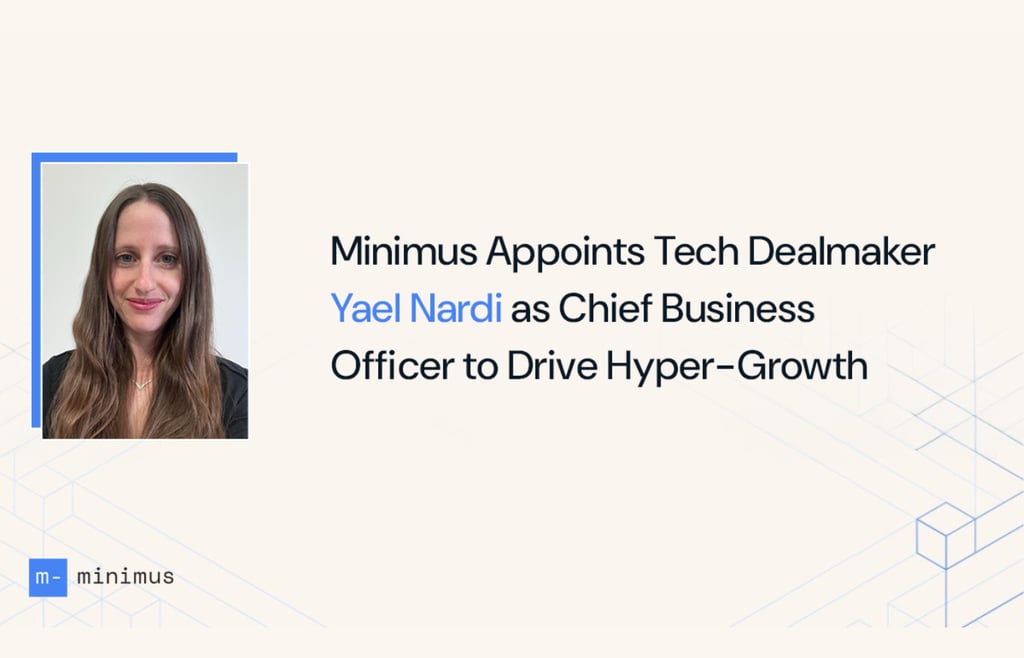
Minimus, a leading provider of hardened container images and secure container images designed to eliminate CVE risk, today announced the appointment of Yael Nardi as Chief Business Officer (CBO). In this newly created role, Nardi will architect the company’s next phase of scale, overseeing a high-velocity top-of-funnel growth strategy, strategic operations, and future corporate development.
Analysis and market insights on real-time analytics including Big Data, the IoT, and cognitive computing. Business use cases and technologies are discussed.
Advertiser Disclosure: Some of the products that appear on
this site are from companies from which TechnologyAdvice
receives compensation. This compensation may impact how and
where products appear on this site including, for example,
the order in which they appear. TechnologyAdvice does not
include all companies or all types of products available in
the marketplace.

 Best Practices for Deploying and Scaling Industrial AIArtificial Intelligence (AI) is transforming industrial operations, helping organizations optimize workflows, reduce downtime, and enhance productivity. Different industry verticals leverage AI in unique ways.Link to The Center for Adaptive Edge Intelligence
 The Center for Adaptive Edge IntelligenceAdaptive edge intelligence brings real-time decision-making to the point of data creation, whether from sensors, machines, or cameras.Link to The Value of Vehicle Electrification
 The Value of Vehicle ElectrificationElectric vehicles (EVs) present automakers with many design, engineering, and manufactu ring challenges.Link to Accelerating Manufacturing Digital Transformation with Industrial Connectivity and IoT
 Accelerating Manufacturing Digital Transformation with Industrial Connectivity and IoTDigital transformation is empowering industrial organizations to deliver sustainable innovation, disruption-proof products and services, and continuous operational improvement.Link to Smart Manufacturing for Automotive
 Smart Manufacturing for AutomotiveLeading a transportation revolution in autonomous, electric, shared mobility and connectivity with the next generation of design and development tools.Link to Center for Data Pipeline Automation
 Center for Data Pipeline AutomationAs businesses become data-driven and rely more heavily on analytics to operate, getting high-quality, trusted data to the right data user at the right time is essential.Link to Center for Automated Integration
 Center for Automated IntegrationThe goal of automated integration is to enable applications and systems that were built separately to easily share data and work together, resulting in new capabilities and efficiencies that cut costs, uncover insights, and much more.Link to Continuous Intelligence: Insights
 Continuous Intelligence: InsightsDigital transformation requires continuous intelligence (CI). Today’s digital businesses are leveraging this new category of software which includes real-time analytics and insights from a single, cloud-native platform across multiple use cases to speed decision-making, and drive world-class customer experiences.