Product and facility testing involving physical objects could soon be rendered unnecessary –thanks to the emergence of digital twins. And digital twin technology is catching on fast.
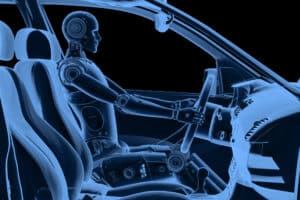
That’s the takeaway from a survey of 2,007 business and IT executives, published by Altair, foresees an end to physical prototyping in the next three to six years, as projected by 67% of respondents. “That means no more crash test dummies,” the survey’s authors suggest.
The survey finds widespread adoption of digital twins across industries, employed in product development, risk assessment, and sustainability. Digital twins are being built through the convergence of simulation technology, high-performance computing, and artificial intelligence.
See also: Digital Twins Now in Use at One in Five Factories, Survey Finds
The study’s authors define digital twin technology as “the process of using data streams to create a digital representation of a real-world asset to improve collaboration, information access, and
decision-making.” Data gleaned from digital twins provides decision-makers “a world of new insight and can help teams work more efficiently to create better products, generate less waste, consume less energy, better assess risk, and so much more.”
Nearly three in four (69%) of executives are leveraging digital twins. At the same time, however, digital twins are new and scene – 71% only began investing in the technology in the past year. Of those organizations not currently using digital twins, half expect their company to adopt the technology within three years.
The survey also suggests a significant internal disconnect exists between upper management and user-level respondents. While 81% of management respondents say their organization is using digital twin technology, only 58% of user-level respondents say this is the case. More than half of respondents overall stated they have limited knowledge about the technology or find it confusing.
Respondents associated a myriad of technologies with digital twin technology, including CAD/CAE, AI, machine learning, and real-time data analysis.
Organizations use digital twin technology for a wide range of functions and reasons, with top use cases including 95% to better inform new product development; 51% to create smart objects; and 50% to monitor real-world objects in real-time.
Respondents reported where they see the greatest impacts of digital twin technology. Seventy-three percent report more accurate risk assessments, faster time to market, and improved customer satisfaction. Likewise, 73% say the technology has made their products or processes more energy-efficient or less wasteful. Another 62% have seen reduced maintenance and warranty costs (62%).
Respondents also believe digital twin technology will reshape the way products are developed in the future, with 36% saying digital twins will speed up product development timelines, and 28% predicting fewer simulations will be needed.

 Best Practices for Deploying and Scaling Industrial AIArtificial Intelligence (AI) is transforming industrial operations, helping organizations optimize workflows, reduce downtime, and enhance productivity. Different industry verticals leverage AI in unique ways.Link to The Center for Adaptive Edge Intelligence
 The Center for Adaptive Edge IntelligenceAdaptive edge intelligence brings real-time decision-making to the point of data creation, whether from sensors, machines, or cameras.Link to The Value of Vehicle Electrification
 The Value of Vehicle ElectrificationElectric vehicles (EVs) present automakers with many design, engineering, and manufactu ring challenges.Link to Accelerating Manufacturing Digital Transformation with Industrial Connectivity and IoT
 Accelerating Manufacturing Digital Transformation with Industrial Connectivity and IoTDigital transformation is empowering industrial organizations to deliver sustainable innovation, disruption-proof products and services, and continuous operational improvement.Link to Smart Manufacturing for Automotive
 Smart Manufacturing for AutomotiveLeading a transportation revolution in autonomous, electric, shared mobility and connectivity with the next generation of design and development tools.Link to Center for Data Pipeline Automation
 Center for Data Pipeline AutomationAs businesses become data-driven and rely more heavily on analytics to operate, getting high-quality, trusted data to the right data user at the right time is essential.Link to Center for Automated Integration
 Center for Automated IntegrationThe goal of automated integration is to enable applications and systems that were built separately to easily share data and work together, resulting in new capabilities and efficiencies that cut costs, uncover insights, and much more.Link to Continuous Intelligence: Insights
 Continuous Intelligence: InsightsDigital transformation requires continuous intelligence (CI). Today’s digital businesses are leveraging this new category of software which includes real-time analytics and insights from a single, cloud-native platform across multiple use cases to speed decision-making, and drive world-class customer experiences.