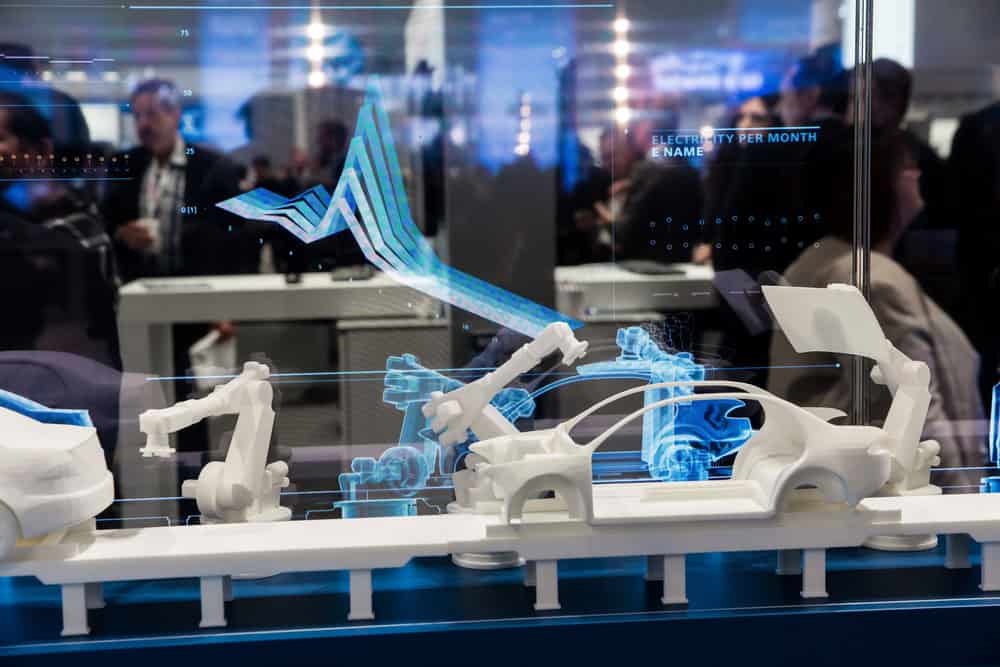
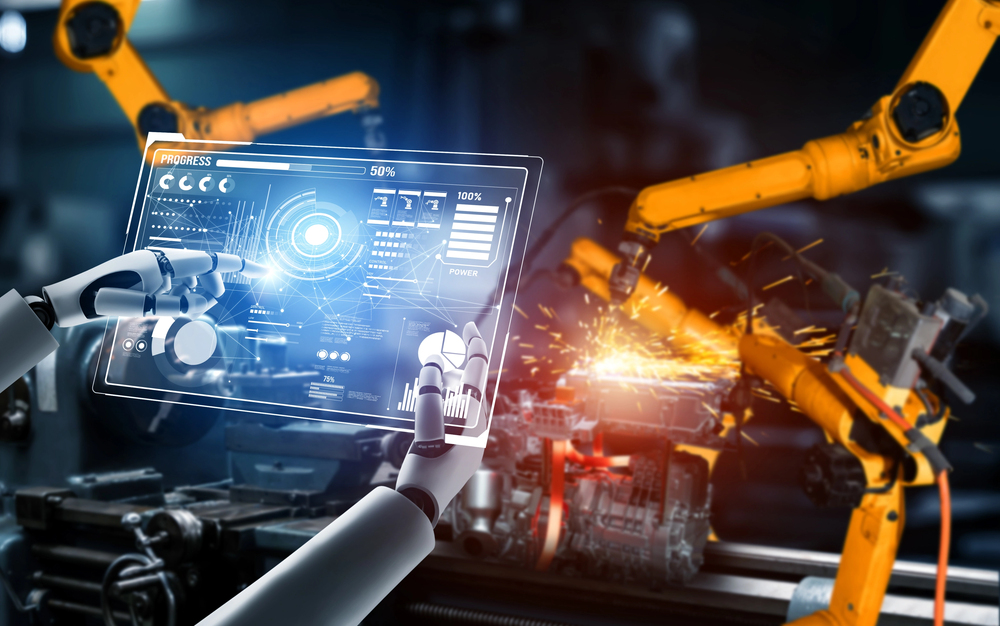
It’s reaching the point in which major global manufacturers cannot effectively function without digital twins to help managers plan operations and expansions. Such requirements are fueling the digital twin market, which is growing at a rate of 40% a year worldwide, from $18 billion as of 2024 to $260 billion by 2032, according to estimates published in Fortune Business Insights. Growth of digital twins is especially seen in enhanced healthcare applications and advancements in 3D simulation and printing technologies.
Digital twin technology helps companies “identify cost-saving opportunities by optimizing resource usage, reducing downtime through predictive maintenance and minimizing inefficiencies in operations,” the report’s authors state. “In addition, large enterprises use twin technology for innovation in product development, testing, and design validation for the creation of high-quality products.”
See also: Using Digital Twins to Drive Manufacturing Efficiency
Digital Twins in Action
Foxconn, well-known as the manufacturer of iPhones for Apple as well as NIVIDIA chips, is leveraging digital twin technology to manage its global network of production facilities. The challenge for Foxconn was unprecedented complexity. Setting up, optimizing, and managing large-scale production lines across multiple global sites requires significant time and resources — a slow process using traditional method. “They limit a manufacturer’s ability to perform real-time analysis, dynamically optimize operations, or replicate best practices across facilities,” according to a report from NVIDIA, which is also Foxconn’s chip supplier.
To meet these needs, the electronics manufacturer employed digital twins powered by NVIDIA Omniverse and Universal Scene Description (OpenUSD) to replicate its production facilities. The company’s digital twin platform is a virtual replica of its factories, enabling simulation-driven design, real-time monitoring, and optimized operations.
The integration of digital twins, AI, and simulation technologies supports advanced plant modeling, simulation, planning, and operations management. The platform connects virtual factories to real-world operational data, embedding dashboards with key metrics from manufacturing execution systems (MES), shop floor control (SFC), and automation systems. In addition, entire production lines are virtually assembled using the digital twin platform, enabling the manufacturer “to rapidly migrate and duplicate layouts between global sites (e.g., Taiwan to Mexico). New factory bring-up and scaling are speeding up significantly as a result,” the report states.
Managers can also explore production lines immersively while monitoring performance and resolving issues instantly.
_

 Best Practices for Deploying and Scaling Industrial AIArtificial Intelligence (AI) is transforming industrial operations, helping organizations optimize workflows, reduce downtime, and enhance productivity. Different industry verticals leverage AI in unique ways.Link to The Center for Adaptive Edge Intelligence
 The Center for Adaptive Edge IntelligenceAdaptive edge intelligence brings real-time decision-making to the point of data creation, whether from sensors, machines, or cameras.Link to The Value of Vehicle Electrification
 The Value of Vehicle ElectrificationElectric vehicles (EVs) present automakers with many design, engineering, and manufactu ring challenges.Link to Accelerating Manufacturing Digital Transformation with Industrial Connectivity and IoT
 Accelerating Manufacturing Digital Transformation with Industrial Connectivity and IoTDigital transformation is empowering industrial organizations to deliver sustainable innovation, disruption-proof products and services, and continuous operational improvement.Link to Smart Manufacturing for Automotive
 Smart Manufacturing for AutomotiveLeading a transportation revolution in autonomous, electric, shared mobility and connectivity with the next generation of design and development tools.Link to Center for Data Pipeline Automation
 Center for Data Pipeline AutomationAs businesses become data-driven and rely more heavily on analytics to operate, getting high-quality, trusted data to the right data user at the right time is essential.Link to Center for Automated Integration
 Center for Automated IntegrationThe goal of automated integration is to enable applications and systems that were built separately to easily share data and work together, resulting in new capabilities and efficiencies that cut costs, uncover insights, and much more.Link to Continuous Intelligence: Insights
 Continuous Intelligence: InsightsDigital transformation requires continuous intelligence (CI). Today’s digital businesses are leveraging this new category of software which includes real-time analytics and insights from a single, cloud-native platform across multiple use cases to speed decision-making, and drive world-class customer experiences.