Meta Platforms, the parent company of Facebook, announced two advancements in the field of robotic artificial intelligence, aimed at improving sensorimotor skills in a robot.
The first advancement is an artificial visual cortex; a single perception model which can understand and replicate a range of sensorimotor skills. The model has been trained on the Ego4D dataset, developed by Meta AI in partnership with several academic partners, which has thousands of videos of humans performing everyday tasks. Meta has announced it will be open sourcing the dataset, so other robotics teams can utilize it.
SEE ALSO: AI and Robotics Research Continues to Accelerate
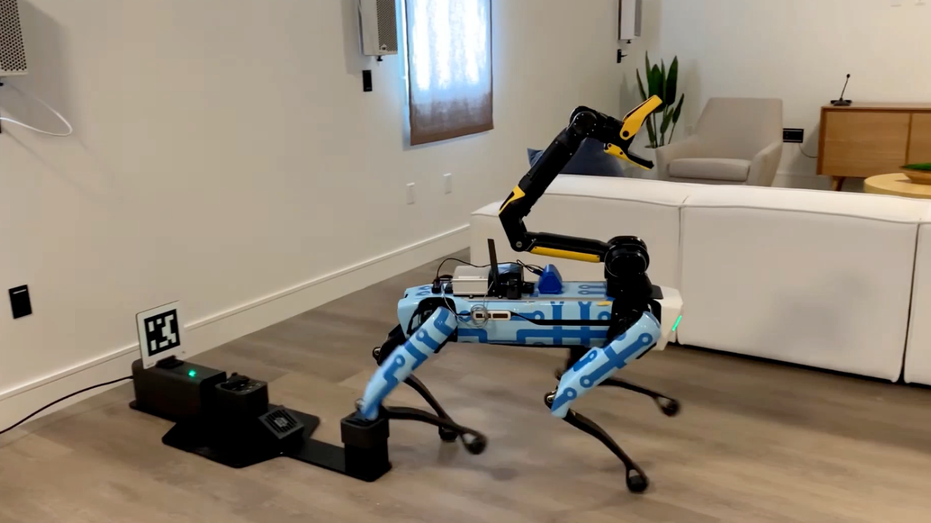
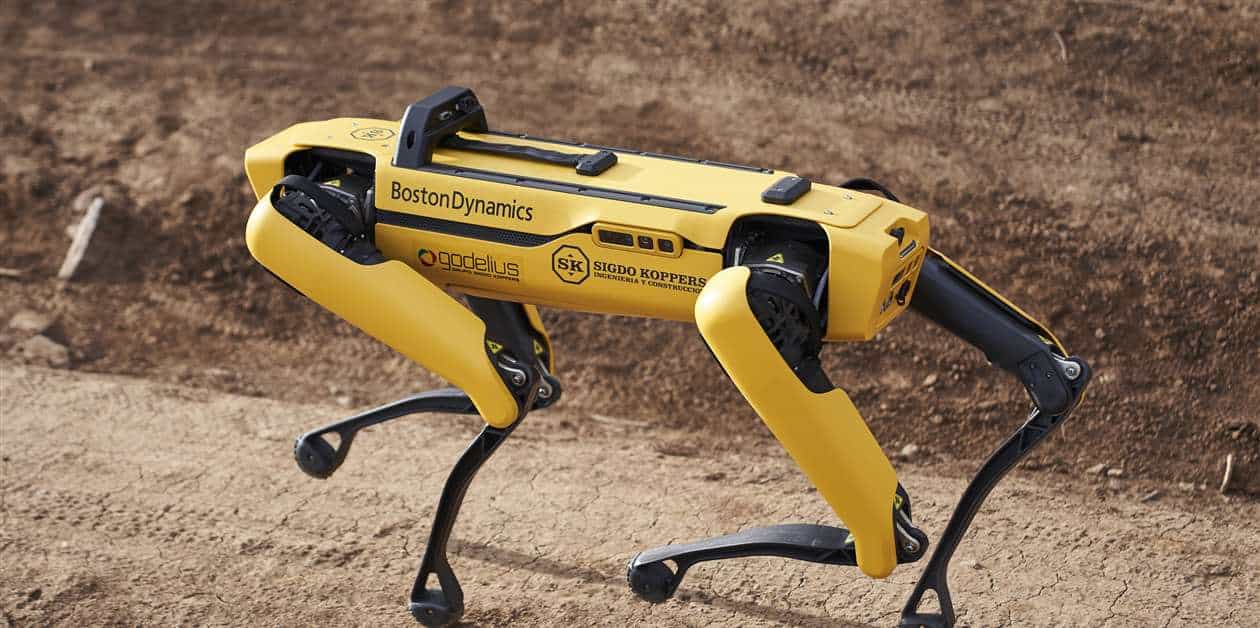
The visual cortex tries to replicate the region of the human brain which converts vision into movement. In this instance, the AI converts camera inputs from humans into robotic actions. This is can do even though the robot is not built the same as a human – during testing Meta used Boston Dynamics Spot robot.
“Although prior work has focused on a small set of robotic tasks, a visual cortex for embodied AI should work well for a diverse set of sensorimotor tasks in diverse environments across diverse embodiments,” said Akshara Rai, research scientist at Meta. “Our results show VC-1 representations match or outperform learning from scratch on all 17 tasks. We also find that adapting VC-1 on task-relevant data results in it becoming competitive with or outperforming best-known results on all tasks in CortexBench.”
The second advancement is a new approach to robotic mobile manipulation, called adaptive sensorimotor skill coordination. Meta claims this new approach is far better than previous methods, with 98 percent success on tasks such as navigation, picking up an object, placing the object, and repeating processes.
Meta trained the robot entirely through simulation, which removes the rigidity that real-world testing can sometimes cause. Instead of faltering at the first change in the real-world, a robot trained with sensor-to-action neural networks is more capable of adapting to changes.
“When we put our work to the test, we used two significantly different real-world environments where Spot was asked to rearrange a variety of objects,” said Rai. “Overall, ASC achieved near-perfect performance, succeeding on 59 of 60 episodes, overcoming hardware instabilities, picking failures, and adversarial disturbances like moving obstacles or blocked paths. In comparison, traditional baselines like task and motion planning succeed in only 73 percent of cases, because of an inability to recover from real-world disturbances.”
Part of the issue with simulation to reality transfers in the past has been that developers attempt to replicate all of the physical attributes of the real-world inside the simulation. Meta, in its latest test, used a counterintuitive approach in simulation by focusing on the high-level policy ideas such as where to go rather than low-level physics, such as how to move the legs.
While science fiction writers and technologists of the 20th century expected the physical attributes of robots would be solved way before the mental, the opposite looks to be true. With ChatGPT and other generative systems able to trick humans into believing they are real, we seem to be on the cusp of AI which is creative, artistic, and fun, but we still appear to be a few generations away from robots that can do even the most basic tasks as well as humans.

 Best Practices for Deploying and Scaling Industrial AIArtificial Intelligence (AI) is transforming industrial operations, helping organizations optimize workflows, reduce downtime, and enhance productivity. Different industry verticals leverage AI in unique ways.Link to The Center for Adaptive Edge Intelligence
 The Center for Adaptive Edge IntelligenceAdaptive edge intelligence brings real-time decision-making to the point of data creation, whether from sensors, machines, or cameras.Link to The Value of Vehicle Electrification
 The Value of Vehicle ElectrificationElectric vehicles (EVs) present automakers with many design, engineering, and manufactu ring challenges.Link to Accelerating Manufacturing Digital Transformation with Industrial Connectivity and IoT
 Accelerating Manufacturing Digital Transformation with Industrial Connectivity and IoTDigital transformation is empowering industrial organizations to deliver sustainable innovation, disruption-proof products and services, and continuous operational improvement.Link to Smart Manufacturing for Automotive
 Smart Manufacturing for AutomotiveLeading a transportation revolution in autonomous, electric, shared mobility and connectivity with the next generation of design and development tools.Link to Center for Data Pipeline Automation
 Center for Data Pipeline AutomationAs businesses become data-driven and rely more heavily on analytics to operate, getting high-quality, trusted data to the right data user at the right time is essential.Link to Center for Automated Integration
 Center for Automated IntegrationThe goal of automated integration is to enable applications and systems that were built separately to easily share data and work together, resulting in new capabilities and efficiencies that cut costs, uncover insights, and much more.Link to Continuous Intelligence: Insights
 Continuous Intelligence: InsightsDigital transformation requires continuous intelligence (CI). Today’s digital businesses are leveraging this new category of software which includes real-time analytics and insights from a single, cloud-native platform across multiple use cases to speed decision-making, and drive world-class customer experiences.