Best Practices for Deploying and Scaling Industrial AI
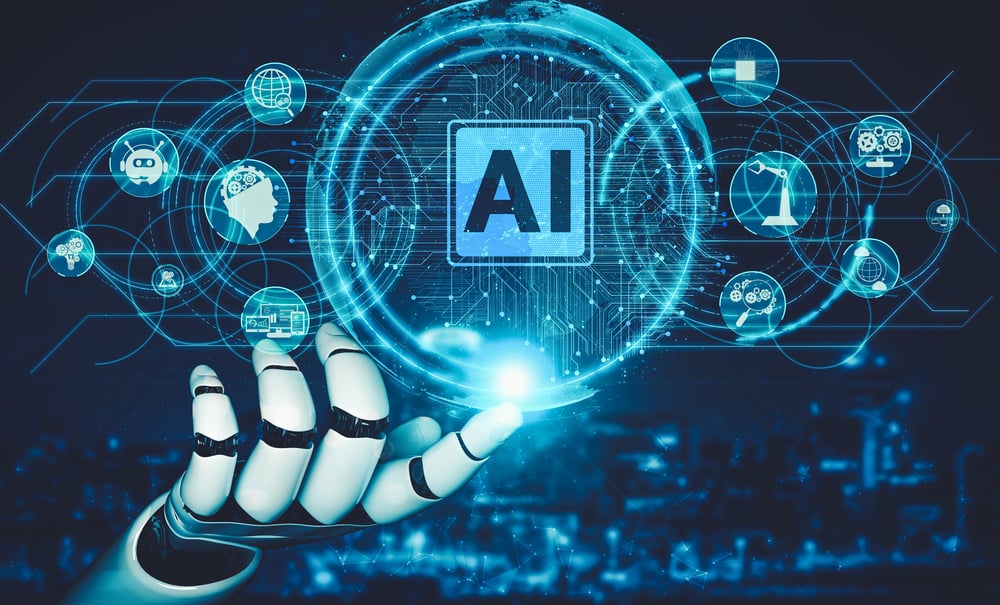
Artificial Intelligence (AI) is transforming industrial operations, helping organizations optimize workflows, reduce downtime, and enhance productivity. Different industry verticals leverage AI in unique ways.
Accelerating Manufacturing Digital Transformation with Industrial Connectivity and IoT
Digital transformation is empowering industrial organizations to deliver sustainable innovation, disruption-proof products and services, and continuous operational improvement.
Leading a transportation revolution in autonomous, electric, shared mobility and connectivity with the next generation of design and development tools.
As businesses become data-driven and rely more heavily on analytics to operate, getting high-quality, trusted data to the right data user at the right time is essential.
The goal of automated integration is to enable applications and systems that were built separately to easily share data and work together, resulting in new capabilities and efficiencies that cut costs, uncover insights, and much more.
Digital transformation requires continuous intelligence (CI). Today’s digital businesses are leveraging this new category of software which includes real-time analytics and insights from a single, cloud-native platform across multiple use cases to speed decision-making, and drive world-class customer experiences.
Best Practices for Deploying and Scaling Industrial AI
Artificial Intelligence (AI) is transforming industrial operations, helping organizations optimize workflows, reduce downtime, and enhance productivity. Different industry verticals leverage AI in unique ways.
Accelerating Manufacturing Digital Transformation with Industrial Connectivity and IoT
Digital transformation is empowering industrial organizations to deliver sustainable innovation, disruption-proof products and services, and continuous operational improvement.
Leading a transportation revolution in autonomous, electric, shared mobility and connectivity with the next generation of design and development tools.
As businesses become data-driven and rely more heavily on analytics to operate, getting high-quality, trusted data to the right data user at the right time is essential.
The goal of automated integration is to enable applications and systems that were built separately to easily share data and work together, resulting in new capabilities and efficiencies that cut costs, uncover insights, and much more.
Digital transformation requires continuous intelligence (CI). Today’s digital businesses are leveraging this new category of software which includes real-time analytics and insights from a single, cloud-native platform across multiple use cases to speed decision-making, and drive world-class customer experiences.
How Edge Will Help Telecoms Enable a New Generation of Services and Applications
Communication network of Scene of Hong Kong Cityscape river side at night time, Technology Smart City with Internet of Things concept
A discussion about the need for telcos to modernize their infrastructure and the role edge can play in bringing innovative applications and services to market.
Edge applications enabled by 5G services from telecom providers are poised to disrupt (in a good way) everything from the way we work to the way businesses operate. However, telecom providers must modernize their infrastructures to deliver on the promise of edge.
Recently, RTInsights sat down with Erin K. Banks, Product Marketing Director in the Telco Systems Business at Dell Technologies, and talked about the technology challenges telcos face with edge, the need to modernize their infrastructure, and the role edge can play in bringing innovative applications and services to market. Here is a summary of our conversation.
RTInsights: When we talk about telecom and edge, what are the problems telcos hope to address?
Erin Banks, Dell Technologies
Banks: Telcom operators, also known as Communication Service Providers (CSPs), need to address the day-to-day tasks, so they can focus on developing new advanced and profitable services for the customers.
The problem of trying to deal with this is that the technology they currently have in place limits their ability to create these services. It doesn’t allow them to be quick and efficient and develop and design new capabilities. As a result, many feel like they’re falling behind. One problem leads to the next when they are trying to build these services.
RTInsights: What’s needed to implement telecom edge solutions?
Banks: CSPs need to modernize their network architecture, leveraging open technologies and software-defined solutions, and they need to utilize automation and CI/CD (continuous innovation/continuous development). This will enable them to be agile and implement new services and capabilities.
Modernization is essential and requires industry-standard infrastructure in order to develop cloud-native workloads. Implementing these workloads allows them to develop and deploy these new services and capabilities. And it also lets them implement processes that allow them to quickly and efficiently develop the software and services that the consumers need and want.
Right now, technology and the infrastructure is fragmented, outdated, and siloed. It doesn’t enable the capabilities they need. CSPs must transform the infrastructure. This is a new domain for CSPs. It’s not quick, and it’s not an easy process, and it can be a struggle for many organizations. So, they need to find the right partner that’s going to help them on this journey.
RTInsights: Where or how does 5G fit in?
Banks: 5G, without a doubt, is the catalyst for the telecom transformation. It’s the whole reason why we’re having these conversations. It’s a disruptive, game-changing technology. If we go back to our conversation about the challenges, for a second, we addressed the fact that consumers, people like us, and organizations want new services. We want to download our movies faster, or we want better quality for our video. Think about what happened during the pandemic. We had to change our industry events, and now everything is videos, and we want better quality capability. We also want more connected capabilities to use IoT more in our personal lives.
We want these services to be able to use them in a new way that will improve both our work and personal lives. That’s where 5G helps. It reduces delays and latencies and improves reliability.
5G can connect anything and change everything. 5G will lead to better cities, better homes, and better transportation in the long run. I think the ultimate goal is just a better life for all.
RTInsights: What interesting edge applications are you seeing in the telecom space?
Banks: This is probably one of the most important questions to ask because sometimes people don’t necessarily see the vision and don’t understand what’s possible. When you think about all the technologies that we had previously and all the things that are changing, it is great to recognize the outcomes that the technology will provide. From that perspective, edge is revolutionary.
Just the investments overall give an indication of edge’s expected role. Arthur D. Little said by 2030, the annual spend across this market will be $700 billion. It’s going to change how we manufacture and how we consume the goods that are being manufactured. It’s changing how we’re transporting people, how we heal the sick, and how we feed the world. When you think about technology being able to do all those things, that’s very impactful.
Some of the bigger investment areas are manufacturing, healthcare, automotive, and energy and utilities. Just take one of those industries like automotive. Think about what is already happening with cars, IoT, and 5G.
Speculating on the future now, imagine a world where you will never have car accidents again. I mean, could you imagine a world like that? Imagine the ripple effect of something like that. The role of outlying industries that handle insurance and car repairs are completely changed. Who knows if someday, with autonomous cars, we can get to a point where we will not need traffic lights? Traffic engineering in cities would be fundamentally transformed, and all the organizations in this industry will need to evolve to address this new reality.
That’s why I say that 5G is this disruptive technology, and businesses that think that 5G will not impact them need to think bigger because, more than likely, they are relying on organizations that 5G will impact. It’s the ripple effect. It’s just going to happen overall.
There are very few times that technology really has impacted change, our world, and what we’re doing end to end, and we’re certainly on the cusp of that right now.
Salvatore Salamone is a physicist by training who writes about science and information technology. During his career, he has been a senior or executive editor at many industry-leading publications including High Technology, Network World, Byte Magazine, Data Communications, LAN Times, InternetWeek, Bio-IT World, and Lightwave, The Journal of Fiber Optics. He also is the author of three business technology books.
The edge is where it all happens. It is where innovation is created and where it is delivered. SQL Server workloads must therefore be just as resilient and highly available there as they are in the cloud or in a traditional data center.
The low-altitude economy depends on continuous, real-time ingestion and processing of high-volume telemetry, sensor, and imagery data to support safe, scalable operations.
The edge is where it all happens. It is where innovation is created and where it is delivered. SQL Server workloads must therefore be just as resilient and highly available there as they are in the cloud or in a traditional data center.
Traditional cyberattacks typically involve one of two strategies: bypassing authentication or exploiting software vulnerabilities. MCP-based systems introduce a different category of risk.
Analysis and market insights on real-time analytics including Big Data, the IoT, and cognitive computing. Business use cases and technologies are discussed.
Advertiser Disclosure: Some of the products that appear on
this site are from companies from which TechnologyAdvice
receives compensation. This compensation may impact how and
where products appear on this site including, for example,
the order in which they appear. TechnologyAdvice does not
include all companies or all types of products available in
the marketplace.

 Best Practices for Deploying and Scaling Industrial AIArtificial Intelligence (AI) is transforming industrial operations, helping organizations optimize workflows, reduce downtime, and enhance productivity. Different industry verticals leverage AI in unique ways.Link to The Center for Adaptive Edge Intelligence
 The Center for Adaptive Edge IntelligenceAdaptive edge intelligence brings real-time decision-making to the point of data creation, whether from sensors, machines, or cameras.Link to The Value of Vehicle Electrification
 The Value of Vehicle ElectrificationElectric vehicles (EVs) present automakers with many design, engineering, and manufactu ring challenges.Link to Accelerating Manufacturing Digital Transformation with Industrial Connectivity and IoT
 Accelerating Manufacturing Digital Transformation with Industrial Connectivity and IoTDigital transformation is empowering industrial organizations to deliver sustainable innovation, disruption-proof products and services, and continuous operational improvement.Link to Smart Manufacturing for Automotive
 Smart Manufacturing for AutomotiveLeading a transportation revolution in autonomous, electric, shared mobility and connectivity with the next generation of design and development tools.Link to Center for Data Pipeline Automation
 Center for Data Pipeline AutomationAs businesses become data-driven and rely more heavily on analytics to operate, getting high-quality, trusted data to the right data user at the right time is essential.Link to Center for Automated Integration
 Center for Automated IntegrationThe goal of automated integration is to enable applications and systems that were built separately to easily share data and work together, resulting in new capabilities and efficiencies that cut costs, uncover insights, and much more.Link to Continuous Intelligence: Insights
 Continuous Intelligence: InsightsDigital transformation requires continuous intelligence (CI). Today’s digital businesses are leveraging this new category of software which includes real-time analytics and insights from a single, cloud-native platform across multiple use cases to speed decision-making, and drive world-class customer experiences.