Physical AI promises to reinvent industrial automation with more efficient ways to train and control entire digital workforces of autonomous mobile robots.
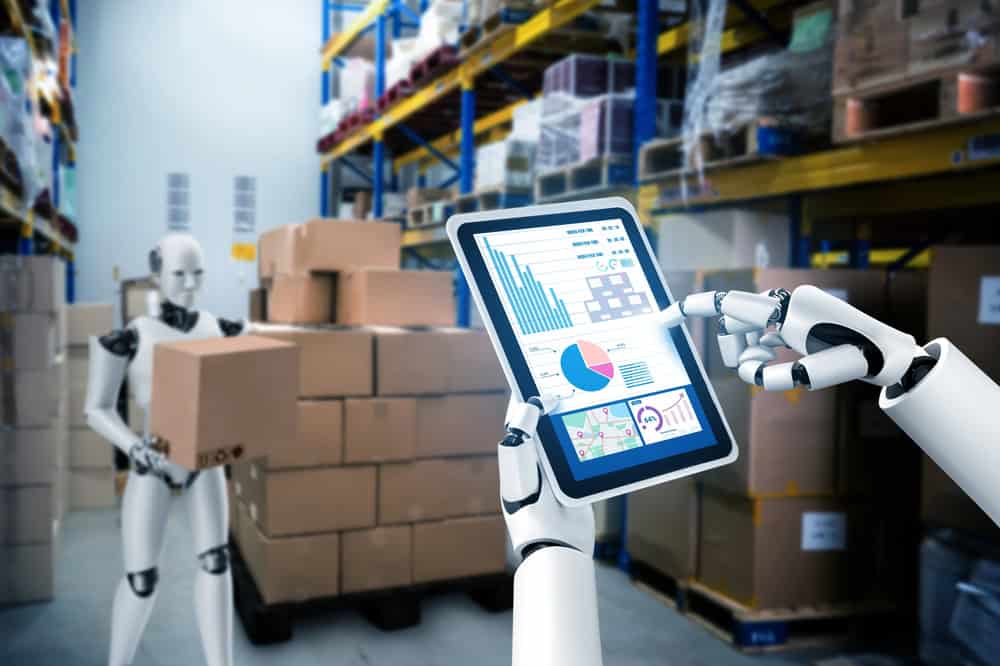
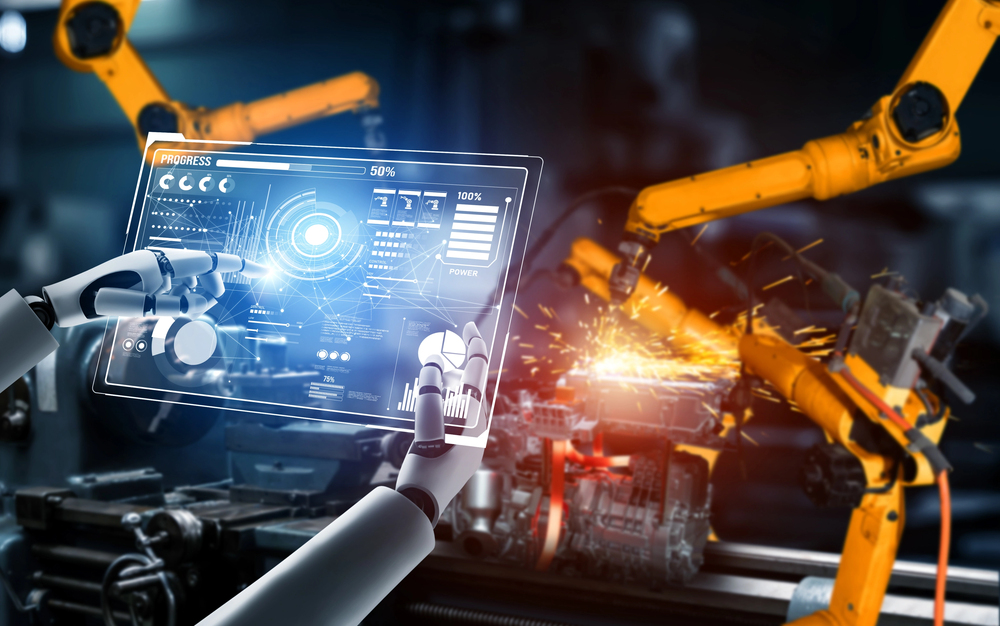
Factory robots, those arms seen on assembly lines doing welding spots or painting parts, have been around for decades. Now, we’re starting to see more mobile, almost human-like robots carrying on more of the grunt work that is part of industrial sites.
To promote the application of humanoid robots, Accenture and Schaeffler AG recently unveiled a vision for the future of industrial automation with what they term as “physical AI” and robotics powered by technologies from NVIDIA and Microsoft.
The collaboration is intended to optimize various work scenarios, from human-centric to human and robot collaboration and full automation. These include industrial automation systems, autonomous mobile robots, mobile manipulator cobots, and general-purpose humanoid robots. The emerging smart factory requires complex collaboration between humans, industrial automation systems and multi-robot fleets.
See also: The Increasing Role of Cobots in Automotive Smart Manufacturing
Physical AI promises to reinvent industrial automation with more efficient ways to train and control entire digital workforces of autonomous mobile robots, mobile adaptive manipulators and general-purpose humanoid robots, according to a statement from Accenture.
Accenture and Schaeffler developed a proof-of-concept demonstrating the benefits AI-powered simulations can bring to factories and distribution centers on three levels:
- Planning the ideal facility: With digital twins of factories and warehouses, Schaeffler is poised to simulate and identify the best layout for facilities upfront, reducing commissioning times. This includes virtually positioning production lines and kitting stations for dynamic material flow, as well as facilitating collaboration between humans and robots. Virtual commissioning can also help Schaeffler determine the right degree of automation for each facility. The types of work that can be virtualized include autonomous mobile robots supporting transport tasks, and general-purpose humanoid robots in highly automated facilities. Accenture’s own survey found 43% of factory managers believe humanoid robots will become a standard component of assembly processes.
- Paving the way for physical AI and general-purpose humanoid robots: Accenture and Schaeffler are starting to adopt Mega, an NVIDIA Omniverse Blueprint, to test robot fleets, including general-purpose humanoid robots, in industrial digital twins of factories and warehouses. Such robots can perform material handling, such as tote handling and transport to kitting and commissioning areas. These humanoid robots can also learn real-world tasks by observing, via vision AI, simulations. One learned task, for example, is compiling spare part kits for individual orders in one of Schaeffler’s spare part centers.
- Optimizing live robotics operations: Simulated data can help optimize the physical performance of robots in the warehouse and on the shop floor, to accelerate productivity and avoid congestion. “Data from various simulated scenarios is fed into Microsoft Fabric, a unified, AI-powered data platform,,” the vendors explain. “Site managers and workers responsible for operations can then compare key performance indicators, such as availability, utilization and overall equipment effectiveness for these scenarios to identify potential issues in time to act.” In another example, a generative AI-powered factory operations agent “helps staff gain production insights and solve issues faster by letting them ask questions in natural language.”
“Humanoids are appealing because of their versatility. They will fit quickly and easily into a human-centric world, accessing physical spaces and participating in workflows initially designed for people,” the vendors added.
Joe McKendrick is RTInsights Industry Editor and industry analyst focusing on artificial intelligence, digital, cloud and Big Data topics. His work also appears in Forbes an Harvard Business Review. Over the last three years, he served as co-chair for the AI Summit in New York, as well as on the organizing committee for IEEE's International Conferences on Edge Computing. (full bio). Follow him on Twitter @joemckendrick.

 Best Practices for Deploying and Scaling Industrial AIArtificial Intelligence (AI) is transforming industrial operations, helping organizations optimize workflows, reduce downtime, and enhance productivity. Different industry verticals leverage AI in unique ways.Link to The Center for Adaptive Edge Intelligence
 The Center for Adaptive Edge IntelligenceAdaptive edge intelligence brings real-time decision-making to the point of data creation, whether from sensors, machines, or cameras.Link to The Value of Vehicle Electrification
 The Value of Vehicle ElectrificationElectric vehicles (EVs) present automakers with many design, engineering, and manufactu ring challenges.Link to Accelerating Manufacturing Digital Transformation with Industrial Connectivity and IoT
 Accelerating Manufacturing Digital Transformation with Industrial Connectivity and IoTDigital transformation is empowering industrial organizations to deliver sustainable innovation, disruption-proof products and services, and continuous operational improvement.Link to Smart Manufacturing for Automotive
 Smart Manufacturing for AutomotiveLeading a transportation revolution in autonomous, electric, shared mobility and connectivity with the next generation of design and development tools.Link to Center for Data Pipeline Automation
 Center for Data Pipeline AutomationAs businesses become data-driven and rely more heavily on analytics to operate, getting high-quality, trusted data to the right data user at the right time is essential.Link to Center for Automated Integration
 Center for Automated IntegrationThe goal of automated integration is to enable applications and systems that were built separately to easily share data and work together, resulting in new capabilities and efficiencies that cut costs, uncover insights, and much more.Link to Continuous Intelligence: Insights
 Continuous Intelligence: InsightsDigital transformation requires continuous intelligence (CI). Today’s digital businesses are leveraging this new category of software which includes real-time analytics and insights from a single, cloud-native platform across multiple use cases to speed decision-making, and drive world-class customer experiences.