We may not live in the
robot-filled future once dreamt by futurists, but we are getting closer to it. Speakers
with virtual assistants inside and robot vacuum cleaners are both commonplace, and
we should expect even more home-invading bots in the next decade.
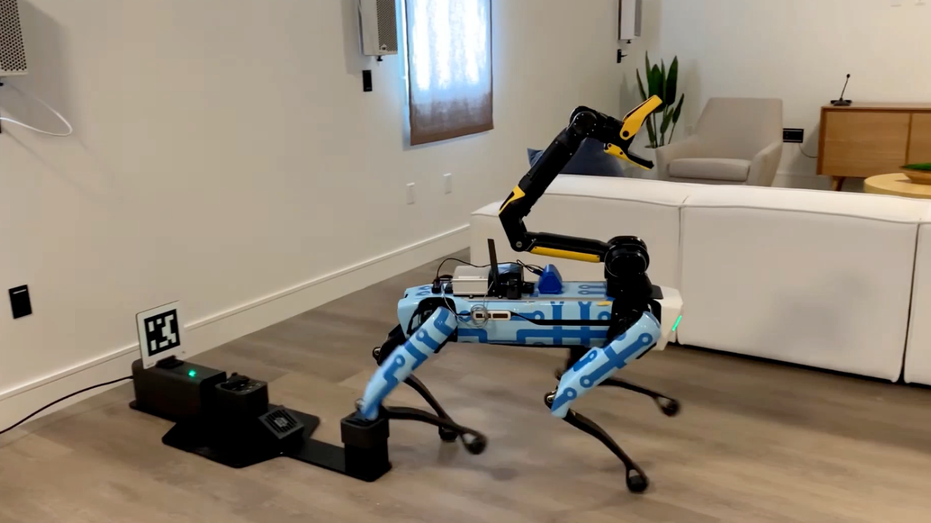
One of the hurdles developers currently face is teaching robots how to manoeuvre around the house. To that end, a research team from the University of Michigan has published a new model, which trains robots on the relationships between household objects.
SEE ALSO: Qualcomm Announces 5G and AI Robotics Platform
For example, a robot
may be assigned to take washing from the basket upstairs and move it into the
washing machine. With the model, it can be trained to understand where both the
basket and the machine is, removing the need to move the robot manually.
“Being able to
efficiently search for objects in an environment is crucial for service robots
to autonomously perform tasks,” said Zhen Zeng, co-author of the study.
“We provide a practical method that enables the robot to actively search
for target objects in a complex environment.”
The model, called SLiM
(Semantic Linking Maps), associates landmark objects, like a fridge, with other
related objects, like an orange juice carton or mayonnaise. From that, if a
robot is asked to clean the table, it will know to put fridge items back where
they belong.
The researchers said
that SLiM accounts for uncertainty, for instance if the laundry basket has been
moved, it will not stop functioning, although it might take longer to find the
new location.
This active renewal of
geographic locations and relationships between objects should improve long-term
performance of robots, which may otherwise shut down constantly due to a change
in the environment.
The Roomba was a
watershed moment in terms of household robots, and most of robots launched
after have copied the design and functionality of it. However, the robots presented
by Michigan team are far more sophisticated, able to pick up objects and
perform tasks.
We are still a few
years off those types of robots, although research like this shows it’s
definitely in the pipeline.

 Best Practices for Deploying and Scaling Industrial AIArtificial Intelligence (AI) is transforming industrial operations, helping organizations optimize workflows, reduce downtime, and enhance productivity. Different industry verticals leverage AI in unique ways.Link to The Center for Adaptive Edge Intelligence
 The Center for Adaptive Edge IntelligenceAdaptive edge intelligence brings real-time decision-making to the point of data creation, whether from sensors, machines, or cameras.Link to The Value of Vehicle Electrification
 The Value of Vehicle ElectrificationElectric vehicles (EVs) present automakers with many design, engineering, and manufactu ring challenges.Link to Accelerating Manufacturing Digital Transformation with Industrial Connectivity and IoT
 Accelerating Manufacturing Digital Transformation with Industrial Connectivity and IoTDigital transformation is empowering industrial organizations to deliver sustainable innovation, disruption-proof products and services, and continuous operational improvement.Link to Smart Manufacturing for Automotive
 Smart Manufacturing for AutomotiveLeading a transportation revolution in autonomous, electric, shared mobility and connectivity with the next generation of design and development tools.Link to Center for Data Pipeline Automation
 Center for Data Pipeline AutomationAs businesses become data-driven and rely more heavily on analytics to operate, getting high-quality, trusted data to the right data user at the right time is essential.Link to Center for Automated Integration
 Center for Automated IntegrationThe goal of automated integration is to enable applications and systems that were built separately to easily share data and work together, resulting in new capabilities and efficiencies that cut costs, uncover insights, and much more.Link to Continuous Intelligence: Insights
 Continuous Intelligence: InsightsDigital transformation requires continuous intelligence (CI). Today’s digital businesses are leveraging this new category of software which includes real-time analytics and insights from a single, cloud-native platform across multiple use cases to speed decision-making, and drive world-class customer experiences.