Data labeling and annotation are critical in training
machine learning (ML) models and artificial intelligence (AI) algorithms that
are used in continuous intelligence applications (CI). Could Annotations, a new data
annotation tool from IBM gives businesses yet another option to help with this
time-consuming, yet vital task.
See also: Data Annotation Feeds the AI Beast
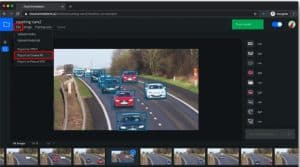
The tool, released on Github, is a fast, easy, and
collaborative open-source image annotation tool for teams and individuals. The
tool uses AI to automate data annotation, helping to reduce many manual steps
of drawing outlines around objects and more.
Cloud Annotations supports uploading both photos and videos.
However, there are a few limitations to consider. IBM includes some best
practices to ensure businesses get the best results when using the tool.
Guidance and suggestions provided by IBM for best use include:
- Object Type: The model is optimized for photographs of objects in the real world. They are unlikely to work well for x-rays, hand drawings, scanned documents, receipts, etc.
- Object Environment: The training data should be as close as possible to the data on which predictions are to be made. For example, if your use case involves blurry and low-resolution images (such as from a security camera), your training data should be composed of blurry, low-resolution images. In general, you should also consider providing multiple angles, resolutions, and backgrounds for your training images.
- Difficulty: The model generally can’t predict labels that humans can’t assign. So, if a human can’t be trained to assign labels by looking at the image for 1-2 seconds, the model likely can’t be trained to do it either.
- Label Count: We recommend at least 50 labels per object category for a usable model, but using 100s or 1000s would provide better results.
- Image Dimensions: The model resizes the image to 300×300 pixels, so keep that in mind when training the model with images where one dimension is much longer than the other.
- Object Size The object of interest’s size should be at least ~5% of the image area to be detected. For example, on the resized 300×300 pixel image, the object should cover ~60×60 pixels.
Expanding the market
Cloud Annotation is the latest tool designed to help with
data annotation for items used in ML and AI training. Some tools that offer
help in this area include Intel’s Computer
Vision Annotation Tool (CVAT) and Google’s Fluid
Annotation.
The Computer
Vision Annotation Tool (CVAT) is an open-source tool for annotating digital
images and videos. The main function of the application is to provide users
with convenient annotation instruments. For that purpose, Intel designed CVAT
as a versatile service with many features.
CVAT is a browser-based application for both individuals and
teams that supports different work scenarios. The main tasks of supervised
machine learning can be divided into three groups:
- Object detection
- Image classification
- Image segmentation
CVAT lets users annotate data for each of these cases.
Fluid
Annotation first runs an image through a pre-trained semantic segmentation
model (Mask-RCNN). This
generates around 1000 image segments with their class labels and confidence
scores. The segments with the highest confidences are used to initialize the
labeling, which is presented to the annotator. Afterward, the annotator can:
(1) Change the label of an existing segment choosing from a shortlist generated
by the machine. (2) Add a segment to cover a missing object. The machine
identifies the most likely pre-generated segments, through which the annotator
can scroll and select the best one. (3) Remove an existing segment. (4) Change
the depth-order of overlapping segments.
Meeting Market Demands
Businesses that want to build CI applications that use AI
need high-quality data to train the AI models. Such a need has created a new
market for data annotation tools and services. Complementing tools like IBM’s
Cloud Annotation, a booming
industry has emerged, comprised of companies that specialize in speedy and
highly accurate data annotation services. Some of the companies in this market deliver
domain-specific labeled data.
The companies that provide such services provide greater
value than a public crowdsources service might offer. Instead, this new breed
of companies use highly trained data labelers, and many develop their own advanced
annotation tools. Many of those tools are AI-based to work on their own or in
tandem with a human operator.
One example of such a company is Samasource, which uses a secured cloud
annotation platform, SamaHub, to manage the annotation lifecycle. This includes
image upload, annotation, data sampling, and QA, data delivery, and overall
collaboration.
Taken together, the innovative tools and data annotation
service companies help produce much higher quality data to train AI models in
much faster time frames. The availability of high-quality annotated data in a
speedier manner can only help businesses build more resilient and reliable AI
and CI systems and applications.

 Best Practices for Deploying and Scaling Industrial AIArtificial Intelligence (AI) is transforming industrial operations, helping organizations optimize workflows, reduce downtime, and enhance productivity. Different industry verticals leverage AI in unique ways.Link to The Center for Adaptive Edge Intelligence
 The Center for Adaptive Edge IntelligenceAdaptive edge intelligence brings real-time decision-making to the point of data creation, whether from sensors, machines, or cameras.Link to The Value of Vehicle Electrification
 The Value of Vehicle ElectrificationElectric vehicles (EVs) present automakers with many design, engineering, and manufactu ring challenges.Link to Accelerating Manufacturing Digital Transformation with Industrial Connectivity and IoT
 Accelerating Manufacturing Digital Transformation with Industrial Connectivity and IoTDigital transformation is empowering industrial organizations to deliver sustainable innovation, disruption-proof products and services, and continuous operational improvement.Link to Smart Manufacturing for Automotive
 Smart Manufacturing for AutomotiveLeading a transportation revolution in autonomous, electric, shared mobility and connectivity with the next generation of design and development tools.Link to Center for Data Pipeline Automation
 Center for Data Pipeline AutomationAs businesses become data-driven and rely more heavily on analytics to operate, getting high-quality, trusted data to the right data user at the right time is essential.Link to Center for Automated Integration
 Center for Automated IntegrationThe goal of automated integration is to enable applications and systems that were built separately to easily share data and work together, resulting in new capabilities and efficiencies that cut costs, uncover insights, and much more.Link to Continuous Intelligence: Insights
 Continuous Intelligence: InsightsDigital transformation requires continuous intelligence (CI). Today’s digital businesses are leveraging this new category of software which includes real-time analytics and insights from a single, cloud-native platform across multiple use cases to speed decision-making, and drive world-class customer experiences.