Protecting the global food supply is a complex and difficult task no matter what product is in question, but the stakes are particularly high when we’re talking about one particularly popular, flexible, and controversial product: milk.
The U.S. Department of Agriculture estimates that Americans consume more than 600 pounds of milk and milk-based products every year. And raw milk is the basis of a massive number of products, such as pasteurized drinking milk, infant formula, cheese, ice cream, and much more.
Having a safer milk supply chain could mean preventing a massive number of illnesses and deaths that occur globally every year. In the U.S., there are 3,000 deaths from foodborne disease every year—a significant number, but small in comparison to the 2 million deaths annually in emerging areas around the world.
Tackling this problem is precisely the goal of a new collaboration between academic and industry institutions, the Consortium for Sequencing the Food Supply Chain (SFSC). This group, which already includes IBM Research, Mars Incorporated, and Bio-Rad Laboratories, Inc., is now welcoming Cornell University into the fold.
Jeff Welser, vice president and director, IBM Research – Almaden, said the partnership with Cornell University will use artificial intelligence and machine learning “to gain new insights into how microorganisms interact within a particular environment.”
New, analytics-enabled tests for milk
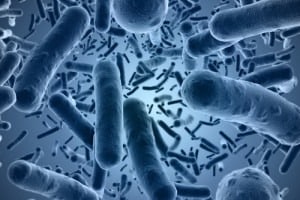
In the milk supply chain, raw product is tested for specific set of common bacteria that cause foodborne illness. That’s a good start, but Cornell and IBM Research want to take the effort to the next step by sequencing and analyzing the DNA and RNA of the entire microbiome population that exists within those samples. They’ll begin this effort by conducting several studies at Cornell’s Dairy Processing Plant and farm in Ithaca, N.Y., which contains a microcosm of the entire milk supply chain.
These studies will help researchers understand the baseline microbiome that’s present in typical sample of milk, and help flesh out a picture of what is “normal.” These will create a number of models that advanced analytics platforms can use to analyze additional samples from the real-world supply chain.
The ability to detect anomalies is paramount to this effort. It’s a more sophisticated detection strategy compared to simply searching for certain types of bacteria, because it’s impossible to plan for every type of infection, bacteria, and contamination that’s possible within the supply chain. The consortium hopes to use these normal models to be able to detect contaminants in the supply chain that simply haven’t been seen before. These could be used not only to detect product that doesn’t meet food safety standards, but also potential fraud.
“As nature’s most perfect food, milk is an excellent model for studying the genetics of food. As a leader in genomics research, the Department of Food Science anticipates this research collaboration with IBM can lead to exciting opportunities to apply findings to multiple food products in locations worldwide,” said Martin Wiedmann, the Gellert Family Professor in Food Safety at Cornell University.
A growing consortium for AI and analytics in food
The SFSC began in 2015 as a collaboration between Mars Research and Mars, Inc., to focus on risk assessment, surveillance, and diagnosis of foodborne pathogens. Instead of simply upgrading the existing systems for detecting pathogens, they sought better methods of understanding the data they already receive from the supply chain.
Mars donated terabytes of genomic data, which was corroborated with weather, transport, and other contextual data, and then analyzed with advanced analytics, to help define a breakout and warn both producers and distributors if a sample looked less than ideal. Because the system can ingest data from multiple sources, and then analyze it using bioinformatics algorithms, it will be possible not only to detect anomalies faster, but also create new protocols that will enhance food safety moving forward.
In the future, the SFSC hopes to bring artificial intelligence machine learning into the picture to further refine baselines and enhance the ability to find anomalies. And because food borne illness causes in 128,000 hospitalizations and $9 billion in medical costs every year in the U.S. alone, even minor improvements to the food safety system could result in enormous benefits to people all around the world.

 Best Practices for Deploying and Scaling Industrial AIArtificial Intelligence (AI) is transforming industrial operations, helping organizations optimize workflows, reduce downtime, and enhance productivity. Different industry verticals leverage AI in unique ways.Link to The Center for Adaptive Edge Intelligence
 The Center for Adaptive Edge IntelligenceAdaptive edge intelligence brings real-time decision-making to the point of data creation, whether from sensors, machines, or cameras.Link to The Value of Vehicle Electrification
 The Value of Vehicle ElectrificationElectric vehicles (EVs) present automakers with many design, engineering, and manufactu ring challenges.Link to Accelerating Manufacturing Digital Transformation with Industrial Connectivity and IoT
 Accelerating Manufacturing Digital Transformation with Industrial Connectivity and IoTDigital transformation is empowering industrial organizations to deliver sustainable innovation, disruption-proof products and services, and continuous operational improvement.Link to Smart Manufacturing for Automotive
 Smart Manufacturing for AutomotiveLeading a transportation revolution in autonomous, electric, shared mobility and connectivity with the next generation of design and development tools.Link to Center for Data Pipeline Automation
 Center for Data Pipeline AutomationAs businesses become data-driven and rely more heavily on analytics to operate, getting high-quality, trusted data to the right data user at the right time is essential.Link to Center for Automated Integration
 Center for Automated IntegrationThe goal of automated integration is to enable applications and systems that were built separately to easily share data and work together, resulting in new capabilities and efficiencies that cut costs, uncover insights, and much more.Link to Continuous Intelligence: Insights
 Continuous Intelligence: InsightsDigital transformation requires continuous intelligence (CI). Today’s digital businesses are leveraging this new category of software which includes real-time analytics and insights from a single, cloud-native platform across multiple use cases to speed decision-making, and drive world-class customer experiences.