IoT devices are expected to incorporate new technologies and capabilities in 2025, making them more powerful than ever before. Those developments are likely to be leveraged by industrial companies to get more out of IoT than was previously possible.
One area where there are expected to be many developments in 2025 is IoT connectivity. As manufacturers modernize and increasingly automate operations, the analysis of operational data from equipment and production lines becomes essential. The applications that use the insights derived from that data can only work if there is a wireless infrastructure in place.
Increasingly, organizations are complementing their traditional wireless connectivity options (e.g., Wi-Fi, LoRaWAN, Bluetooth, and more) with the addition of new services. For example, over the last several years, many IoT devices that used public wireless services have gone from supporting 2G/3G services to 4G/5G networks to enhance connectivity.
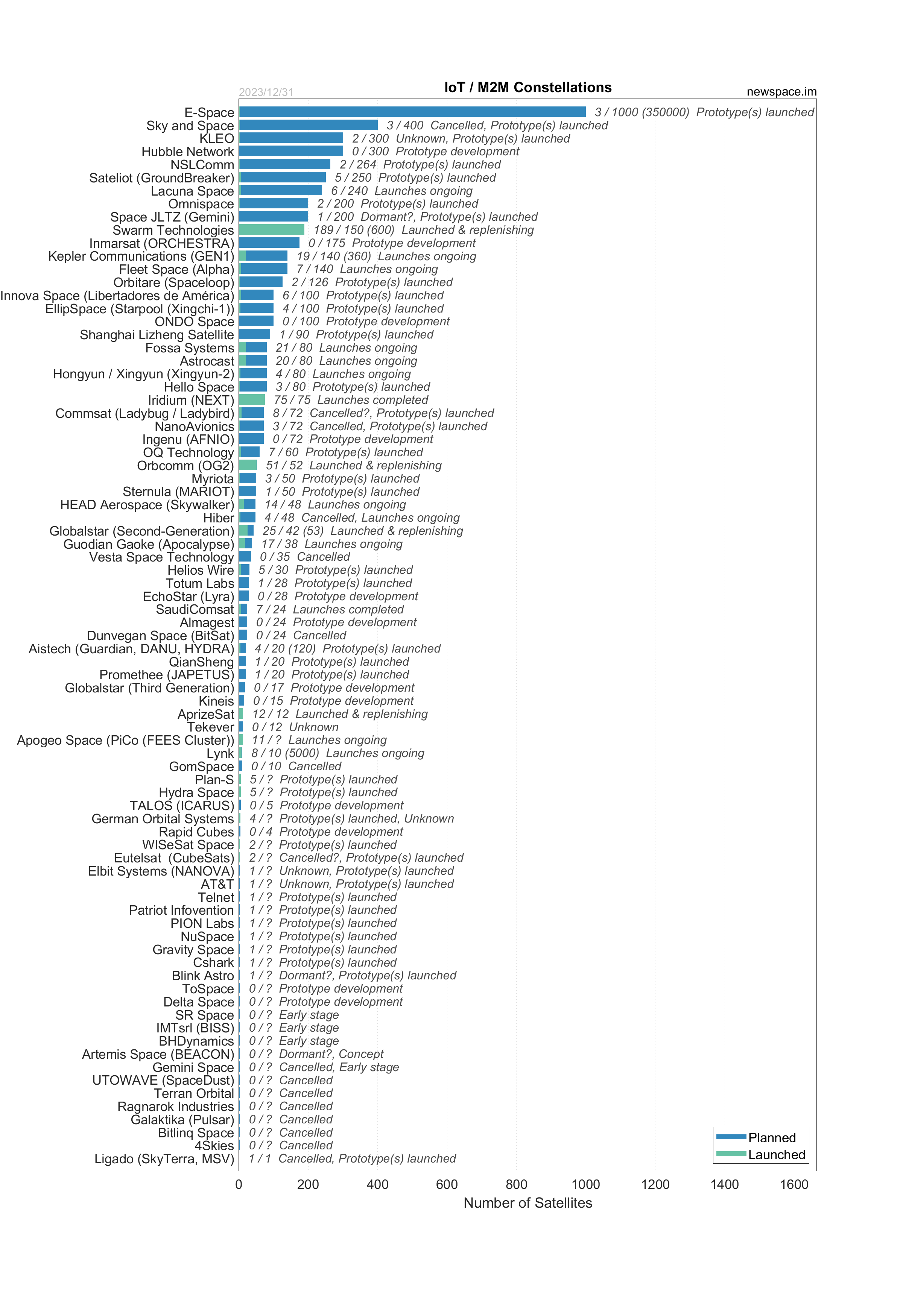
Additionally, in the last year or so, there has been growing interest in satellite services specifically developed to support IoT connectivity. In the U.S., more players are entering the market due to the FCC’s streamlining of the satellite application process. The impact of this streamlining is significant. NewSpace Index, a company that tracks commercial satellite constellations, small satellite rocket launchers, and funding options, lists more than 70 companies set up to launch satellites to serve the IoT and machine-to-machine markets.
Furthermore, as we reported last year, two industry efforts aim to ensure standardization and drive the market for IoT satellite services. One effort, the Mobile Satellite Services Association (MSSA), has “a vision of integrating terrestrial and non-terrestrial network services to deliver scalable, sustainable, and affordable connectivity to any device, anytime, anywhere.”
The other effort, the 3rd Generation Partnership Project (3GPP), brings together different industry stakeholders to develop protocols for mobile telecommunications. One aspect of the group’s work is on telecom standards to be used around the globe to support satellite IoT and machine-to-machine (M2M) services.
The Inevitable Marriage of IoT and AI
It goes without saying that AI is impacting every aspect of technology today. That’s certainly the case with IoT. The convergence of AI and IoT is enabling advanced data analysis and smarter decision-making. This integration enhances automation, predictive maintenance, and more.
That point was noted in a report by IoT Analytics, a German market insights company, late last year. “Edge AI is fundamentally transforming the IoT landscape by allowing edge IoT devices to process data locally, reducing latency and enabling real-time responses,” said Satyajit Sinha, Principal Analyst at IoT Analytics, in a released statement. Specifically, the integration of AI technologies, including generative AI and edge AI, is a significant trend in the industry. Others have concurred, noting that in industrial settings, AI-powered IoT devices facilitate predictive maintenance and enhance operational efficiency.
Some of the common IoT application areas that are expected to benefit from increased connectivity and AI include:
Optimized operations: AI enhances process automation by analyzing real-time IoT data, optimizing production workflows, energy use, and resource allocation. It can adjust processes dynamically to increase efficiency.
Improved safety: AI-powered IoT devices can monitor environmental conditions, machinery performance, and worker behavior, alerting operators to potential hazards. This leads to safer working environments and reduced risk of accidents.
Real-time analytics and decision-making: AI processes large amounts of IoT data in real-time, providing actionable insights to decision-makers. It allows for rapid adjustments to production processes and operations based on real-time information.
Supply chain optimization: AI in IoT can track assets, optimize logistics, and forecast demand, improving supply chain transparency and efficiency. This reduces delays, cuts costs, and enhances inventory management.
A Final Word in IoT Developments
IoT devices are poised for significant transformation in 2025. Driven by advancements in AI, connectivity, and more, these trends are likely to enhance the functionality, efficiency, and adoption of IoT in industrial operations.

 Best Practices for Deploying and Scaling Industrial AIArtificial Intelligence (AI) is transforming industrial operations, helping organizations optimize workflows, reduce downtime, and enhance productivity. Different industry verticals leverage AI in unique ways.Link to The Center for Adaptive Edge Intelligence
 The Center for Adaptive Edge IntelligenceAdaptive edge intelligence brings real-time decision-making to the point of data creation, whether from sensors, machines, or cameras.Link to The Value of Vehicle Electrification
 The Value of Vehicle ElectrificationElectric vehicles (EVs) present automakers with many design, engineering, and manufactu ring challenges.Link to Accelerating Manufacturing Digital Transformation with Industrial Connectivity and IoT
 Accelerating Manufacturing Digital Transformation with Industrial Connectivity and IoTDigital transformation is empowering industrial organizations to deliver sustainable innovation, disruption-proof products and services, and continuous operational improvement.Link to Smart Manufacturing for Automotive
 Smart Manufacturing for AutomotiveLeading a transportation revolution in autonomous, electric, shared mobility and connectivity with the next generation of design and development tools.Link to Center for Data Pipeline Automation
 Center for Data Pipeline AutomationAs businesses become data-driven and rely more heavily on analytics to operate, getting high-quality, trusted data to the right data user at the right time is essential.Link to Center for Automated Integration
 Center for Automated IntegrationThe goal of automated integration is to enable applications and systems that were built separately to easily share data and work together, resulting in new capabilities and efficiencies that cut costs, uncover insights, and much more.Link to Continuous Intelligence: Insights
 Continuous Intelligence: InsightsDigital transformation requires continuous intelligence (CI). Today’s digital businesses are leveraging this new category of software which includes real-time analytics and insights from a single, cloud-native platform across multiple use cases to speed decision-making, and drive world-class customer experiences.