Once a sci-fi theory, cognitive computing has entered the realm of concrete reality across industries, promising to redefine supercomputing and significantly impact work.
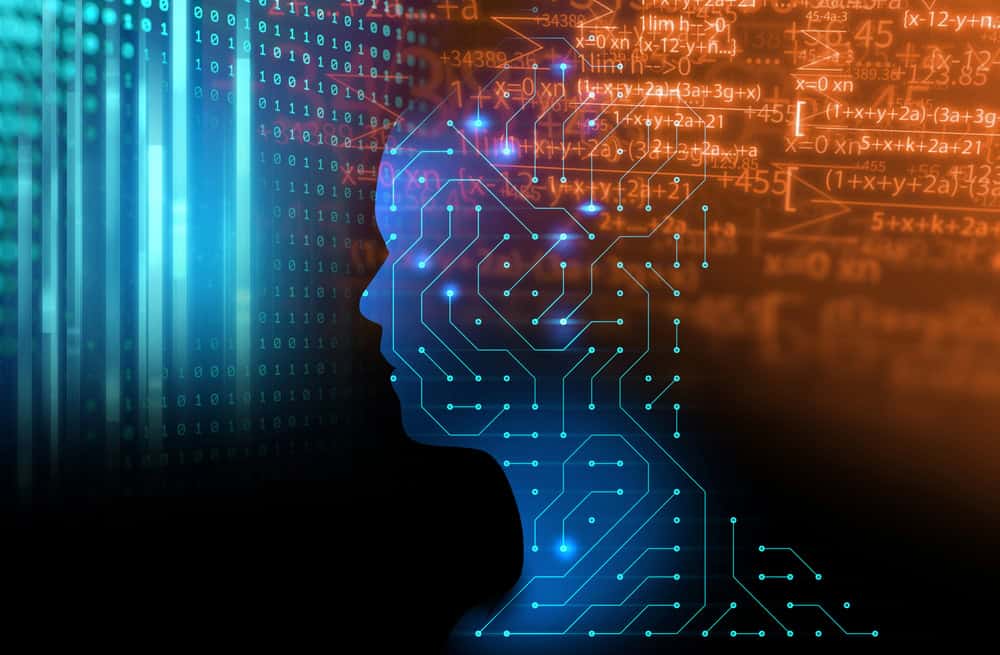
At its core, cognitive computing uses hardware and software to simulate human intelligence, using all the processes of human intelligent behavior. It acquires and processes data and uses relevant information to run a system. Cognitive computing, used in artificial intelligence (AI) applications, enables machines to learn from data by applying statistical models to understand patterns from occurrences over time. A competent cognitive system even has the capability to generate reasoning by accessing huge amounts of data, mimicking the way the human brain functions.
Rapid advancement in various AI algorithms in anomaly detection, regression, two class, multi-class, and clustering has opened up the floodgates, and going forward cognitive computing can be leveraged to re-imagine business models and transform everyday functions.
There are several ways in which cognitive computing is impacting everyday reality and the way we could work in the future.
Self-driving cars
Today, smart vehicles already have AI-based driver-assist features such as self-parking, cruise controls to keep vehicles in the designated lane, and speed control depending on the vehicles around. Autonomous vehicle manufacturers are using deep learning techniques and sophisticated neural networks to deal with traffic randomness. For example, NIVIDIA’s DRIVE PX2 is working with leading auto manufacturers in building AI-based self-driving cars.
Last year, three auto majors partnered to launch a project aimed at helping vehicles communicate with one another and, in turn, enable drivers to gain a better understanding of traffic conditions, using the power of AI to improve transport management.
Drones
Large logistics companies are using cognitive computing in a big way through drones that provide last-mile delivery. Along with drone package delivery, cognitive computing will even facilitate simulated drone missions and drone fleet coordination by dynamically generating mission plans and optimizing them continuously to ensure accuracy and efficient use of resources. Real-time flight-path tracking and recalculation in a dynamically-changing environment will also become possible with cognitive systems. Clearly, fleet management is another area where cognitive computing will have a huge impact in the future. Related: Use cases in transportation management
Emotion-aware machines
Emotion recognition and analysis is emerging as a promising technological development for the media and marketing sectors in a retail environment. For example, with 3D facial imaging technology, customer emotion and sentiment can be detected and analyzed; this will help brands deliver personalized experiences in their marketing campaigns and carry out real-time micro-segmentation to achieve finer targeting based on unique customer behavior and response.
The combination of cloud and cognitive computing and advancements in AI algorithms will provide immense computing power in the areas of temporal reasoning, geospatial reasoning, natural language processing and semantic search, thereby moving marketing platforms from a B2C to a B2I(business 2 individual) model. Thus, individual customer engagement will go far beyond chat bots, which are already in use.
Child psychology is another area that will benefit greatly from emotion-aware applications. The development of ‘smart toys’, which will respond according to the behavior of a child, will help marketers and parents learn more about a child’s development and devise interventions accordingly.
Diagnostics and precision medicine
AI-powered clinical assistants will soon be seen in most hi-tech hospitals and healthcare centers. These assistants can handle routine patient problems, thus speeding up the process of diagnosis for the patient and ensure doctors’ time is not wasted on routine tasks.
Apart from disease diagnostics, AI has also taken giant strides in drug effect prediction for each patient. Trial drug prediction and precision medicine have the potential to increase lifespan and improve the quality of life.
It will impact higher-level health issues as well—IBM is teaming up with Stanford to build cognitive machine learning models that can predict heart failure in advance and Intel has announced its own competition to find algorithms that can predict lung cancer. Related: computer-aided diagnosis and bioinformatics
Employee behavior analysis
Cognitive computing can help the corporate sector manage employee churn by studying employee behavior based on activities and preferences. This analysis will help companies engage with employees in a proactive manner and enhance employee experience.
In addition, organizations are also expected to use cognitive technology to gain insights that will facilitate decision-making.
Ambient intelligence
Cognitive computing extends itself to sensors and systems that work on ambient intelligence. The combination of cloud computing, big data, neural networks and mobile computing will make it possible for brands to understand the context in which its users operate. Knowing the context will allow businesses to perform real-time actions based on ambient situations. Home automation systems and ambient lighting systems are some applications in this space. Experts say that by 2020, ambient computing will play a predominant role in more everyday life situations.
AI and data: The key to the future
This is just the beginning. In the next two years, we will see a huge growth in intelligent applications that defuse bombs, take care of the elderly, solve climate change issues, and save lives. Given the increasing utility of this technology, Forrester estimates businesses investment in AI will increase by 300% in 2017.
Today, data and algorithms can be mined to create statistical models. What will add to the vast data available is the data generated by IoT (Internet of Things) sensors and mobile devices—providing in-depth intelligence about the customer’s environment.
Cognitive computing holds the key to the data future. Cognitive systems are already transforming the manner in which businesses interact with their customers. In the days to come, it will become a pervasive and persuasive reality that helps brands drive workplace productivity, build better products, and deliver extremely personalized and meaningful experiences for consumers.
Learn more:

 Best Practices for Deploying and Scaling Industrial AIArtificial Intelligence (AI) is transforming industrial operations, helping organizations optimize workflows, reduce downtime, and enhance productivity. Different industry verticals leverage AI in unique ways.Link to The Center for Adaptive Edge Intelligence
 The Center for Adaptive Edge IntelligenceAdaptive edge intelligence brings real-time decision-making to the point of data creation, whether from sensors, machines, or cameras.Link to The Value of Vehicle Electrification
 The Value of Vehicle ElectrificationElectric vehicles (EVs) present automakers with many design, engineering, and manufactu ring challenges.Link to Accelerating Manufacturing Digital Transformation with Industrial Connectivity and IoT
 Accelerating Manufacturing Digital Transformation with Industrial Connectivity and IoTDigital transformation is empowering industrial organizations to deliver sustainable innovation, disruption-proof products and services, and continuous operational improvement.Link to Smart Manufacturing for Automotive
 Smart Manufacturing for AutomotiveLeading a transportation revolution in autonomous, electric, shared mobility and connectivity with the next generation of design and development tools.Link to Center for Data Pipeline Automation
 Center for Data Pipeline AutomationAs businesses become data-driven and rely more heavily on analytics to operate, getting high-quality, trusted data to the right data user at the right time is essential.Link to Center for Automated Integration
 Center for Automated IntegrationThe goal of automated integration is to enable applications and systems that were built separately to easily share data and work together, resulting in new capabilities and efficiencies that cut costs, uncover insights, and much more.Link to Continuous Intelligence: Insights
 Continuous Intelligence: InsightsDigital transformation requires continuous intelligence (CI). Today’s digital businesses are leveraging this new category of software which includes real-time analytics and insights from a single, cloud-native platform across multiple use cases to speed decision-making, and drive world-class customer experiences.