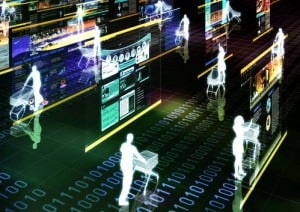
Now that IoT is all the rage, we’re hearing more about the somewhat dated concept of “frictionless retail.” What the heck is frictionless retail? Well, let’s imagine you walk into a major discount department store. Sensors monitor your behavior while you’re inside, noting where in the store you spend the most time. Aisle location may project demand for certain products, such as coolers, and thus more coolers are ordered automatically from the warehouse before you even have the urge to buy one.
But that’s the tip of the iceberg, when it come to retail and IoT. Warehouses will leverage automated inventory monitoring, RFID, and remove the humans from having to count everything just to understand what’s available. Moreover, and most important, staff will have the ability to monitor demand, and have that demand reflect immediately in the numbers and types of inventory on hand.The objective is to meet the demand with products, and never have a customer who has an urge to buy a product but that product is not available.
The overall idea is to remove delays or frustrations from the supply chain and best-serve the customer in the store. While we can certainly make the supply chain much more efficient by automating inventory control processes, supplier connections and behaviors, and by using on-demand predictive analytics, there is still the store itself and how the customer experiences the store.
A better retail customer experience
While monitoring customer behavior is a step forward, as to what they do in the store and where, there are IoT-enabled technologies that can be further applied here as well. For instance, the ability to bypass the checkout lines and just leave the store with your cart. Your phone responds to wireless product scanners that understand what’s in your cart using RFID, and it automatically deals with payment through your smart phone or another device. Looks like shoplifting, but it ain’t.
Moreover, IoT provides the ability to quickly find what you’re looking for and understand the stock levels before you do. Let’s say you need a mini-fridge for your kid’s dorm room, and you know that they are in the store, somewhere. You search on your smartphone app that tells you where the mini-fridges’ are located, their prices, and you have the option to buy. As you enter the store, you’re met with a staffer who calls you by name, helps you load up the product in your vehicle, and you leave without stopping at the register. That’s certainly better than looking for products that are out-of-stock, waiting in long lines at the register, and having to search for assistance in the store.
So what’s driving the IoT movement in retail? The first big store that provides good IoT connections to offer the services listed above will win a large market. Customers respond to convenience and speed. Just look at the success of on-line retailers such as Amazon.com. Brick-and-mortar stores must be better at providing a frictionless customer experience and supply chain, as well as provide a frictionless on-line experience. In other words, get onboard the IoT train now, or get out of the business.

 Best Practices for Deploying and Scaling Industrial AIArtificial Intelligence (AI) is transforming industrial operations, helping organizations optimize workflows, reduce downtime, and enhance productivity. Different industry verticals leverage AI in unique ways.Link to The Center for Adaptive Edge Intelligence
 The Center for Adaptive Edge IntelligenceAdaptive edge intelligence brings real-time decision-making to the point of data creation, whether from sensors, machines, or cameras.Link to The Value of Vehicle Electrification
 The Value of Vehicle ElectrificationElectric vehicles (EVs) present automakers with many design, engineering, and manufactu ring challenges.Link to Accelerating Manufacturing Digital Transformation with Industrial Connectivity and IoT
 Accelerating Manufacturing Digital Transformation with Industrial Connectivity and IoTDigital transformation is empowering industrial organizations to deliver sustainable innovation, disruption-proof products and services, and continuous operational improvement.Link to Smart Manufacturing for Automotive
 Smart Manufacturing for AutomotiveLeading a transportation revolution in autonomous, electric, shared mobility and connectivity with the next generation of design and development tools.Link to Center for Data Pipeline Automation
 Center for Data Pipeline AutomationAs businesses become data-driven and rely more heavily on analytics to operate, getting high-quality, trusted data to the right data user at the right time is essential.Link to Center for Automated Integration
 Center for Automated IntegrationThe goal of automated integration is to enable applications and systems that were built separately to easily share data and work together, resulting in new capabilities and efficiencies that cut costs, uncover insights, and much more.Link to Continuous Intelligence: Insights
 Continuous Intelligence: InsightsDigital transformation requires continuous intelligence (CI). Today’s digital businesses are leveraging this new category of software which includes real-time analytics and insights from a single, cloud-native platform across multiple use cases to speed decision-making, and drive world-class customer experiences.