There is a truism in the IoT world that more data makes for better decisions. How will this play out as the industrial IoT (IIoT) market prepares for 2018?
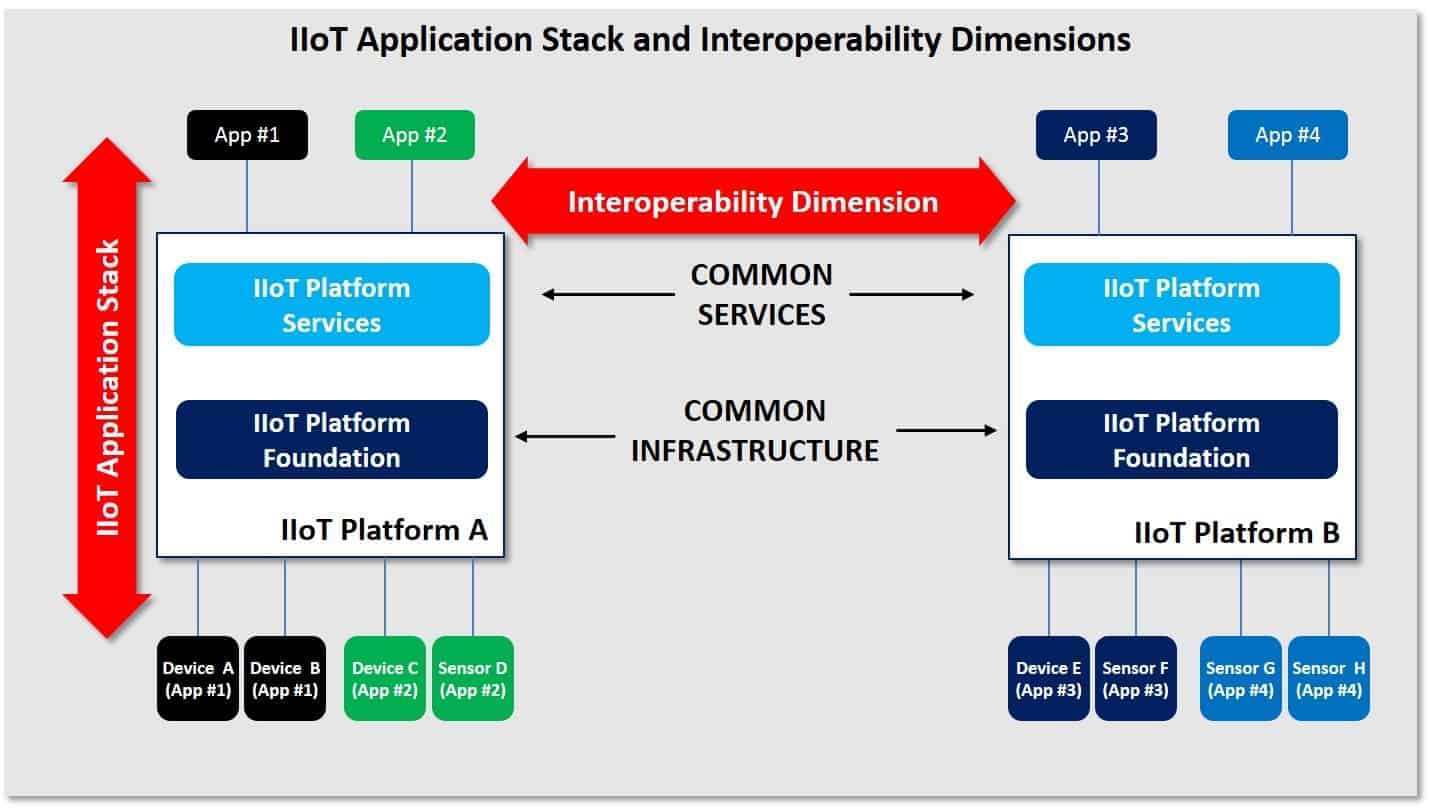
To date, many organizations have experimented with first-generation IoT applications, with strict data boundaries. They have learned to use a range of enabling technologies for connecting machines, deploying sensors, remotely updating in-field devices, applying machine learning and rule-based AI technologies and visualizing data to manage assets, improve productivity and save money. The flow of data is linear, along with the IIoT application stack, from machine sensor(s) to an IoT application (e.g. condition monitoring, predictive analytics, quality control etc.). These are generally termed vertical or siloed applications.
See also: New framework tackles interoperability
Having navigated the experimentation phase, 2018 will see many organizations deploying multiple, parallel applications on a common infrastructure (e.g. using a single device management tool and cloud-services platform). Inside a factory, for example, this might encompass individual applications for asset management in a manufacturing cell; condition monitoring for a mission-critical finishing machine; and, stock control of component supply-chains.
In time, facility owners will see value in linking in-factory applications to those in sister factories and even to third-party suppliers, distribution channels, and field-support partners. This will shift the data-flow paradigm away from the traditional, vertical IIoT stack arrangement to more horizontal approaches.
As illustrated, the ability to share data across multiple, siloed, vertical applications depends on a set of common services. A simple example is a device management tool, to manage and configure devices remotely, shared across multiple applications. This means that in addition to managing its own connected devices, a common (interoperable) device manager would have the added functionality to recognize, bring on-board and interact with devices without a priori agreement or configuration between communicating entities. (Source: Industrial Internet Consortium: Business Strategy & Innovation Framework White Paper.)
In the example illustration, application App #1 should be able to interact with Sensor D (associated with App #2), even though they are on the same IIoT platform. And, App #3 should be able to draw data from Device B (associated with App #1), across separate platforms.
Apart from the ability to gain access to more data, why should organizations bother with this kind of complexity? One reason is that an interoperable design makes it easier to mix and match technologies, e.g. some devices connected via cellular and others connected via Wi-Fi or, devices communicating via a mix of HTTP, CoAP, MQTT and OPC-UA protocols.
Interoperability Also Fosters Innovation
A second reason is that interoperability allows users to choose from different vendor solutions, which fosters cost-competitiveness and innovation. If you have ever taken your cell phone abroad, you’ll appreciate the ease with which it works, irrespective of who manages the underlying network.
Solution providers and standardization bodies are already laying the groundwork for higher-value interoperability ideas. These include the use of common information models and semantic interoperability techniques. What this means in practice is that a temperature sensor in a building might send a data value of 22.5 allowing a receiving application to interpret this as a temperature reading from a climate control unit (as distinct from a water-supply unit, for example), with measurements based on the Celsius scale and to a designated level of precision. As a result, it’s now possible to expand the notion of data to include not just the sensor measurements but other parameters such as time-stamp, location, ownership, and duration-validity.
Semantic interoperability adds extra dimensions to the idea of ‘more data’. From a design standpoint, 2018 will be the year to prepare for innovative, IIoT interoperability developments and to factor their innovation potential into the design of Big Data and analytics solutions.

 Best Practices for Deploying and Scaling Industrial AIArtificial Intelligence (AI) is transforming industrial operations, helping organizations optimize workflows, reduce downtime, and enhance productivity. Different industry verticals leverage AI in unique ways.Link to The Center for Adaptive Edge Intelligence
 The Center for Adaptive Edge IntelligenceAdaptive edge intelligence brings real-time decision-making to the point of data creation, whether from sensors, machines, or cameras.Link to The Value of Vehicle Electrification
 The Value of Vehicle ElectrificationElectric vehicles (EVs) present automakers with many design, engineering, and manufactu ring challenges.Link to Accelerating Manufacturing Digital Transformation with Industrial Connectivity and IoT
 Accelerating Manufacturing Digital Transformation with Industrial Connectivity and IoTDigital transformation is empowering industrial organizations to deliver sustainable innovation, disruption-proof products and services, and continuous operational improvement.Link to Smart Manufacturing for Automotive
 Smart Manufacturing for AutomotiveLeading a transportation revolution in autonomous, electric, shared mobility and connectivity with the next generation of design and development tools.Link to Center for Data Pipeline Automation
 Center for Data Pipeline AutomationAs businesses become data-driven and rely more heavily on analytics to operate, getting high-quality, trusted data to the right data user at the right time is essential.Link to Center for Automated Integration
 Center for Automated IntegrationThe goal of automated integration is to enable applications and systems that were built separately to easily share data and work together, resulting in new capabilities and efficiencies that cut costs, uncover insights, and much more.Link to Continuous Intelligence: Insights
 Continuous Intelligence: InsightsDigital transformation requires continuous intelligence (CI). Today’s digital businesses are leveraging this new category of software which includes real-time analytics and insights from a single, cloud-native platform across multiple use cases to speed decision-making, and drive world-class customer experiences.