Researchers from MIT and
Toyota have published a new open dataset, called DriveSeg, aimed at advancing research
into self-driving systems.
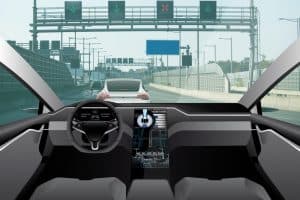
The dataset is different from most others, as it is primarily video driving scenes. Pattern recognition systems perform best when they use video scenes, rather than static images, as it makes amorphous objects more easily identifiable.
SEE ALSO: Could Coronavirus Break Legislative Gridlock For Emerging Technologies?
“In sharing this dataset, we hope to encourage researchers, the industry, and other innovators to develop new insight and direction into temporal AI modeling that enables the next generation of assisted driving and automotive safety technologies,” said Bryan Reimer, principal researcher at MIT.
Waymo, the leader of autonomous vehicle development, uses a video feed from real-world tests and simulation to improve its self-driving technology. For start-ups without a fleet of cars or access to a large database of street view images, open datasets are the next best option.
“Whenever we
drive, we are always tracking the movements of the environment around us to
identify potential risks and make safer decisions,” said Rini Sherony, Toyota research
center senior principal engineer.
“By sharing this dataset, we hope to accelerate research into autonomous driving systems and advanced safety features that are more attuned to the complexity of the environment around them.”
Toyota’s Slow Drive to Autonomy
MIT has a longstanding research relationship with Toyota, established in 2015 to accelerate artificial intelligence research. Since then, they have explored a blockchain-based insurance program, published a model for better autonomous reasoning, and built a $1 billion autonomous vehicle research hub in Ann Arbor.
Toyota has been relatively slow to self-driving vehicles and has focused more on semi-autonomous safety features than full autonomy. This may pay off for the car manufacturer, as public opinion on self-driving is still low and we’re unlikely to see a fully road-ready self-driving car in the next few years.

 Best Practices for Deploying and Scaling Industrial AIArtificial Intelligence (AI) is transforming industrial operations, helping organizations optimize workflows, reduce downtime, and enhance productivity. Different industry verticals leverage AI in unique ways.Link to The Center for Adaptive Edge Intelligence
 The Center for Adaptive Edge IntelligenceAdaptive edge intelligence brings real-time decision-making to the point of data creation, whether from sensors, machines, or cameras.Link to The Value of Vehicle Electrification
 The Value of Vehicle ElectrificationElectric vehicles (EVs) present automakers with many design, engineering, and manufactu ring challenges.Link to Accelerating Manufacturing Digital Transformation with Industrial Connectivity and IoT
 Accelerating Manufacturing Digital Transformation with Industrial Connectivity and IoTDigital transformation is empowering industrial organizations to deliver sustainable innovation, disruption-proof products and services, and continuous operational improvement.Link to Smart Manufacturing for Automotive
 Smart Manufacturing for AutomotiveLeading a transportation revolution in autonomous, electric, shared mobility and connectivity with the next generation of design and development tools.Link to Center for Data Pipeline Automation
 Center for Data Pipeline AutomationAs businesses become data-driven and rely more heavily on analytics to operate, getting high-quality, trusted data to the right data user at the right time is essential.Link to Center for Automated Integration
 Center for Automated IntegrationThe goal of automated integration is to enable applications and systems that were built separately to easily share data and work together, resulting in new capabilities and efficiencies that cut costs, uncover insights, and much more.Link to Continuous Intelligence: Insights
 Continuous Intelligence: InsightsDigital transformation requires continuous intelligence (CI). Today’s digital businesses are leveraging this new category of software which includes real-time analytics and insights from a single, cloud-native platform across multiple use cases to speed decision-making, and drive world-class customer experiences.