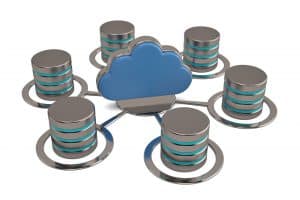
Oracle today announced it has infused Oracle Enterprise
Manager with additional capabilities that make it simpler to manage its databases
running in hybrid cloud computing environments.
Oracle Enterprise Manager is the control plane that Oracle
makes available to IT organizations that wish to manage instances of Oracle databases
and associated IT infrastructure from within an on-premises IT environment.
See also: Oracle Launches Free Database and Cloud Service Tier
In addition to providing a single dashboard to manage multiple Oracle database environments running on multiple clouds, the latest release of Oracle Enterprise Manager provides additional analytics and monitoring tools in addition to making it simpler to migrate databases into a public cloud computing environment. IT organizations can also now opt to take advantage of a Grafana plug-in to visualize data.
The enhanced analytics provide enhanced capacity and
forecasting capabilities enabled by Exadata Warehouse, an instance of a data
warehouse running on Oracle databases optimized for Exadata servers from Oracle,
says Dan Koloski, vice president of product management for Oracle.
Finally, Oracle has improved security by adding support for Transparent
Data Encryption, improved compliance monitoring, fine-grained control of
on-premises fleets, and new security standards for Oracle Database 18c and 19c
databases. Oracle also revealed that Oracle Enterprise Manager has been
certified for best practices by the Center for Internet Security Benchmarks.
By providing a superior lifecycle management experience,
Oracle is making it more compelling for organizations to embrace a commercial
database platform versus relying on open-source databases, says Koloski. As IT
organizations find themselves managing fleets of databases it quickly becomes apparent
the challenges associated with managing a fleet of open source databases
spanning multiple platforms lead to higher total costs, notes Koloski. The manageability
of Oracle databases becomes a major differentiator, says Koloski.
“Customers want to be able to manage a hybrid estate as it
were a single estate,” says Koloski. “They don’t want to go from fire drill to
fire drill.”
Oracle Enterprise Manager is intended to be an alternative
to a management service that Oracle also offers via its cloud. Oracle provides
IT organizations with a choice because some organizations prefer having the
management plane for their database environments to reside in an on-premises IT
environment or on cloud infrastructure they directly control, notes Koloski.
Regardless of where the manage plane resides, Koloski notes
the role of database administrators (DBAs) is evolving. Instead of managing a
handful of databases the average DBA will be increasingly relying on machine
learning algorithms and other forms of artificial intelligence to manage fleets
of databases, says Koloski. Many DBAs are also now managing the cloud
infrastructure databases are deployed on, adds Koloski.
No matter which database platform gets selected, the one
thing that is certain is there have never been more data stores to manage. IT organizations
in the months and years ahead will be hard-pressed to manage them all without
relying on additional layers of automation. It may take some time for IT
organizations to adjust their processes to that new reality, but like it or not
increased levels of databases automation are now all but inevitable.

 Best Practices for Deploying and Scaling Industrial AIArtificial Intelligence (AI) is transforming industrial operations, helping organizations optimize workflows, reduce downtime, and enhance productivity. Different industry verticals leverage AI in unique ways.Link to The Center for Adaptive Edge Intelligence
 The Center for Adaptive Edge IntelligenceAdaptive edge intelligence brings real-time decision-making to the point of data creation, whether from sensors, machines, or cameras.Link to The Value of Vehicle Electrification
 The Value of Vehicle ElectrificationElectric vehicles (EVs) present automakers with many design, engineering, and manufactu ring challenges.Link to Accelerating Manufacturing Digital Transformation with Industrial Connectivity and IoT
 Accelerating Manufacturing Digital Transformation with Industrial Connectivity and IoTDigital transformation is empowering industrial organizations to deliver sustainable innovation, disruption-proof products and services, and continuous operational improvement.Link to Smart Manufacturing for Automotive
 Smart Manufacturing for AutomotiveLeading a transportation revolution in autonomous, electric, shared mobility and connectivity with the next generation of design and development tools.Link to Center for Data Pipeline Automation
 Center for Data Pipeline AutomationAs businesses become data-driven and rely more heavily on analytics to operate, getting high-quality, trusted data to the right data user at the right time is essential.Link to Center for Automated Integration
 Center for Automated IntegrationThe goal of automated integration is to enable applications and systems that were built separately to easily share data and work together, resulting in new capabilities and efficiencies that cut costs, uncover insights, and much more.Link to Continuous Intelligence: Insights
 Continuous Intelligence: InsightsDigital transformation requires continuous intelligence (CI). Today’s digital businesses are leveraging this new category of software which includes real-time analytics and insights from a single, cloud-native platform across multiple use cases to speed decision-making, and drive world-class customer experiences.