Best Practices for Deploying and Scaling Industrial AI
Artificial Intelligence (AI) is transforming industrial operations, helping organizations optimize workflows, reduce downtime, and enhance productivity. Different industry verticals leverage AI in unique ways.
Accelerating Manufacturing Digital Transformation with Industrial Connectivity and IoT
Digital transformation is empowering industrial organizations to deliver sustainable innovation, disruption-proof products and services, and continuous operational improvement.
Leading a transportation revolution in autonomous, electric, shared mobility and connectivity with the next generation of design and development tools.
As businesses become data-driven and rely more heavily on analytics to operate, getting high-quality, trusted data to the right data user at the right time is essential.
The goal of automated integration is to enable applications and systems that were built separately to easily share data and work together, resulting in new capabilities and efficiencies that cut costs, uncover insights, and much more.
Digital transformation requires continuous intelligence (CI). Today’s digital businesses are leveraging this new category of software which includes real-time analytics and insights from a single, cloud-native platform across multiple use cases to speed decision-making, and drive world-class customer experiences.
Best Practices for Deploying and Scaling Industrial AI
Artificial Intelligence (AI) is transforming industrial operations, helping organizations optimize workflows, reduce downtime, and enhance productivity. Different industry verticals leverage AI in unique ways.
Accelerating Manufacturing Digital Transformation with Industrial Connectivity and IoT
Digital transformation is empowering industrial organizations to deliver sustainable innovation, disruption-proof products and services, and continuous operational improvement.
Leading a transportation revolution in autonomous, electric, shared mobility and connectivity with the next generation of design and development tools.
As businesses become data-driven and rely more heavily on analytics to operate, getting high-quality, trusted data to the right data user at the right time is essential.
The goal of automated integration is to enable applications and systems that were built separately to easily share data and work together, resulting in new capabilities and efficiencies that cut costs, uncover insights, and much more.
Digital transformation requires continuous intelligence (CI). Today’s digital businesses are leveraging this new category of software which includes real-time analytics and insights from a single, cloud-native platform across multiple use cases to speed decision-making, and drive world-class customer experiences.
Process + Master Data & Digital Transformation, Part II
Process + Data are both critical for innovation and transformation. The potential and the power of Data insights are realized in the digitized and automated processes.
This is Part II of a 2-part
article on Process + Data. Part I
described the evolution of intelligent DBMSsand intelligent BPMSs. Artificial Intelligence, as well as
various digital technologies, have had a tremendous impact on both trends.
iBPMSs also support process and work automation – especially through Robotic
Process Automation.
Part I highlighted
the lack of balance between DBMSs – especially advanced NoSQL databases – and
BPMSs in enterprise architectures. Through AI and other digital technologies,
they have both become intelligent. Furthermore,
we are now witnessing a plethora of approaches for No Code/Low Code development
in both domains. There are now Citizen
Developers and Citizen Data
Scientists.
However, the DBMS layer with
multiple Relational and NoSQL database is ubiquitous in IT Infrastructures and
Enterprise Architectures. Data is the new crude oil!
The BPMS layer? Not so much.
To make the most of the synergy
between Process and Data, the enterprise in-motion needs to focus on the
obvious: the core business applications and solutions that drive business value. To re-iterate the obvious:
it is not about technology!
Valuestreams (aka Valuechains)
The data approach is at its core a
bottom-up approach focusing on persistent data. Important and critical. But
still, bottom-up technology-driven. Here we will elucidate three robust use
cases that take a different approach that is much more supportive of Autonomic
Enterprise-In-Motion.
The process-driven application
approach is very different. A fundamental assumption in the process-driven
approach is that a business is a collection of Valuestreams. Businesses think
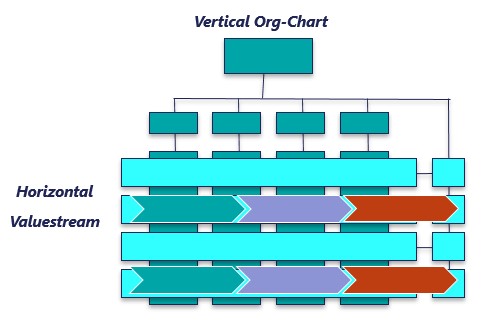
in terms of objectives and milestones or stages to achieve these objectives in the context of Valuestreams. Most organizations are still organized vertically,
and each business unit focuses on their measurable objectives.
Silos in business units, various applications, and trading partners are pervasive
Valuestreams go horizontally across business units,
different legacy applications, and trading partners attempting to optimize
customer experiences – to realize and operationalize value. The Cultural change in the Enterprise-In-Motion needs to
capture, digitize, and automate the valuestream for optimized visibility and
control.
The
Valuestream Digitization and Automation are the central pillars for Digital
Transformation
Organizationally, the culture needs to encourage empowered
ownership of the valuestream – across silos. Digital
Process Automation achieves the digitization and automation of valuestreams
through Dynamic
Case Management (DCM).
Typically, these are siloed, and the communication is done
through manual hand-offs. It is interesting to note that digital technologies
and even digital transformation practices have had little impact on vertically
organized siloed organizations. The organization hierarchy has persisted.
Valuestreams go horizontally often with an empowered owner for its operational
excellence. If the valuestreams are not optimized through DPA, there will be
considerable waste and inefficiencies.
The
power of the digitized & automated Valuestreams is the core enabler of the
three use cases
Process + Master Data
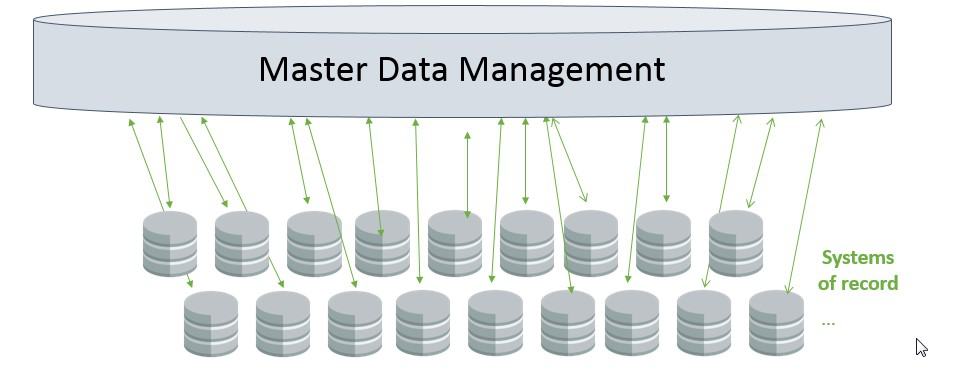
According to the MDM Institute: Master Data Management (MDM) is the
authoritative, reliable foundation for data used across many applications and
constituencies with the goal to provide a single view of the truth no matter
where it lies.
The siloes mentioned above – in
organizations, business units, and applications that are owned by them – are
the main reason there are inconsistencies in the information about the same
entity: customer, supplier, product, or other. Master Data addresses several
pain points. Here are a few examples:
Inconsistencies and poor data quality results in
poor, erroneous, and even risky decisions. The automated dynamic case
executions are as good as the consistency of the data.
For Customers, Products, Pricing, Partners,
Suppliers, Services, and other Master Data shared across applications, often
different siloed systems contain contradictory information about the same
entity (e.g., wrong marital status). There is a lot of waste attempting to keep
heterogeneous data consistent and of high quality.
Mergers and Acquisitions also create data
consistency challenges – to have a single version of the truth about a customer
or offering across the organization
Here are some typical examples:
Customer address is not updated consistently
across all the databases or applications that store the address.
The price of a product is not consistent and depends on
the channel (retail, Web, mobile app, etc.)
The
Supplier list, availability, and list
of parts is inconsistent across various ERP systems
There are many more.
Master
Data is needed to address data quality, data consistency, data sourcing, data
accuracy, data integrity, data replication, and data completeness.
As noted above, an enterprise is
the aggregate of its Valuestreams. These valuestreams executions are only as
good as the consistency of the data. The Computer Science expression “Garbage
In – Garbage Out” (GIGO) is very much applicable here. In fact, data
inconsistencies will sooner or later impact the customer experience resulting
in customer dissatisfaction: lower Net Promoter Scores (NPS), higher ratio of
detractors!
The Bottom-Up MDM Approach
Often organizations attempt to
address the challenges of Master Data through Master Data Management tools and
systems. This could end up being “big bang” master data projects, with
expensive tools. Some organizations have established MDM centers of excellence
for governance. The technology and data consistencies are formidable and
important to address, including data cleansing, addressing missing data, data
consistency, ETL, and data integration. The danger is the enormous effort
required to normalize master data without prioritizing through the business
objectives. One common problem is that initiatives attempting to resolve master
data challenges often do so in a silo. The MDM itself becomes yet another layer
of software that needs to be managed. If data copying and replication is used,
this also creates additional overhead and potential inconsistencies.
However, the more serious problem
is the lack of focus and precise justification in the creation and management
of specific master data. For instance, the aggregate number of fields or
attributes about a Customer from various systems of records could be in the
100s. The most critical customer Valuestreams will typically need a very small
subset of the available fields or attributes. The rest will rarely – if ever –
be used. While the reasoning of the MDM system might make sense, this bottom-up
approach could be sub-optimal.
Top-Down Valuestream Approach
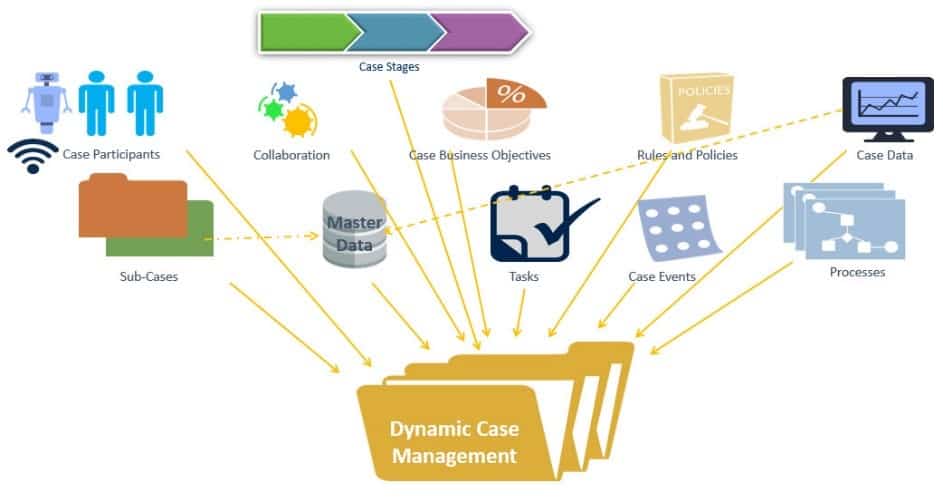
A more optimal approach is to
treat MDM challenges as part of overall continuous improvement initiatives,
especially through end-to-end dynamic case management solutions that connect
silos that touch and manipulate master data. The Enterprise-In-Motion is an
aggregate of Valuestreams. MDM is about making the Valuestreams run as well as
they can. Each of these Valuestreams have specific business objectives – for
instance, reducing cost, improving the NPS, or generating revenue. The core to
this approach is a Dynamic Case Management (DCM) -enabled layer that wraps and
modernizes legacy systems. As noted in Part I, DCM is a key capability in DPA –
in addition to Robotic Automation, AI, and other Digital Technologies.
The
top-down approach focuses only on those fields or attributes that are needed
for specific Valuestreams that are optimized, digitized, and automated through
DPA.
This “top-down” approach
prioritizes transformational projects with MDM improvements and balances risk
with business value. These technical database issues must be addressed, but
with a revamped approach to priorities.
Think Big but Start Small
In the Enterprise-In-Motion,
solutions to master data issues are driven by “Think Big…But Start Small”
governance. The approach is to realize quick wins, build or achieve the needed
master data rigor, and then expand with additional transformational solutions
that include Master Data. In other words, with the iterative approach, the
aggregate master is built piecemeal instead of a Big Bang comprehensive Master
Data and then realization of projects
for solutions for digital transformation. The Master Data governance and
implementation can be embedded in the DNA of the process automation
methodologies and lead to the prioritization of data sources and the
optimization needed to manage data within the DPA layer. The objective is to
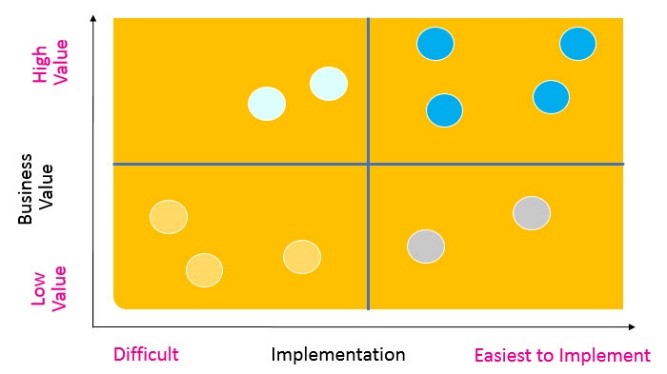
balance ease of Master Data with business value for specific prioritized projects.
In Design
Thinking Methodology, prioritization is
critical for the backlog of Valuestream projects. These prioritizations
systematically rank projects balancing ease of implementation with business
value. Here are some potentially measurable dimensions that could impact the
prioritization:
Complexity
of consolidating the master data fields for the project
Impact
of poor master data quality on end-to-end cases for the project
The
application of the master data fields in the high business impact project
Availability
of APIs to access the master data field values for the project
The prioritized slivers reflecting
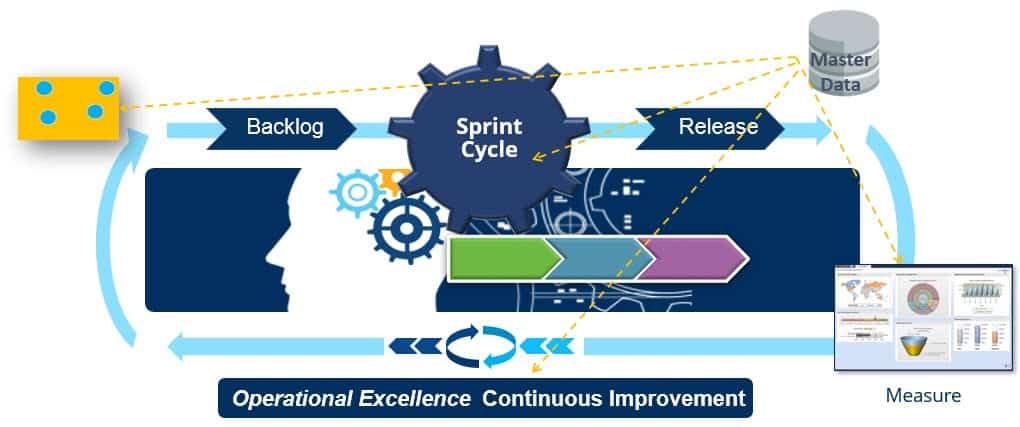
Master Data support are fed to the agile
methodology. The methodology should help you continuously monitor and
measure the business objectives. The Master Data gets optimized iteratively
throughout the slivers. The innovative projects fed by the Design Thinking
prioritizations are continuously measured and monitored. There are three types
of iterations in the Top-Down approach:
Iterations
in the backlog of the projects – prioritized by business value as well as
Master Data availability dimensions
Iterations
while building the DPA solution while leveraging Master Data
Post-production,
it is also important to compare the targeted vs. achieved objectives for
further improvements.
Thus, the Top-Down approach
incrementally builds up the Master Data, while continuously delivering high
business value projects and improving them.
Digital Transformation: IoT & Blockchain
The Valuestream process-driven
top-down approach is an enabler for Digital Transformation technology value
propositions. Two of these technologies that are most critical for the Enterprise-In-Motion
are IoT and Blockchain.
IoT is about connectivity of increasingly intelligent devices
through sensors and actuators. The foundation for connectivity, balancing
range, and power supply considerations is, of course, critical. There are
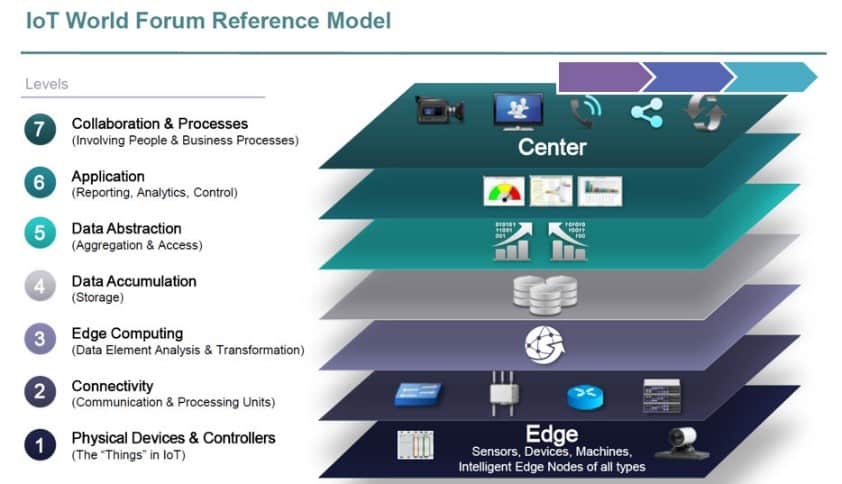
several components in the overall stack and multi-tier architectures of IoT.
The lowest levels include physicaldevices and
systems. It is precisely this cyber-physicalconnectivity that is laying the
foundation of the IoT era.Other
layers include the data accumulation and analysis layers. The IoT connected
devices generate an enormous amount of data: Big Data is becoming Thing Data!
Some of this data – often the bulk of it – is being processed at the edges.
This is significant and spot on. Success can be achieved
top-down with concrete business objectives from the get-go. Top-down business
solutions involve People, Connected Devices (aka IoT), trading Partners, and
Enterprise Applications (aka Systems of Record): all collaborating and
orchestrating their activities towards concrete and measurable Key Performance
Indicators (KPIs). The collaborations are in the context of End-to-End Valuestreams (the
operating word being Value), that are
modeled, automated, and monitored
through DPA for continuous improvement. DPA methodology, competency best practices, andtechnology are the engine that
drives IoT success.
There are many applications of IoT that are driven by DPA
Valuestreams. Digital
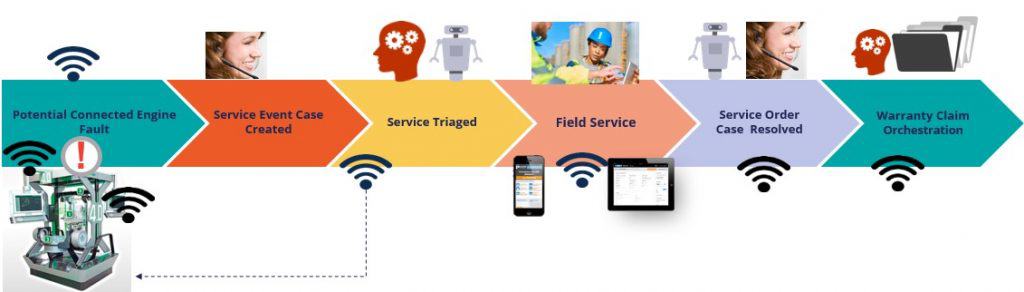
Prescriptive Maintenance is the killer application for IoT. As illustrated
here, it involves the orchestration of tasks whose participants include people
– for example, Customer Service and Field
Service – enterprise applications, AI for triaging the best actions,
Warranty chain management, and of course connected devices and IoT. The
end-to-end orchestration and automation are achieved through DPA.
Blockchain
is very much a revolution. It is the engine that empowers the emergence of
the Internet of Value (IoV). IoV is an important phase in the evolution of
the Internet. In the 1990s we started with the Internet of Information: the traditional Internet – the one
we use every day searching for information. Next came the Internet of Thingsor connected
devices that are becoming pervasive in consumer (e.g., Connected Homes), public
sector (e.g., Smart Cities), and industrial applications (e.g., Smart
Manufacturing). The road to IoT success
runs through Digital Process Automation. Blockchain that is the underlying
technology for cryptocurrencies is enabling the Internet of Value. The
value can be digital currency. More importantly, the “value” can also
be data that supports inter- and intra- organizational exchanges supporting
business objectives.
Blockchain as a Decentralized & Distributed Database
Blockchain stores the ledger of transactions between various
parties – in nodes that participate in validating the Blockchain. The ledger is
distributed and replicated. Enterprises collaborating in B2B transactions can
now share the transaction information via Blockchain. One potential application
for extended (i.e., involving different
trading partners) Enterprises-In-Motion is to treat the Blockchain as a
shared database for their trade transactions and access the data as needed from
within their enterprise applications. Thus, instead of trading partners
replicating the data in their internal ERP or database systems, the Blockchain
can serve as a Master Data for the inter-enterprise transactions! Blockchain
technology is still very much in its infancy. We will pass through several “Troughs
of Disillusionment” hype cycle
phases before robust IoV solutions become pervasive.
Blockchain technology discussions also tend to be very much
“bottom-up” – an interesting innovation looking for problems to solve. Like the
success of IoT running through DPA, Blockchain needs to evolve to a Valuechain (aka Valuestream) approach –
powered through DPA!
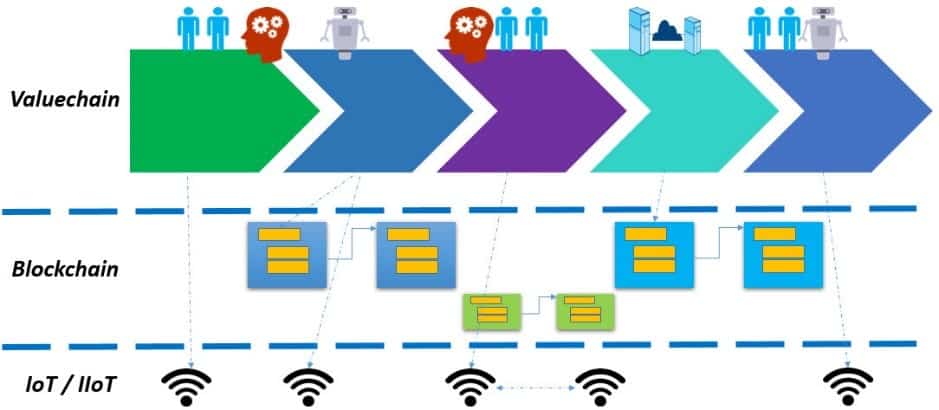
Valuechain Orchestration Layer: At the
top, you have the end-to-end Valuechain that orchestrates and sequences tasks
involving people, automated devices, and enterprise applications (aka systems
of record) and trading partners. This layer is digitized and automated through
DPA.
Blockchain Layer: The
decentralized distributed ledgers are managed at the middle Blockchain layer.
The Blockchains will execute either smart contract rules, exchange
cryptocurrencies, or both. The tasks or milestones of the end-to-end Valuechain
will leverage Blockchain in specific steps.
IoT/IIoT Connected Device Layer: The
lowest layer will be the IoT/IIoT connectivity layer. With Blockchain as well
as IoT/IIoT edge computing, an added advantage is pushing the execution and the
transactions to the edges. The overall Valuechain is at the top, with IoT/IIoT
edge computing that can leverage Blockchain as needed.
Process + Data Conclusions
Process and Data are both critical for the Enterprise-In-Motion.
However, the Process layer for automated Valuestreams – with robust DPA
(current incarnation in the evolution of BPM) – is often missing in IT
infrastructure and enterprise architectures. Part II of Process+Data covered
three compelling use cases that clearly illustrate the power of a top-down
business-driven Process approach. Even Master Data – that is at its core a database challenge – can be
transformed and optimized through prioritizing the Valuestreams and building up
the Master Data in the context of DPA iterations. The two other use cases
pertain to the most compelling Digital Transformation technologies: IoT and
Blockchain. For either, the road to success runs through DPA!
Process + Data are both critical for innovation and
transformation. The potential and the power of Data insights are realized in
the digitized and automated processes.
The
Enterprise-In-Motion IT infrastructures and enterprise architectures, as well
as the accompanying business value-focused methodologies, need DPA.
Dr. Setrag Khoshafian is Principal and Chief Scientist at Khosh Consulting. He is a pioneer and recognized expert in the transformation of innovative and agile enterprises. He has invented pragmatic approaches for innovation and cultural transformation through a holistic approach leveraging Intelligent Business Process Management, Intelligent Database Management, Internet of Things (IoT), Blockchain, AI, Low Code/No Code, Service-Oriented Architectures and Automation. Previously he was the Chief Evangelist & VP of BPM at Pegasystems Inc., the Senior VP of Technology at Savvion, and Chief Scientist & VP of Development at Portfolio Technologies.
Dr. Khoshafian is an author, thought leader, keynote speaker, and educator who has helped the cultural transformation journeys of entrepreneurial enterprises leveraging digital technologies.
He has been a senior executive in the software industry for the past 30 years, where he has invented, architected, and steered the production of several enterprise software products and solutions.
He is well recognized and quoted frequently for his contributions in Intelligent BPMS, Intelligent DBMS, Blockchain, IoT, AI, and Service-Oriented Enterprises.
Dr. Khoshafian is a frequent speaker and presenter at international workshops and conferences. He is the lead author of more than 10 books and hundreds of publications in various industry and academic journals.
He has also been full-time as well as adjunct professor in several universities across the globe. Dr. Khoshafian holds a PhD in Computer Science from the University of Wisconsin-Madison. He also holds MSc in Mathematics from AUB.
Twitter: @setrag
Linked In: https://www.linkedin.com/in/setrag
Digital transformation suffers when employees can’t master new solutions quickly enough. Application simulation and AI-based roleplay training can overcome such issues, creating comprehensive preparedness that enables users to master digital workflows and interpersonal interactions.
The industrial sector has always thrived on adaptation. AI, IoT, software-defined systems, and digital twins represent the next stage of that evolution.
Analysis and market insights on real-time analytics including Big Data, the IoT, and cognitive computing. Business use cases and technologies are discussed.
Advertiser Disclosure: Some of the products that appear on
this site are from companies from which TechnologyAdvice
receives compensation. This compensation may impact how and
where products appear on this site including, for example,
the order in which they appear. TechnologyAdvice does not
include all companies or all types of products available in
the marketplace.

 Best Practices for Deploying and Scaling Industrial AIArtificial Intelligence (AI) is transforming industrial operations, helping organizations optimize workflows, reduce downtime, and enhance productivity. Different industry verticals leverage AI in unique ways.Link to The Center for Adaptive Edge Intelligence
 The Center for Adaptive Edge IntelligenceAdaptive edge intelligence brings real-time decision-making to the point of data creation, whether from sensors, machines, or cameras.Link to The Value of Vehicle Electrification
 The Value of Vehicle ElectrificationElectric vehicles (EVs) present automakers with many design, engineering, and manufactu ring challenges.Link to Accelerating Manufacturing Digital Transformation with Industrial Connectivity and IoT
 Accelerating Manufacturing Digital Transformation with Industrial Connectivity and IoTDigital transformation is empowering industrial organizations to deliver sustainable innovation, disruption-proof products and services, and continuous operational improvement.Link to Smart Manufacturing for Automotive
 Smart Manufacturing for AutomotiveLeading a transportation revolution in autonomous, electric, shared mobility and connectivity with the next generation of design and development tools.Link to Center for Data Pipeline Automation
 Center for Data Pipeline AutomationAs businesses become data-driven and rely more heavily on analytics to operate, getting high-quality, trusted data to the right data user at the right time is essential.Link to Center for Automated Integration
 Center for Automated IntegrationThe goal of automated integration is to enable applications and systems that were built separately to easily share data and work together, resulting in new capabilities and efficiencies that cut costs, uncover insights, and much more.Link to Continuous Intelligence: Insights
 Continuous Intelligence: InsightsDigital transformation requires continuous intelligence (CI). Today’s digital businesses are leveraging this new category of software which includes real-time analytics and insights from a single, cloud-native platform across multiple use cases to speed decision-making, and drive world-class customer experiences.