In 2025, smart manufacturing became a strategic imperative for leaders seeking competitive advantage, resilience, and long-term growth. Global manufacturers face intensifying pressures, from supply chain volatility and tightening margins to talent shortages and evolving customer expectations, that demand not just incremental improvement but fundamental transformation.
Smart manufacturing, anchored in digital connectivity, advanced analytics, artificial intelligence (AI), robotics, and real-time operational intelligence, was seen as a way to deliver measurable gains in efficiency, quality, flexibility, and innovation. For manufacturing organizations that embraced smart manufacturing in 2025, the payoff extended beyond operational metrics to strategic value creation.
Many industry leaders leveraged digital twins to model operations before committing capital, deploying AI to shift from reactive to predictive decision-making, and experimenting with advanced robotics to address labor constraints and enhance workplace safety.
A Renewed Focus on Smart Manufacturing
Smart manufacturing represents the convergence of digital technologies with physical production systems to create highly adaptable, efficient, and intelligent operations. At its core, smart manufacturing extends traditional automation by embedding sensors (IoT), connectivity, and real-time data into machines and processes, enabling them to monitor conditions, communicate status, and make autonomous or guided decisions.
Through this integration, manufacturers can achieve unprecedented visibility into every stage of production, turning raw data into actionable insights that improve throughput, minimize unplanned downtime, and elevate product quality. That transformation aligns with Industry 4.0 principles but increasingly incorporates advanced AI and machine learning to enable predictive analytics, self-optimization, and context-aware control loops across complex industrial environments.
Top 5 RTInsights Smart Manufacturing Articles of 2025
Given the importance of smart manufacturing, leading global manufacturers renewed their efforts in 2025 by embracing new technologies. Here is our coverage of the technologies they used and the ways they were applied in the past year:
Humanoid Robots Ready to Trot Across Factory Floors
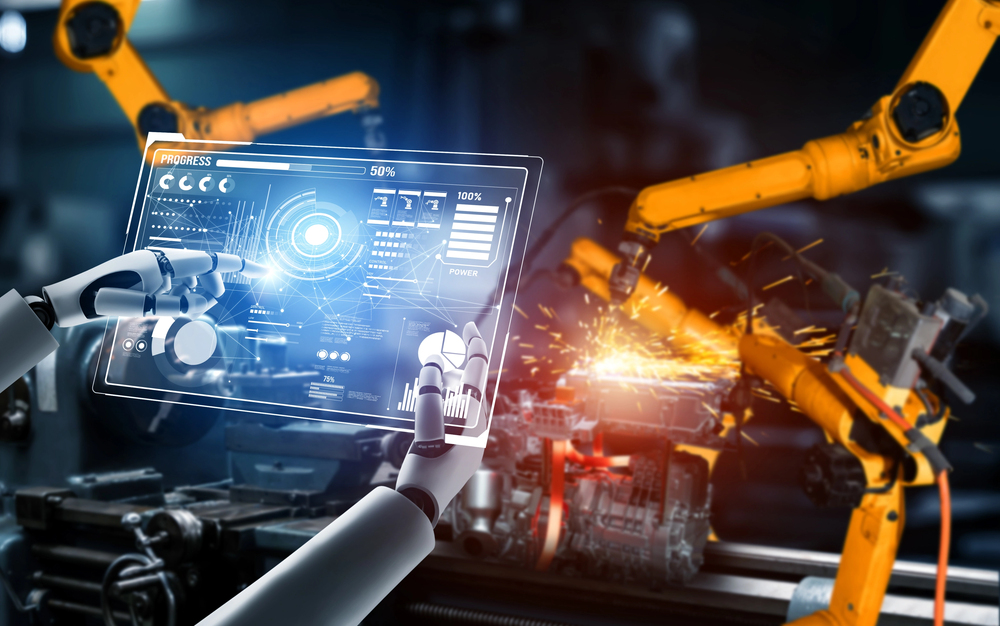
The article explores the emerging role of humanoid robots in industrial environments, marking a significant evolution from fixed-function automation to mobile, human-like robotic platforms. While traditional robotic arms have long handled welding, painting, and material handling tasks, newer humanoid systems equipped with advanced sensing, mobility, and AI capabilities are beginning to tackle more varied and dynamic work scenarios on factory floors. These robots are part of a broader “physical AI” vision that integrates autonomous mobile robots, manipulators, and collaborative systems into holistic smart manufacturing operations.
The piece highlights collaborative efforts, such as those between Accenture and Schaeffler AG, to demonstrate how digital simulations and digital twin models can help optimize robotic deployment, space layouts, and workload distribution before real-world execution. The emerging class of humanoid and mobile robots promises to improve flexibility and human-robot interaction. However, adoption remains nascent and will require careful planning around safety, task selection, and workforce integration.
2025 IoT Developments to Spur Industrial Innovations
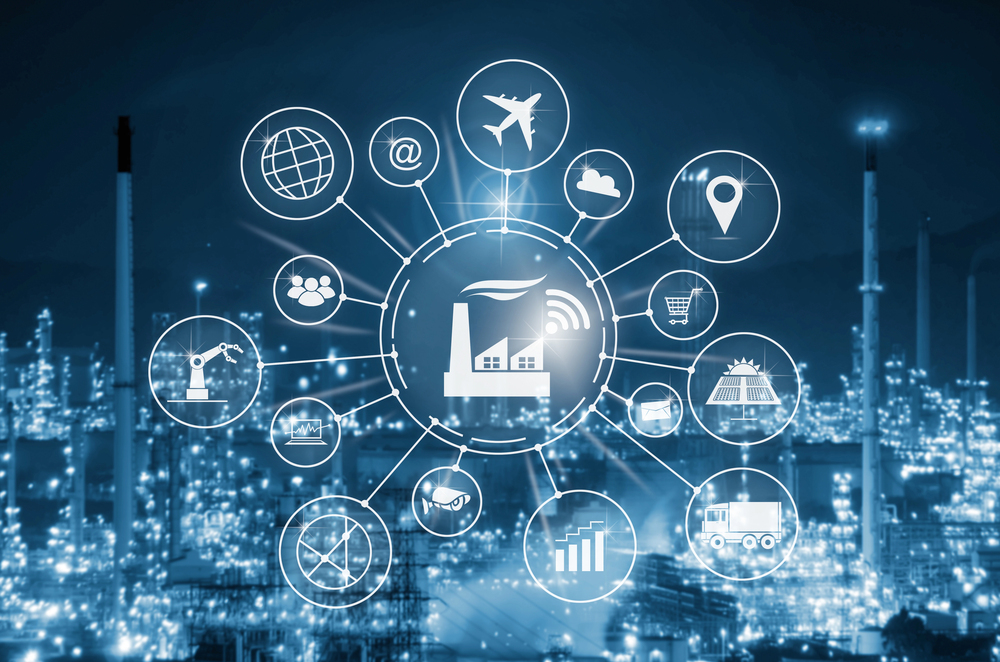
This article outlines key developments in the Industrial Internet of Things (IIoT) that accelerated industrial innovation in 2025. The author noted that advancements in connectivity, sensor technology, and data processing, coupled with AI and edge computing, made IoT devices more capable and intelligent than ever. These enhancements provided manufacturers with richer real-time operational insights, enabling more precise control of equipment performance, condition monitoring, and remote diagnostics.
The article emphasizes that these IoT trends will unlock new use cases, such as more robust predictive maintenance, adaptive supply chain orchestration, and integration with broader enterprise systems. As manufacturing operations become increasingly reliant on continuous data flows, organizations that embrace these developments will be better positioned to optimize efficiency, reduce lifecycle costs, and accelerate digital transformation journeys.
Why Has Industry 4.0 Fallen Short? Addressing the Gaps in Industrial Transformation
The piece critically examines the original promises of Industry 4.0, noting that many manufacturers have yet to realize the full benefits once envisioned from digital transformation. Despite significant investments in IoT, automation, and analytics, progress has often been piecemeal due to fragmented implementations, unclear business objectives, and a lack of alignment between technology initiatives and organizational strategy.
To address these shortcomings, the article’s author argues for a holistic approach that marries digital investments with clear business outcomes, strong leadership commitment, and workforce upskilling. Success in the next phase of transformation will depend on integrating disparate systems into cohesive platforms, cultivating innovation-friendly cultures, and balancing technology adoption with human capabilities.
Inside the New Wave of AI Adoption in Manufacturing
This article describes a pivotal shift in how manufacturers adopted AI: moving from exploratory pilots to deep, operational integration across key functions. The author noted that AI is becoming embedded in quality control, cybersecurity, robotics coordination, and predictive analytics, transforming not just isolated use cases but the core fabric of manufacturing operations.
The piece underscores that long-term value will come from connecting AI systems with enterprise data, establishing governance frameworks, and ensuring that workforce skills evolve in parallel with technological capabilities. Manufacturers achieving this are better equipped to harness AI for continuous improvement, autonomous decision support, and resilient operations.
Digital Twins Pave Way for AI-Enabled Smart Factories
The article highlights the pivotal role of digital twins in accelerating the adoption of AI and smart factory capabilities. Digital twins, which are virtual models dynamically synchronized with their physical peers, enabled manufacturers to simulate plant layouts, analyze system performance, and optimize workflows before deploying changes on the factory floor. This resulted in reduced downtime, improved resource utilization, and more reliable operational planning.
Growth in digital twin deployment was driven by the need for advanced modeling, real-time dashboards that integrate MES and automation data, and AI-augmented analytics that enable predictive maintenance and decision support. As manufacturers increasingly rely on these virtual systems, digital twins are becoming foundational to smart manufacturing strategies that seek to balance flexibility, efficiency, and innovation.

 Best Practices for Deploying and Scaling Industrial AIArtificial Intelligence (AI) is transforming industrial operations, helping organizations optimize workflows, reduce downtime, and enhance productivity. Different industry verticals leverage AI in unique ways.Link to The Center for Adaptive Edge Intelligence
 The Center for Adaptive Edge IntelligenceAdaptive edge intelligence brings real-time decision-making to the point of data creation, whether from sensors, machines, or cameras.Link to The Value of Vehicle Electrification
 The Value of Vehicle ElectrificationElectric vehicles (EVs) present automakers with many design, engineering, and manufactu ring challenges.Link to Accelerating Manufacturing Digital Transformation with Industrial Connectivity and IoT
 Accelerating Manufacturing Digital Transformation with Industrial Connectivity and IoTDigital transformation is empowering industrial organizations to deliver sustainable innovation, disruption-proof products and services, and continuous operational improvement.Link to Smart Manufacturing for Automotive
 Smart Manufacturing for AutomotiveLeading a transportation revolution in autonomous, electric, shared mobility and connectivity with the next generation of design and development tools.Link to Center for Data Pipeline Automation
 Center for Data Pipeline AutomationAs businesses become data-driven and rely more heavily on analytics to operate, getting high-quality, trusted data to the right data user at the right time is essential.Link to Center for Automated Integration
 Center for Automated IntegrationThe goal of automated integration is to enable applications and systems that were built separately to easily share data and work together, resulting in new capabilities and efficiencies that cut costs, uncover insights, and much more.Link to Continuous Intelligence: Insights
 Continuous Intelligence: InsightsDigital transformation requires continuous intelligence (CI). Today’s digital businesses are leveraging this new category of software which includes real-time analytics and insights from a single, cloud-native platform across multiple use cases to speed decision-making, and drive world-class customer experiences.