A new report by IoT Analytics, a German market insights company, quantifies the explosive growth in connected IoT devices this year. It also finds that an important trend in 2024 is the integration of AI into IoT devices.
With respect to the expected growth in the market, IoT Analytics finds that connected IoT devices are projected to increase by 13% in 2024, reaching 18.8 billion by year-end. The company expects continued growth over the upcoming years. Specifically, it forecasts that the number of connected IoT devices will grow to 40 billion by 2030.
The report notes that three technologies make up nearly 80% of the market: Wi-Fi, Bluetooth, and cellular IoT. In particular, the report found that:
Wi-Fi makes up 31% of all IoT connections. Within this market (and others that use Wi-Fi), there has been a shift over the last few years, with many companies moving from Wi-Fi 5 devices to Wi-Fi 6 and Wi-Fi 6E. Organizations that use the newer Wi-Fi generation of technology typically can support more devices operating at higher bandwidth compared to Wi-Fi 5 environments. This year, devices that support the next generation, Wi-Fi 7, are starting to ship.
25% of connected IoT devices worldwide rely on Bluetooth. Bluetooth Low Energy (BLE), also known as Bluetooth Smart, has been continuously developed to allow IoT devices to maintain reliable connectivity while operating at power. The report notes that “BLE is now the preferred option for battery-powered IoT devices such as asset tracking devices” and even the industrial sector is starting to show increasing interest in IO-Link Wireless technology.
Cellular IoT (2G, 3G, 4G, 5G, LTE-M, and NB-IoT) makes up nearly 21% of global IoT connections. According to IoT Analytics’ Global Cellular IoT Connectivity Tracker & Forecast, global cellular IoT connections grew 24% year-over-year in 2023. Additionally, this year saw the introduction of 5G RedCap technology. 5G RedCap delivers throughputs of 150 and 50 Mbps in the downlink and uplink, respectively. Those supporting this technology aim for broader applicability for 5G, serving a broader array of use cases in industry applications.
Benefits abound with AI and IoT integration
One notable trend identified in the report is the integration of artificial intelligence into IoT devices this year. “The integration of AI technologies, including generative AI and edge AI, is a significant trend in 2024,” said Satyajit Sinha, Principal Analyst at IoT Analytics, in a released statement.
Why the interest in AI integration? “Edge AI is fundamentally transforming the IoT landscape by allowing edge IoT devices to process data locally, reducing latency and enabling real-time responses.”
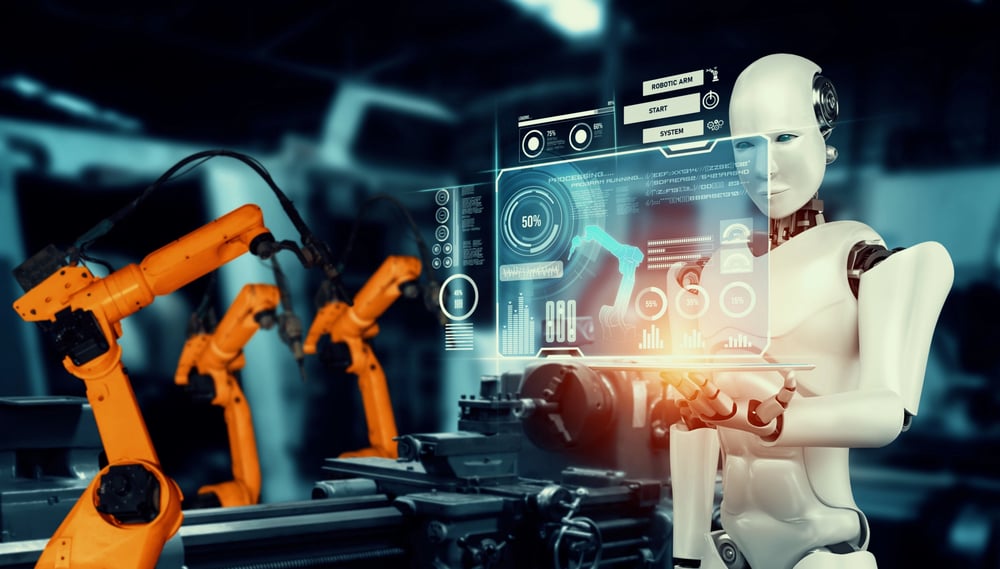
Integrating AI into IoT devices in industrial settings offers several key benefits, improving operational efficiency, safety, and decision-making.
Some of the application areas where the integration is being adopted include:
- Predictive maintenance: AI can analyze IoT data to predict equipment failures before they happen, reducing downtime and extending the lifespan of machinery. This minimizes costly repairs and unplanned maintenance.
- Optimized operations: AI enhances process automation by analyzing real-time IoT data, optimizing production workflows, energy use, and resource allocation. It can adjust processes dynamically to increase efficiency.
- Improved safety: AI-powered IoT devices can monitor environmental conditions, machinery performance, and worker behavior, alerting operators to potential hazards. This leads to safer working environments and reduced risk of accidents.
- Real-time analytics and decision-making: AI processes large amounts of IoT data in real-time, providing actionable insights to decision-makers. It allows for rapid adjustments to production processes and operations based on real-time information.
- Supply chain optimization: AI in IoT can track assets, optimize logistics, and forecast demand, improving supply chain transparency and efficiency. This reduces delays, cuts costs, and enhances inventory management.
- Energy efficiency: AI algorithms can analyze data from IoT sensors to optimize energy usage, reducing waste and lowering costs. This can be particularly beneficial in industries with high energy consumption, such as manufacturing and utilities.
Bottom line: By integrating AI into IoT, industrial settings can become smarter, more efficient, and capable of adapting to the complexities of modern operations.

 Best Practices for Deploying and Scaling Industrial AIArtificial Intelligence (AI) is transforming industrial operations, helping organizations optimize workflows, reduce downtime, and enhance productivity. Different industry verticals leverage AI in unique ways.Link to The Center for Adaptive Edge Intelligence
 The Center for Adaptive Edge IntelligenceAdaptive edge intelligence brings real-time decision-making to the point of data creation, whether from sensors, machines, or cameras.Link to The Value of Vehicle Electrification
 The Value of Vehicle ElectrificationElectric vehicles (EVs) present automakers with many design, engineering, and manufactu ring challenges.Link to Accelerating Manufacturing Digital Transformation with Industrial Connectivity and IoT
 Accelerating Manufacturing Digital Transformation with Industrial Connectivity and IoTDigital transformation is empowering industrial organizations to deliver sustainable innovation, disruption-proof products and services, and continuous operational improvement.Link to Smart Manufacturing for Automotive
 Smart Manufacturing for AutomotiveLeading a transportation revolution in autonomous, electric, shared mobility and connectivity with the next generation of design and development tools.Link to Center for Data Pipeline Automation
 Center for Data Pipeline AutomationAs businesses become data-driven and rely more heavily on analytics to operate, getting high-quality, trusted data to the right data user at the right time is essential.Link to Center for Automated Integration
 Center for Automated IntegrationThe goal of automated integration is to enable applications and systems that were built separately to easily share data and work together, resulting in new capabilities and efficiencies that cut costs, uncover insights, and much more.Link to Continuous Intelligence: Insights
 Continuous Intelligence: InsightsDigital transformation requires continuous intelligence (CI). Today's digital businesses are leveraging this new category of software which includes real-time analytics and insights from a single, cloud-native platform across multiple use cases to speed decision-making, and drive world-class customer experiences.