A new machine learning model could more accurately predict ocean currents than conventional methods, potentially improving the ability to track plastic pollution and oil spills, alongside aiding with search and rescue attempts.
The research team involved in creating this model, which included computer scientists from MIT, developed it with knowledge of fluid dynamics which more accurately reflect the physics in ocean currents.
SEE ALSO: Recommender Systems – Why the Future is Real-Time Machine Learning
Alongside the GPS data provided from buoys in the ocean, which is the basis for the conventional method of predicting currents, the machine learning model was able to predict at a more accurate level, identify divergences at a greater rate, and not be too computationally expensive to implement.
“Our method captures the physical assumptions more appropriately and more accurately. In this case, we know a lot of the physics already. We are giving the model a little bit of that information so it can focus on learning the things that are important to us, like what are the currents away from the buoys, or what is this divergence and where is it happening?” said senior author Tamara Broderick, an associate professor in MIT’s Department of Electrical Engineering and Computer Science (EECS) and a member of the Laboratory for Information and Decision Systems and the Institute for Data, Systems, and Society, in a news release.
During the development of the machine learning model, the team ran virtual and real-world tests to gauge how accurate their model was in comparison to the conventional system. Real buoys were released into the Gulf of Mexico for the real-world testing, near the area where the Deepwater Horizon oil spill occurred.
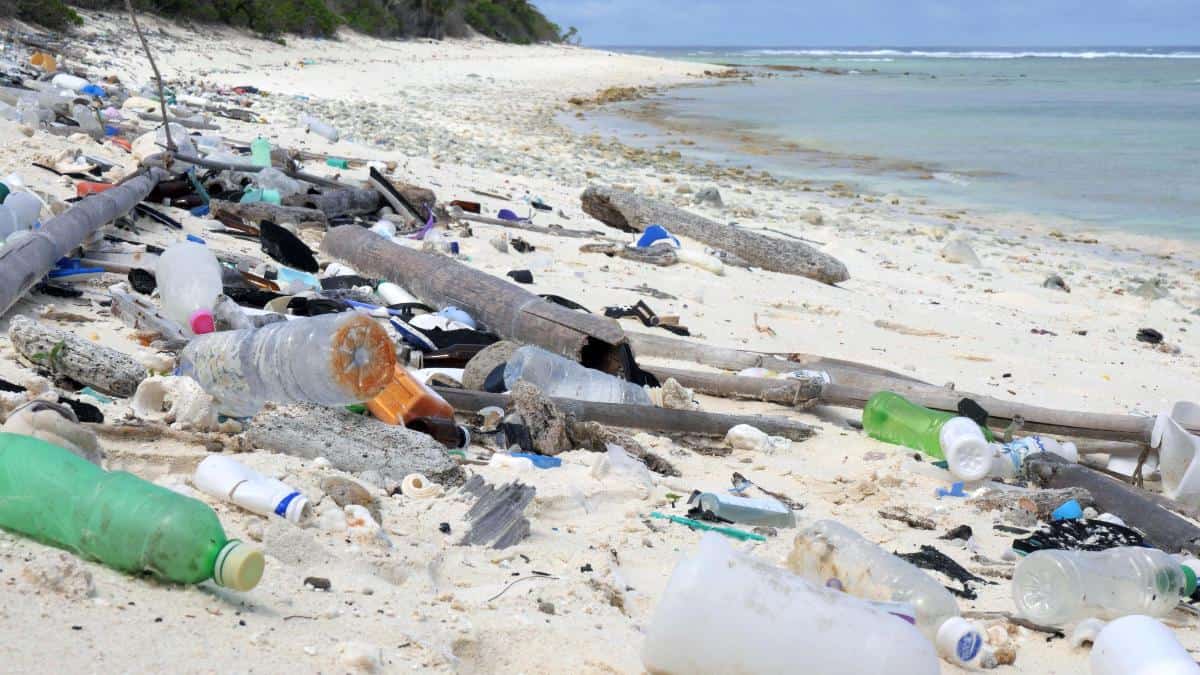
That brings us to the use cases for this model, of which there are many. In general terms, a more accurate prediction tool for ocean currents could be vitally important for all sorts of naval deployments, from commercial to military. The researchers also see the tool as capable of more accurately tracking plastic pollution, by providing environmental groups with sophisticated ways to track the end location of a plastic dump, which can often end up in coves or beach fronts.
“The authors cleverly integrate known behaviors from fluid dynamics to model ocean currents in a flexible model,” said Massimiliano Russo, an associate biostatistician at Brigham and Women’s Hospital, in a news release. “The resulting approach retains the flexibility to model the nonlinearity in the currents but can also characterize phenomena such as vortices and connected currents that would only be noticed if the fluid dynamic structure is integrated into the model. This is an excellent example of where a flexible model can be substantially improved with a well thought and scientifically sound specification.”
The research has been published with support from the Office of Naval Research, through the Multi-University Research Initiative. Results of the test will be presented in fuller detail at the International Conference on Machine Learning in Hawaii on July 23.

 Best Practices for Deploying and Scaling Industrial AIArtificial Intelligence (AI) is transforming industrial operations, helping organizations optimize workflows, reduce downtime, and enhance productivity. Different industry verticals leverage AI in unique ways.Link to The Center for Adaptive Edge Intelligence
 The Center for Adaptive Edge IntelligenceAdaptive edge intelligence brings real-time decision-making to the point of data creation, whether from sensors, machines, or cameras.Link to The Value of Vehicle Electrification
 The Value of Vehicle ElectrificationElectric vehicles (EVs) present automakers with many design, engineering, and manufactu ring challenges.Link to Accelerating Manufacturing Digital Transformation with Industrial Connectivity and IoT
 Accelerating Manufacturing Digital Transformation with Industrial Connectivity and IoTDigital transformation is empowering industrial organizations to deliver sustainable innovation, disruption-proof products and services, and continuous operational improvement.Link to Smart Manufacturing for Automotive
 Smart Manufacturing for AutomotiveLeading a transportation revolution in autonomous, electric, shared mobility and connectivity with the next generation of design and development tools.Link to Center for Data Pipeline Automation
 Center for Data Pipeline AutomationAs businesses become data-driven and rely more heavily on analytics to operate, getting high-quality, trusted data to the right data user at the right time is essential.Link to Center for Automated Integration
 Center for Automated IntegrationThe goal of automated integration is to enable applications and systems that were built separately to easily share data and work together, resulting in new capabilities and efficiencies that cut costs, uncover insights, and much more.Link to Continuous Intelligence: Insights
 Continuous Intelligence: InsightsDigital transformation requires continuous intelligence (CI). Today’s digital businesses are leveraging this new category of software which includes real-time analytics and insights from a single, cloud-native platform across multiple use cases to speed decision-making, and drive world-class customer experiences.