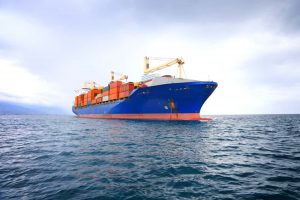
Autonomous cars and delivery drones (both ground and air-based) got lots of attention this year. But perhaps going unnoticed were significant developments in autonomous watercraft.
There has been a strong interest in autonomous watercraft for years. For the better part of the last decade, the U.S. Navy has been investing in autonomous boat technology for reconnaissance, payload delivery, and for decoys. It believes automation will save lives because fewer people will be on the ships that perform those duties.
See also: Could Coronavirus Break Legislative Gridlock For Emerging Technologies?
Much of the technology the military has been exploring has
commercial use, too. And for the same reasons. Autonomous systems make ships safer
and more efficient, reducing the number of crew members, and alleviating the
need for keeping qualified crew members on board for months on end.
The benefits are astounding. A past RTInsights article on the Internet of Boats noted: “Eliminating the crew alone would slice a commercial ship’s costs by up to 44 percent by removing the need for salaries, quarters, air-conditioning, and so much more. Such a change could make a ship 5 percent lighter and use 15 percent less fuel.”
Overcoming autonomous watercraft technology obstacles
Autonomous watercraft have similar technology challenges as drones
and self-driving cars, trucks, and buses. They all need many discrete systems to
aid with location determination, object detection, video imagery analysis,
decision-automation, and more. Each area has technical nuances that must be
addressed. And then, these discrete systems must be integrated and work
together. Some technology demonstrations in 2020 show the progress that has
been made with water-based crafts.
Retracing the Mayflower’s voyage
IBM and a global consortium of partners, including marine
research organization ProMare collaborated to build an
unmanned, autonomous ship to celebrate the 400th anniversary
of the Mayflower voyage.
The project combined server, cloud, and edge technologies with
AI to run the ship and guide it, avoiding ocean dangers as it sails from
Plymouth, England to Plymouth, MA. Additionally, the ship carried research pods
containing sensors and scientific instruments used to gather data in a variety
of critical areas, including sea level mapping, ocean plastics measurement,
marine life monitoring, and maritime security.
According to IBM: “The Mayflower Autonomous Ship (MAS) features an AI Captain built by ProMare and IBM developers. The AI Captain gives the MAS the ability to sense, think, and make decisions at sea with no human captain or onboard crew.” MAS launched in September and will spend six months in sea trials, undertaking various research missions and voyages before attempting to cross the Atlantic in Spring 2021.
Autonomous water taxi demo
A more recent proof of concept project debuted in December. Buffalo Automation, a U.S. based developer of AI-powered autonomous water transport, predictive navigation, and maritime safety systems, conducted a full-scale demo of the world’s first autonomous water taxi concept in Knoxville, TN, on the Tennessee River.
The Greycraft water taxi concept is a fully contained,
solar-powered, AI-enabled autonomous vessel. It uses Buffalo Automation’s AutoMate,
a predictive boat navigation system that guides large commercial ships. The
system uses AI, neural networks, and thermal imaging technologies to identify
even the smallest obstructions and safety issues. And it then provides critical
warnings and assistance in safely navigating around them. AutoMate has already
been adopted by multiple commercial ships operating on the U.S. Great
Lakes.
The water taxi demo used Pegasus, a consumer version of the AutoMate
system, designed for smaller recreational boats. Pegasus offers comprehensive
navigation and safety. It works with traditional gas-powered boat engines. However,
in the demo, the Pegasus technology has been adapted to provide a fully
autonomous boating experience in a new product line called Greycraft that
combines electrification, renewable energy, and modular design.
A look to
the future
The IBM and Buffalo Automation demonstrations are helping
prove out the technologies needed for autonomous systems on water. They show
that the needed technology is maturing, as is the case in ground-based and
flying self-guided systems.
More developments and success are highly likely, especially
as more powerful compute engines (processors, GPUs, as well as new embedded and
edge computing resources) come to market. These devices will let AI algorithms
run faster and help deliver the decision-making insights needed for autonomous
operations. The new compute power will also allow more advanced AI algorithms
to be used and will let AI run on the autonomous systems themselves.
Currently, technology is ahead of the regulations (as is the
case in most fields). As the technical obstacles to autonomous watercraft and
other systems fade, attention will need to be paid to resolving regulatory and
government safety issues. Addressing these issues will be a major undertaking
since we are talking about international governing bodies such as the International
Maritime Organization (IMO), a United Nations agency that oversees shipping
down to smaller government entities that mandate navigation and safety
requirements on local passageways.

 Best Practices for Deploying and Scaling Industrial AIArtificial Intelligence (AI) is transforming industrial operations, helping organizations optimize workflows, reduce downtime, and enhance productivity. Different industry verticals leverage AI in unique ways.Link to The Center for Adaptive Edge Intelligence
 The Center for Adaptive Edge IntelligenceAdaptive edge intelligence brings real-time decision-making to the point of data creation, whether from sensors, machines, or cameras.Link to The Value of Vehicle Electrification
 The Value of Vehicle ElectrificationElectric vehicles (EVs) present automakers with many design, engineering, and manufactu ring challenges.Link to Accelerating Manufacturing Digital Transformation with Industrial Connectivity and IoT
 Accelerating Manufacturing Digital Transformation with Industrial Connectivity and IoTDigital transformation is empowering industrial organizations to deliver sustainable innovation, disruption-proof products and services, and continuous operational improvement.Link to Smart Manufacturing for Automotive
 Smart Manufacturing for AutomotiveLeading a transportation revolution in autonomous, electric, shared mobility and connectivity with the next generation of design and development tools.Link to Center for Data Pipeline Automation
 Center for Data Pipeline AutomationAs businesses become data-driven and rely more heavily on analytics to operate, getting high-quality, trusted data to the right data user at the right time is essential.Link to Center for Automated Integration
 Center for Automated IntegrationThe goal of automated integration is to enable applications and systems that were built separately to easily share data and work together, resulting in new capabilities and efficiencies that cut costs, uncover insights, and much more.Link to Continuous Intelligence: Insights
 Continuous Intelligence: InsightsDigital transformation requires continuous intelligence (CI). Today’s digital businesses are leveraging this new category of software which includes real-time analytics and insights from a single, cloud-native platform across multiple use cases to speed decision-making, and drive world-class customer experiences.