Best Practices for Deploying and Scaling Industrial AI
Artificial Intelligence (AI) is transforming industrial operations, helping organizations optimize workflows, reduce downtime, and enhance productivity. Different industry verticals leverage AI in unique ways.
Accelerating Manufacturing Digital Transformation with Industrial Connectivity and IoT
Digital transformation is empowering industrial organizations to deliver sustainable innovation, disruption-proof products and services, and continuous operational improvement.
Leading a transportation revolution in autonomous, electric, shared mobility and connectivity with the next generation of design and development tools.
As businesses become data-driven and rely more heavily on analytics to operate, getting high-quality, trusted data to the right data user at the right time is essential.
The goal of automated integration is to enable applications and systems that were built separately to easily share data and work together, resulting in new capabilities and efficiencies that cut costs, uncover insights, and much more.
Digital transformation requires continuous intelligence (CI). Today’s digital businesses are leveraging this new category of software which includes real-time analytics and insights from a single, cloud-native platform across multiple use cases to speed decision-making, and drive world-class customer experiences.
Best Practices for Deploying and Scaling Industrial AI
Artificial Intelligence (AI) is transforming industrial operations, helping organizations optimize workflows, reduce downtime, and enhance productivity. Different industry verticals leverage AI in unique ways.
Accelerating Manufacturing Digital Transformation with Industrial Connectivity and IoT
Digital transformation is empowering industrial organizations to deliver sustainable innovation, disruption-proof products and services, and continuous operational improvement.
Leading a transportation revolution in autonomous, electric, shared mobility and connectivity with the next generation of design and development tools.
As businesses become data-driven and rely more heavily on analytics to operate, getting high-quality, trusted data to the right data user at the right time is essential.
The goal of automated integration is to enable applications and systems that were built separately to easily share data and work together, resulting in new capabilities and efficiencies that cut costs, uncover insights, and much more.
Digital transformation requires continuous intelligence (CI). Today’s digital businesses are leveraging this new category of software which includes real-time analytics and insights from a single, cloud-native platform across multiple use cases to speed decision-making, and drive world-class customer experiences.
Levi Strauss & Co., one of the world’s leading apparel company and jeans makers, continuously strives to improve the in-store experience.
The company sought to improve the in-store experience by helping to ensure customers can easily find the products they want and avoid missing sales due to misplaced items. The company also sought to build a foundation for generating customer insights – to better understand customer preferences based on in-store behaviors.
Unfortunately, misplaced items can present challenges to that strong experience.
“Over the course of a day, customers occasionally place items in the wrong spot in the store—after deciding against a pair of jeans, a customer might inadvertently leave the jeans next to the shirts,” according to Noah Treshnell, senior vice president of the Americas for Levi’s. “We need ways to help our salespeople quickly find misplaced items, so they can put those items back where they belong and we can avoid losing sales.”
Locating misplaced items is particularly important for apparel retailers. Unlike other types of retail businesses, apparel retailers often keep only a few of each unique product type—or SKU—in the store. The business might have 50 pairs of each type of jeans in the store but only two or three of each size.
How This Business Opportunity or Challenge Was Met:
Levi’s turned to Intel to implement a solution that combines Internet of Things technology with advanced analytics to help determine when items are no longer in their correct places.
Levi’s and Intel piloted a solution based on Intel’s Trusted Analytics Platform (TAP), designed to help salespeople quickly find misplaced items in a store so they can ensure those items are on the shelves, in the right spots, and ready for customers. The solution incorporates radio-frequency identification (RFID) tags, in-store sensors, a gateway system, and cloud-based analytics built on TAP. The RFID tags were woven into clothing items.
The Intel team then installed antenna sensors in the ceiling of the store that enable continuous, real-time monitoring of the location of the RFID tags. A gateway system located in the store collects data from the sensors and then sends a smaller set of data to the cloud for detailed analysis. The gateway system conducts some basic data analysis to reduce the amount of data transmitted over the network to the cloud.
The TAP algorithms enables Levi’s team members to discover whether items are misplaced. The algorithms use data collected overnight (when products are stationary) to determine the correct locations for groups of items, such as jackets, belts, or a particular jeans style. During store hours, as sensors monitor the location of items, the algorithms determine whether an item is located in the correct location for its group. If a pair of jeans is on the proper shelf, or within arm’s reach of that shelf, no action is required from a salesperson. But if that pair of jeans is misplaced or left in a fitting room, the algorithm could generate an alert on a mobile app that an action should be taken.
Measurable/Quantifiable and “Soft” Benefits from This Initiative
The real-time monitoring system is intended to help Levi’s deliver a superior customer experience, as well as help Levi’s keep track of inventory. The insights gained from the solution can also help enhance the efficiency of store operations. For example, analytics insights can reduce the time it takes for salespeople to find misplaced items.
Using Internet of Things technologies in conjunction with TAP algorithms could also help managers and salespeople better control front and back-stock replenishment. Salespeople could receive alerts when it’s time to replenish jeans on a store shelf using stock from a back room. As a result, stock will be more readily available and visible to customers.
“By improving the accuracy of our inventory system, we can help our salespeople provide the right answer, right away. They can immediately find an item or offer an opportunity to order it,” said Treshnell.
As customer expectations continue to evolve, so too must the technologies that support engagement. Enter the Real-Time Interaction Management (RTIM) engine.
Companies can leverage AI across their communication channels, enabling them to augment (not replace) the role of the human contact center representative.
As the pace and complexity of operations accelerate, organizations are rethinking architectures to enable real-time, human-in-the-loop decision-making.
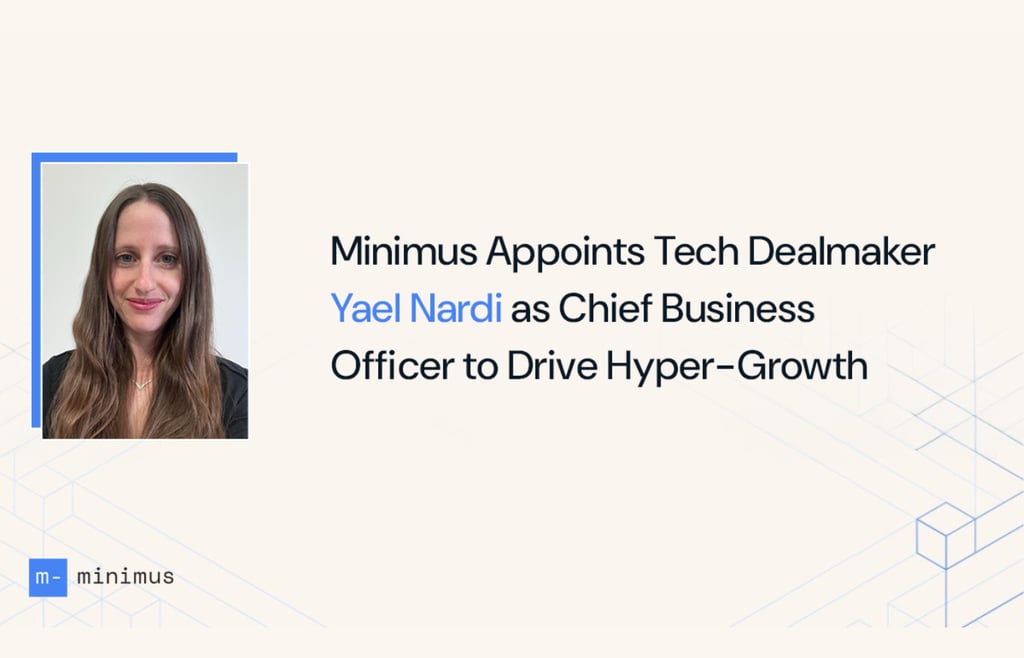
Minimus, a leading provider of hardened container images and secure container images designed to eliminate CVE risk, today announced the appointment of Yael Nardi as Chief Business Officer (CBO). In this newly created role, Nardi will architect the company’s next phase of scale, overseeing a high-velocity top-of-funnel growth strategy, strategic operations, and future corporate development.
Analysis and market insights on real-time analytics including Big Data, the IoT, and cognitive computing. Business use cases and technologies are discussed.
Advertiser Disclosure: Some of the products that appear on
this site are from companies from which TechnologyAdvice
receives compensation. This compensation may impact how and
where products appear on this site including, for example,
the order in which they appear. TechnologyAdvice does not
include all companies or all types of products available in
the marketplace.

 Best Practices for Deploying and Scaling Industrial AIArtificial Intelligence (AI) is transforming industrial operations, helping organizations optimize workflows, reduce downtime, and enhance productivity. Different industry verticals leverage AI in unique ways.Link to The Center for Adaptive Edge Intelligence
 The Center for Adaptive Edge IntelligenceAdaptive edge intelligence brings real-time decision-making to the point of data creation, whether from sensors, machines, or cameras.Link to The Value of Vehicle Electrification
 The Value of Vehicle ElectrificationElectric vehicles (EVs) present automakers with many design, engineering, and manufactu ring challenges.Link to Accelerating Manufacturing Digital Transformation with Industrial Connectivity and IoT
 Accelerating Manufacturing Digital Transformation with Industrial Connectivity and IoTDigital transformation is empowering industrial organizations to deliver sustainable innovation, disruption-proof products and services, and continuous operational improvement.Link to Smart Manufacturing for Automotive
 Smart Manufacturing for AutomotiveLeading a transportation revolution in autonomous, electric, shared mobility and connectivity with the next generation of design and development tools.Link to Center for Data Pipeline Automation
 Center for Data Pipeline AutomationAs businesses become data-driven and rely more heavily on analytics to operate, getting high-quality, trusted data to the right data user at the right time is essential.Link to Center for Automated Integration
 Center for Automated IntegrationThe goal of automated integration is to enable applications and systems that were built separately to easily share data and work together, resulting in new capabilities and efficiencies that cut costs, uncover insights, and much more.Link to Continuous Intelligence: Insights
 Continuous Intelligence: InsightsDigital transformation requires continuous intelligence (CI). Today’s digital businesses are leveraging this new category of software which includes real-time analytics and insights from a single, cloud-native platform across multiple use cases to speed decision-making, and drive world-class customer experiences.