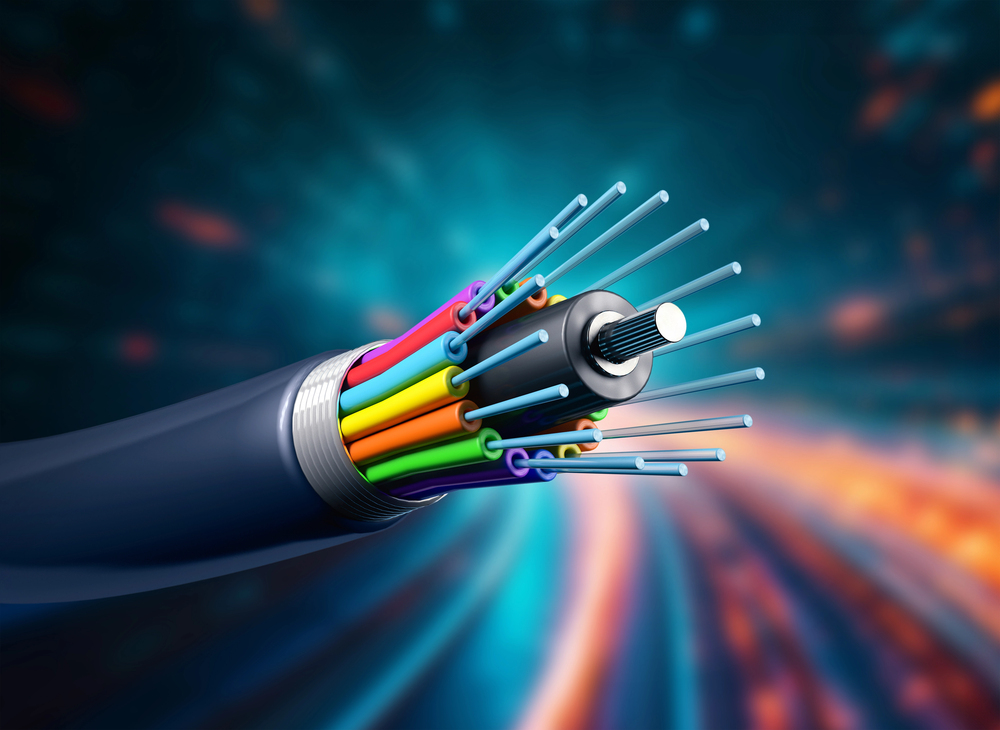
Beneath the mighty oceans across the world lie hidden something just as mighty that have been critical arteries for mankind. These are the imperative submarine cables that have been carrying international data traffic around the world and connecting countries. Though invisible, these million fiber optic arteries have been binding nations, industries, and technologies, enabling an interconnected future.
As the digital economies around the world continue to propel, these cables have been enabling everything, right from instant financial transactions to AI-driven innovations, which have now become critical for financial systems, healthcare networks, utility services, military communications, logistics and supply chains, and hundreds of other industries across the world.
Bridging the world with digital highways
Subsea cables are more than just technological marvels; they are essentially the strategic assets that play a foundational role in enhancing global internet connectivity by serving as the primary infrastructure for international data transmission. These fiber-optic highways connect continents, countries, and data centers across the globe. The fast proliferation of these cables today underpins the expansion of digital infrastructure worldwide, even as they continue to enable seamless global communication, commerce, and internet hubs around the world.
Continents that are physically connected through undersea fiber-optic links reduce the distance data must travel. This plays a pivotal role in minimizing latency for real-time applications by providing the most direct, high-capacity routes for global data transmission. As new technology emerges and the demand for data grows, the undersea lifelines will continue to be indispensable to global connectivity as they enable instant, reliable, and secure flow of information that strengthens the modern digital economy.
See also: What Are Neoclouds and Why Does AI Need Them?
So how do submarine cables help drive business growth?
As data flows continue to surge across the world, subsea cable infrastructure has increasingly become the backbone for scaling modern business operations. These high-capacity fiber routes move enormous volumes of information every single day, allowing companies to work, transact, and collaborate globally in real time. The impact is deep and far-reaching, powering everything from global trade to the rapid pace of digital innovation.
Subsea networks are strategic enablers of business growth, innovation, and economic development. Cutting-edge technology developments are dependent on high-speed and high-volume digital transactions between the nodes. These technologies will be the enablers in the marketplace; therefore, business growth and innovation are highly dependent on reliable subsea networks.
Subsea cables also help businesses to move their technology backend to the cloud seamlessly, enabling them to access global data resources, fostering agility and scalability. With the expansion of international bandwidth supply, subsea cables drive down data transmission costs, making high-quality connectivity more affordable for businesses and consumers. Its high capacity and low-latency connectivity also support the rise of new digital services such as online medicine, online gaming, AR/VR, fintech, and the like that are dependent on robust global networks.
See also: Why Modern AI Needs NaaS
Breaking the bandwidth barrier with technology innovations
As the world’s consumption of data soars and leads to an uptake of advanced tech like cloud computing, AI, streaming, and IoT, industries across the world continue to break new ground to overcome bandwidth limitations and future-proof global connectivity.
Next-generation cable systems are getting faster as well as more intelligent, powerful, and efficient with massive capacity upgrades, advanced multiplexing, and dynamic switching capabilities.
These subsea cables are also helping narrow the digital divide by bringing high-speed connectivity to regions that have long been underserved. At the same time, they provide resilience and low-latency performance that are critical for next-generation applications.
The newest advances in subsea cable technology, ranging from higher-capacity designs and smart AI-driven management to stronger engineering, are reshaping the capabilities of the global internet. As these digital arteries expand, they will fuel new waves of innovation and enable data to travel with even greater speed and reliability.
Advancing digital inclusion globally
Subsea cables are imperative for digital inclusion, given their scale, dependability, and affordable connectivity that enable billions of people across the world to connect to internet services. In addition to businesses, these cables are enabling governments to shift more services online, accelerating digital transformation and strengthening the foundations of fast-growing digital economies. This shift improves how public services are delivered, expanding digital access and unlocking education, healthcare, information, and economic opportunities, encouraging digital innovations and accelerated digital transformations.
As newer cables go live, the increase in international bandwidth also drives down broadband prices and enhances overall network performance, speed, resilience, and service quality, particularly in developing regions.
The need for diversified networks
Building true resilience to mitigate all risks also involves designing networks with multiple layers of protection. Operators like us are therefore investing in multiple, diverse cable routes, redundant backhaul networks, and diversified landing points so we can rapidly re-route data traffic through alternate paths, maintaining minimal impact and continuity for mission-critical applications, should there be any disruptions.
This approach is particularly important for regions dependent on only a handful of undersea routes since it covers all disruption risks across single points of failure, whether they may be accidental or malicious, and
Looking ahead, the integration of AI-driven predictive maintenance and design processes will also help reduce the potential for repairing cable cuts and slash damage resolution times significantly.
Future-proofing the networks
The next chapter of subsea cable reliability is being revolutionized by innovations in materials, intelligence, automation, and integrating best industry practices. Smart sensors and data analytics, for example, are transforming the maintenance of subsea cables by enabling proactive, efficient, and cost-effective management of these critical infrastructures. These advancements are digital highways as robust and resilient backbones that are ready to support the ever-evolving demands of the global digital economy.
To truly future-proof the cable networks, we need to think beyond speed alone and build smarter, resilient infrastructure that ensures strategic expansion, redundancy, and sustainability.
Today, the fiber-optic submarine cable system is no longer just some cables buried under the sea; they are strategic assets that are quietly influencing how connectivity, commerce, and digital participation are evolving.
The split-second global banking transactions and other data interconnections across continents are made possible by the vast web of submarine cables. Every second, these subsea cables transmit immense volumes of data securely between nations. Although hidden from plain sight, these cables undergo constant innovations and enhancements to ensure resilient connectivity.
The continued growth and technological advancement of these networks are not only breaking bandwidth barriers but also democratizing access to information, powering innovation, and driving economic growth across industries across the world. However, to fully unleash its potential, it is important to steadily invest in diverse routes and resilient infrastructure in addition to adopting collaborative approaches to secure and maintain these lifelines. By future-proofing these deep-sea datalinks with intelligent designs, we can collectively ensure that the world’s digital arteries will remain forever ready to connect and empower the world.

 Best Practices for Deploying and Scaling Industrial AIArtificial Intelligence (AI) is transforming industrial operations, helping organizations optimize workflows, reduce downtime, and enhance productivity. Different industry verticals leverage AI in unique ways.Link to The Center for Adaptive Edge Intelligence
 The Center for Adaptive Edge IntelligenceAdaptive edge intelligence brings real-time decision-making to the point of data creation, whether from sensors, machines, or cameras.Link to The Value of Vehicle Electrification
 The Value of Vehicle ElectrificationElectric vehicles (EVs) present automakers with many design, engineering, and manufactu ring challenges.Link to Accelerating Manufacturing Digital Transformation with Industrial Connectivity and IoT
 Accelerating Manufacturing Digital Transformation with Industrial Connectivity and IoTDigital transformation is empowering industrial organizations to deliver sustainable innovation, disruption-proof products and services, and continuous operational improvement.Link to Smart Manufacturing for Automotive
 Smart Manufacturing for AutomotiveLeading a transportation revolution in autonomous, electric, shared mobility and connectivity with the next generation of design and development tools.Link to Center for Data Pipeline Automation
 Center for Data Pipeline AutomationAs businesses become data-driven and rely more heavily on analytics to operate, getting high-quality, trusted data to the right data user at the right time is essential.Link to Center for Automated Integration
 Center for Automated IntegrationThe goal of automated integration is to enable applications and systems that were built separately to easily share data and work together, resulting in new capabilities and efficiencies that cut costs, uncover insights, and much more.Link to Continuous Intelligence: Insights
 Continuous Intelligence: InsightsDigital transformation requires continuous intelligence (CI). Today’s digital businesses are leveraging this new category of software which includes real-time analytics and insights from a single, cloud-native platform across multiple use cases to speed decision-making, and drive world-class customer experiences.