
IoT Devices Could Feature 'Nutrition Labels' To Inform Customers

IoT Devices Could Feature ‘Nutrition Labels’ To Inform Customers

IoT Devices Could Feature ‘Nutrition Labels’ To Inform Customers

internet of things word under torn black sugar paper.

The proposed labels overcome a common IoT problem: People cannot find information about the privacy and security practices of devices at the moment of purchase,

Written By
David Curry
David Curry
Jun 16, 2020
2 minute read

Researchers at Carnegie Mellon University’s CyLab have proposed “nutritional labels” for the Internet of Things devices.

The labels, printed on the back of a product’s box, would inform customers on data practices, security mechanisms, and country of manufacture.

SEE ALSO: IoT Market Remains Fragmented, With Hundreds of Choices

Activating a QR code on the back would provide customers with more information about the device. In total, the label displays 47 pieces of information on privacy and security.
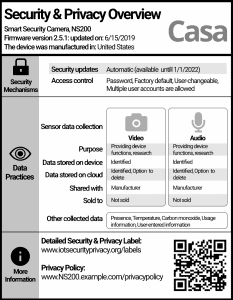
“Survey results show that the vast majority of people are concerned about the security and privacy practices of devices, so we need to provide them with this information,” said CyLab’s Pardis Emami-Naeini, the study’s lead author. “The display of this information should be concise and understandable, akin to a nutrition label on food products.”

IoT devices have been in the news regularly for snooping on users, sending data to unauthorized third parties, or getting hacked.

Lawmakers are beginning to push for better security and privacy, through the Cyber Shield Act and California Consumer Privacy Act, but pre-purchase a customer is still regularly making an uninformed choice on what IoT device has the best practices.

“People cannot find information about the privacy and security practices of devices at the moment of purchase,” said Emami-Naeini.

The team is in talks with manufacturers to adopt the labeling system. However, it will most likely take a law or a collective decision by major manufacturers before we see labels on most devices.

Amazon, Google, and TV manufacturers have all been accused of spying and selling data to third parties as well, so don’t expect them to adopt the labels willingly.


David Curry

David is a technology writer with several years experience covering all aspects of IoT, from technology to networks to security.

Recommended for you...

Powering Smart Cities: Designing Rugged PoE for Outdoor and Industrial Edge Deployments
Jordan Smith
Apr 2, 2026
Securing Time Synchronization: The Overlooked Control in Modern Cybersecurity
Liz Ticong
Apr 2, 2026
Why Satellite Connectivity Sits at the Heart of Enterprise Network Resilience
Fánan Henriques
Feb 14, 2026
Real-time Analytics News for the Week Ending January 31

Featured Resources from Cloud Data Insights

Real-time Analytics News for the Week Ending April 12
AI Is Wasting Energy and the Bill Is Due
Calvin Cooper
Apr 10, 2026
The RAG Pipeline Nobody Told You Was Unnecessary
Avi Cavale
Apr 8, 2026
RT Insights Logo

Analysis and market insights on real-time analytics including Big Data, the IoT, and cognitive computing. Business use cases and technologies are discussed.

Property of TechnologyAdvice. © 2026 TechnologyAdvice. All Rights Reserved

Advertiser Disclosure: Some of the products that appear on this site are from companies from which TechnologyAdvice receives compensation. This compensation may impact how and where products appear on this site including, for example, the order in which they appear. TechnologyAdvice does not include all companies or all types of products available in the marketplace.