AI Computer Vision Detects Defects in Real Time

Taking Computer Vision to the Next Level, with AI Behind It

Taking Computer Vision to the Next Level, with AI Behind It

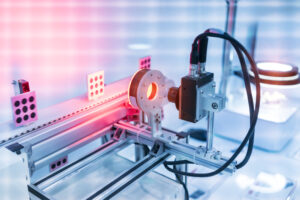
Robotic vision sensor camera system in intellegence factory

Researchers have assembled a computer vision system that uses AI and optical measurement technology to detect, classify, and visualize product defects in real time.

Written By
Joe McKendrick
Joe McKendrick
Jul 17, 2023
2 minute read

One of the interesting aspects of real-time capabilities is computer vision – when linked to back-end intelligence, it can be used for a multitude of applications – from highway toll booths to shipping logistics. Now, new developments in this field may bring instantaneous analysis and action right at the point of contact.

Researchers at the Fraunhofer Institute report they have that assembled a computer vision system that employs artificial intelligence and optical measurement technology to detect, classify and visualize defects in real time, and report them to plant administrators. The demonstration project, under development for a year, detects surface defects, artifacts as well as texture changes, and that evaluates them with the support of AI.

See also: The Benefits of Analytics-Based Product Engineering

“This process can capture 3D-information of surfaces rapidly and in high resolution,” the Fraunhofer report indicates. “The measurement data is used to generate supplementary information in-line for ongoing production processes.”

The real-time photo analysis goes a step further, the researchers add. “The system does not just detect defects – it classifies them at the same time and immediately establishes a wider context. Our customers receive information about the type of defect, along with many other parameters like the defect’s density, geometric dimensions and frequency.”

AI enters the picture with the system being trained within ongoing production using a defect catalog. “As defects are reported, they are fed into a neural network, thereby refining the detection accuracy.”

The researchers say there are many applicable areas for the technology, and apply such as continuous fiber-composite manufacturing processes. “Currently, the Fraunhofer solution uses a maximum of four cameras, which will increase. .

Joe McKendrick

Joe McKendrick is RTInsights Industry Editor and industry analyst focusing on artificial intelligence, digital, cloud and Big Data topics. His work also appears in Forbes an Harvard Business Review. Over the last three years, he served as co-chair for the AI Summit in New York, as well as on the organizing committee for IEEE's International Conferences on Edge Computing. (full bio). Follow him on Twitter @joemckendrick.

Recommended for you...

Real-time Analytics News for the Week Ending April 19
Why Digitizing Leadership Standard Work Is No Longer Optional in Manufacturing
Renato Basso
Apr 17, 2026
Which is Right for Your Organization: Business Intelligence or Operational Intelligence?
Marc Stevens
Apr 7, 2026
Real-time Analytics News for the Week Ending April 5

Featured Resources from Cloud Data Insights

Why Storage is Becoming the Limiting Factor in AI Infrastructure
Ken Claffey
Apr 27, 2026
Real-time Analytics News for the Week Ending April 25
Smart Manufacturing Trends 2026: How AI, IoT, and Automation Are Driving Efficiency and Resilience
Why the Best MSPs Are Starting to Rethink Cloud Strategy (Without Making a Big Deal About It)
Richard Copeland
Apr 24, 2026
RT Insights Logo

Analysis and market insights on real-time analytics including Big Data, the IoT, and cognitive computing. Business use cases and technologies are discussed.

Property of TechnologyAdvice. © 2026 TechnologyAdvice. All Rights Reserved

Advertiser Disclosure: Some of the products that appear on this site are from companies from which TechnologyAdvice receives compensation. This compensation may impact how and where products appear on this site including, for example, the order in which they appear. TechnologyAdvice does not include all companies or all types of products available in the marketplace.